
How to Make Weed Gummies: Recipe, Dosing, and Storage
How to Make Weed Gummies: Recipe, Dosing, and Storage
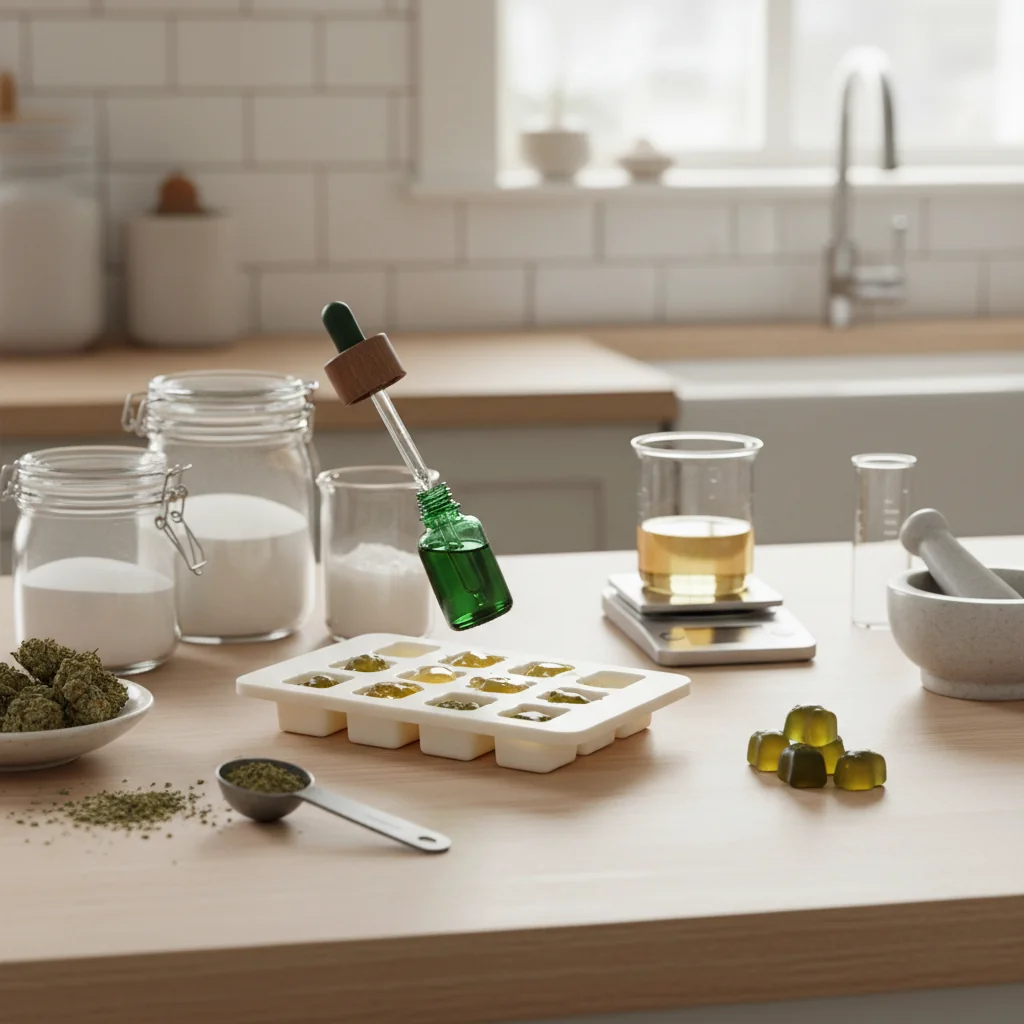
Homemade weed gummies are one of the more controllable forms of edibles because they let you set exact per-piece dosing — something dispensary gummies offer at a price premium and home-baked cookies don't easily allow. The recipe is straightforward, but the technique has a couple of critical points where mistakes ruin the batch. This guide walks through the full process: making or sourcing the cannabis infusion, mixing the gummy base, molding, and storing.
Quick Answer
To make weed gummies, dissolve 1 packet (3oz) of flavored gelatin and 2 packets (.25oz each) of unflavored gelatin in 1 cup of fruit juice over low heat, stir in 1/2 cup of cannabis tincture or potent cannabis oil, add a teaspoon of lecithin to improve absorption, then pour into silicone molds and refrigerate for 2 hours. A typical batch yields 50-60 gummies at 5-10mg of THC each. Always test the potency of your infusion before scaling, and label every batch clearly.
Table of Contents
- What You'll Need
- Step 1: Prepare the Cannabis Infusion
- Step 2: Mix the Gummy Base
- Step 3: Combine, Mold, and Set
- Dosing Homemade Gummies
- Common Mistakes
- Tips for Better Gummies
- Frequently Asked Questions
- Conclusion
What You'll Need
The recipe uses a few specific ingredients that aren't substitutable.
Cannabis infusion: 1/2 cup of cannabis tincture, cannabis-infused MCT oil, or potent cannabis-infused glycerin. The infusion has to be liquid at room temperature — solid cannabutter doesn't blend evenly into the gummy base.
Flavored gelatin: 1 large box (3oz / 85g) of any flavored gelatin powder. Standard supermarket gelatin works fine.
Unflavored gelatin: 2 packets (about 0.5oz / 14g total). This is what gives the gummies their firm, chewable texture. Without unflavored gelatin, the gummies are too soft and fall apart.
Fruit juice: 1 cup. Match the flavor to the flavored gelatin if possible. Cold-pressed juice or 100% fruit juice produces better flavor than concentrate-based juices.
Lecithin: 1 teaspoon of liquid sunflower or soy lecithin. This is an emulsifier that helps the cannabis-infused oil blend with the water-based gelatin mixture, AND it improves how efficiently the body absorbs the THC.
Tools: a small saucepan, a whisk, a measuring cup with a pour spout, silicone gummy molds (preferably 5ml or 10ml capacity), a small dropper or syringe, a refrigerator.
Optional: citric acid for a slightly tart flavor, food coloring for color customization, sour sugar for coating.
Step 1: Prepare the Cannabis Infusion
The infusion is the source of the THC, and the potency of your gummies depends entirely on the potency of the infusion you start with.
To make cannabis tincture from flower: 1. Decarboxylate 7-14 grams of cannabis at 240°F for 30-40 minutes (same process as making cannabutter). 2. Combine the decarbed flower with 1 cup of high-proof alcohol (Everclear or another 151+ proof grain alcohol) in a glass jar. 3. Seal and shake. Let sit in a dark cool place for 7-14 days, shaking once a day. (Alternative: warm the jar in a sous vide bath at 185°F for 2 hours for faster extraction.) 4. Strain through cheesecloth into a clean glass bottle. The result is a green-tinted alcohol-based tincture.
Easier alternative — cannabis-infused MCT oil: 1. Decarboxylate 7-14g of cannabis at 240°F for 35 minutes. 2. Heat 1 cup of MCT oil in a saucepan to 180-200°F. 3. Add the decarbed cannabis. Simmer at 180-200°F for 2-3 hours, stirring occasionally. 4. Strain through cheesecloth. The MCT oil is now infused.
Easiest alternative — buy infusion: in legal states, dispensaries sell cannabis-infused MCT oil and glycerin tinctures with verified potency labels. This eliminates the guesswork of homemade infusion potency.
Why this matters: gummies need a liquid infusion that mixes evenly into the gelatin base. Cannabutter is a solid at room temperature and doesn't distribute uniformly through the gummies — you end up with some gummies that are very strong and others that are weak. Tinctures, MCT oil, and glycerin all stay liquid and blend evenly.
Step 2: Mix the Gummy Base
The gummy base is the gelatin matrix that holds the cannabis infusion in chewy form.
1. Pour 1 cup of cold fruit juice into a small saucepan.
2. Sprinkle 2 packets (0.5oz / 14g total) of unflavored gelatin powder evenly over the juice. Let sit for 5 minutes — the gelatin will absorb water and "bloom," forming a thick layer on top of the juice.
3. Place the saucepan over low heat. Whisk gently until the bloomed gelatin dissolves completely into the juice. This usually takes 3-5 minutes. Do not let the mixture boil — boiling can break down the gelatin's binding properties.
4. Once the unflavored gelatin is dissolved, sprinkle in 1 box (3oz / 85g) of flavored gelatin. Whisk continuously until the flavored gelatin powder dissolves and the mixture turns clear.
5. Continue heating gently for 1-2 minutes after the gelatin has dissolved to ensure even integration.
The result is a hot, viscous, deeply colored liquid. This is the gummy base.
Step 3: Combine, Mold, and Set
The combination step is the most timing-sensitive part because the gelatin starts to set as soon as it cools below 100°F.
1. Remove the gummy base from heat. Let cool for about 1-2 minutes — you want the mixture warm but not boiling-hot when the cannabis goes in. THC starts to degrade above 392°F, but residual oxidation can occur above 200°F too.
2. Whisk in 1 teaspoon of lecithin. The lecithin will dissolve into the warm mixture and disappear visually.
3. Slowly add 1/2 cup of cannabis tincture or infused MCT oil while whisking continuously. The lecithin from step 2 helps the oil emulsify into the water-based gelatin instead of separating.
4. Whisk for 30-60 seconds until the cannabis infusion is fully integrated. The mixture should look uniform with no visible oil separation.
5. Working quickly (the mixture is starting to cool and thicken), use a measuring cup with a pour spout or a syringe to transfer the mixture into silicone gummy molds. Fill each mold cavity to the top.
6. Refrigerate the molds for 2 hours, or until the gummies are fully set and easy to pop out of the molds.
7. Once set, transfer the gummies to a sealed container.
For tincture-based gummies: the alcohol in the tincture mostly evaporates during the gentle warming step but you may still taste a slight alcohol note. Use sweeter, fruitier juices to mask any residual flavor.
Dosing Homemade Gummies
Calculating per-gummy THC content is crucial for safety and consistent effects.
Calculate total THC in your batch: - Tincture potency × volume used = total THC - Example: tincture testing at 1mg/ml × 120ml (1/2 cup) = 120mg of total THC in the batch
Calculate per-gummy dose: - 120mg total ÷ 50 gummies = 2.4mg per gummy - 120mg ÷ 24 gummies = 5mg per gummy
Standard dosing guidelines: - Beginner dose: 2.5-5mg per gummy - Standard dose: 10mg per gummy (matches dispensary edibles) - Experienced user: 15-25mg per gummy
Always test a tester batch first. Make 4-6 gummies as a test, eat one, wait 90 minutes, and gauge the effect. Adjust the recipe up or down before making a full 50-gummy batch.
Account for distribution variance. Even with lecithin and good emulsification, some gummies in a batch will be slightly stronger than others — typically within ±20% of the calculated dose. To minimize this, use small mold cavities (5ml) instead of large ones (10ml+) so each gummy contains a smaller portion of the total mix.
Don't trust online "tincture potency" claims for your own batches. Without lab testing, your homemade tincture's exact mg/ml is an estimate. Bracket your estimate ±30% — if you calculated 5mg per gummy, treat them as 3.5-6.5mg per gummy until you've tested a few batches to confirm consistency.
Common Mistakes
The mistakes that ruin gummy batches are mostly in the mixing and emulsification steps.
Skipping the lecithin. Without lecithin, the cannabis-infused oil separates from the gelatin base and pools at the bottom of the molds. The bottom of each gummy is much stronger than the top, leading to wildly inconsistent dosing.
Using cannabutter instead of liquid infusion. Cannabutter is solid at room temperature and doesn't mix evenly into water-based gelatin. The result is gummies with butter chunks that have most of the THC, while other gummies are weak.
Adding cannabis to boiling-hot mixture. Pouring tincture into a 200°F+ mixture can degrade some of the THC. Let the mixture cool to 150-180°F before adding the cannabis.
Working too slowly. Gelatin starts to set as it cools below 100°F. If you take 10+ minutes to fill the molds, the last gummies will be partially set and uneven. Have molds prepped and ready before combining the cannabis with the base.
Filling molds with the saucepan directly. It's hard to control the pour. Use a measuring cup with a spout or a small syringe. Cleaner pours mean evenly sized gummies and less wasted mixture.
Eating multiple gummies before the first one kicks in. Edibles take 60-90 minutes for full onset. Eating a second gummy 30 minutes after the first because "nothing's happening" produces a much stronger experience than intended.
Tips for Better Gummies
A few small adjustments improve flavor, texture, and dosing consistency.
Use silicone molds with small cavities (5-10ml). Smaller cavities mean each gummy contains a smaller portion of the total batch, so per-piece dosing variance is reduced. They also make for a more standard "edible-sized" final product.
Add citric acid for tartness. A teaspoon of citric acid stirred into the mixture before pouring produces classic sour-gummy flavor. Combine with sour sugar coating after molding for a stronger sour effect.
Coat finished gummies in cornstarch or sugar. A thin layer of cornstarch (for matte finish) or granulated sugar (for sparkle) prevents gummies from sticking together and adds visual appeal.
Make tincture in advance. A potent tincture takes 7-14 days of cold extraction. Plan ahead so you have tincture ready when you want to make gummies. Glass-jar tincture stored in a cool dark place lasts 1-2 years.
Label every batch clearly. Use waterproof labels with the batch date, estimated mg per gummy, and total batch size. Store gummies separately from non-cannabis food, ideally in a locked container or high cabinet inaccessible to children and pets.
Refrigerate after the first day. Gummies left at room temperature for more than a day or two start to soften and may become sticky. Refrigerated, they hold their texture for 2-3 weeks. Frozen, they last several months.
Frequently Asked Questions
How strong are homemade weed gummies typically?
Homemade gummies typically range from 5-25mg of THC per gummy, depending on the strength of the cannabis infusion used and the batch size. A common target is 10mg per gummy, which matches standard dispensary edibles. Always test a single gummy first before consuming multiple.
Why do my homemade gummies taste like weed?
Weed flavor in gummies comes mostly from the chlorophyll and plant compounds extracted along with the THC during infusion. To reduce the taste, use a clean tincture (long-soaked, well-strained), use stronger flavored gelatin (especially fruity flavors like strawberry or mango), and add a teaspoon of citric acid for tartness that masks the grassy notes.
Can you make weed gummies without cannabutter?
Yes — actually, gummies typically work better without cannabutter. The recipe uses a liquid cannabis infusion (tincture or MCT oil) that mixes more evenly into the gelatin than solid butter. Cannabutter doesn't blend uniformly and produces gummies with inconsistent dosing.
How long do homemade weed gummies last?
Refrigerated homemade gummies last 2-3 weeks in a sealed container. Frozen gummies last 6-12 months. At room temperature, gummies start to soften within a day or two and become sticky.
Are homemade gummies as strong as dispensary gummies?
They can be — the strength depends entirely on the potency of your infusion. Dispensary gummies typically contain 10mg per piece with verified lab testing. Homemade gummies can match this if your tincture is properly extracted and you do the math correctly, but without lab testing, the exact potency is an estimate.
Conclusion
Homemade weed gummies let you set exact per-piece dosing and customize flavor in ways dispensary products don't allow. The basic recipe — flavored gelatin, unflavored gelatin, fruit juice, cannabis infusion, and lecithin — produces 50-60 gummies per batch at typical dispensary-equivalent strength. Always start with a tester gummy to confirm potency, work quickly to fill molds before the gelatin sets, and label every batch clearly. Done well, homemade gummies are one of the most consistent and user-friendly forms of homemade edibles.
Frequently Asked Questions
Homemade gummies typically range from 5-25mg of THC per gummy depending on the infusion strength and batch size. A common target is 10mg per gummy, matching standard dispensary edibles.
The grassy flavor comes from chlorophyll extracted with the THC. Reduce it by using a clean tincture (long-soaked, well-strained), stronger flavored gelatin, and citric acid for tartness.
Yes — gummies actually work better without cannabutter. Liquid cannabis infusions (tincture or MCT oil) mix more evenly into gelatin than solid butter, producing more consistent per-piece dosing.
Refrigerated homemade gummies last 2-3 weeks in a sealed container. Frozen gummies last 6-12 months. At room temperature, they soften within a day or two.
They can be — strength depends entirely on infusion potency. Dispensary gummies are typically 10mg per piece with lab testing. Homemade can match this with good tincture, but without lab testing, exact potency is an estimate.
Related Guides

Best Cannabis Brownies Recipe: Classic Pot Brownie Guide
Perfect cannabis brownies recipe with step-by-step instructions. Learn proper cannabutter ratios, baking temperatures, dosing calculations, and tips for consistent, delicious pot brownies.

Calculating THC Dosage in Edibles: The Complete Math Guide
Master the math behind cannabis edible dosing. Complete formulas for calculating THC content, extraction efficiency charts, worked examples, and a quick reference cheat sheet.

How to Make Cannabis Chocolate Truffles: Infused Confection Recipe
Elegant cannabis chocolate truffle recipe with precise dosing. No-bake ganache method using cannabis coconut oil. Coating options, flavor variations, and storage tips.