
How to Make Cannabutter: Complete Step-by-Step Recipe
How to Make Cannabutter: Complete Step-by-Step Recipe
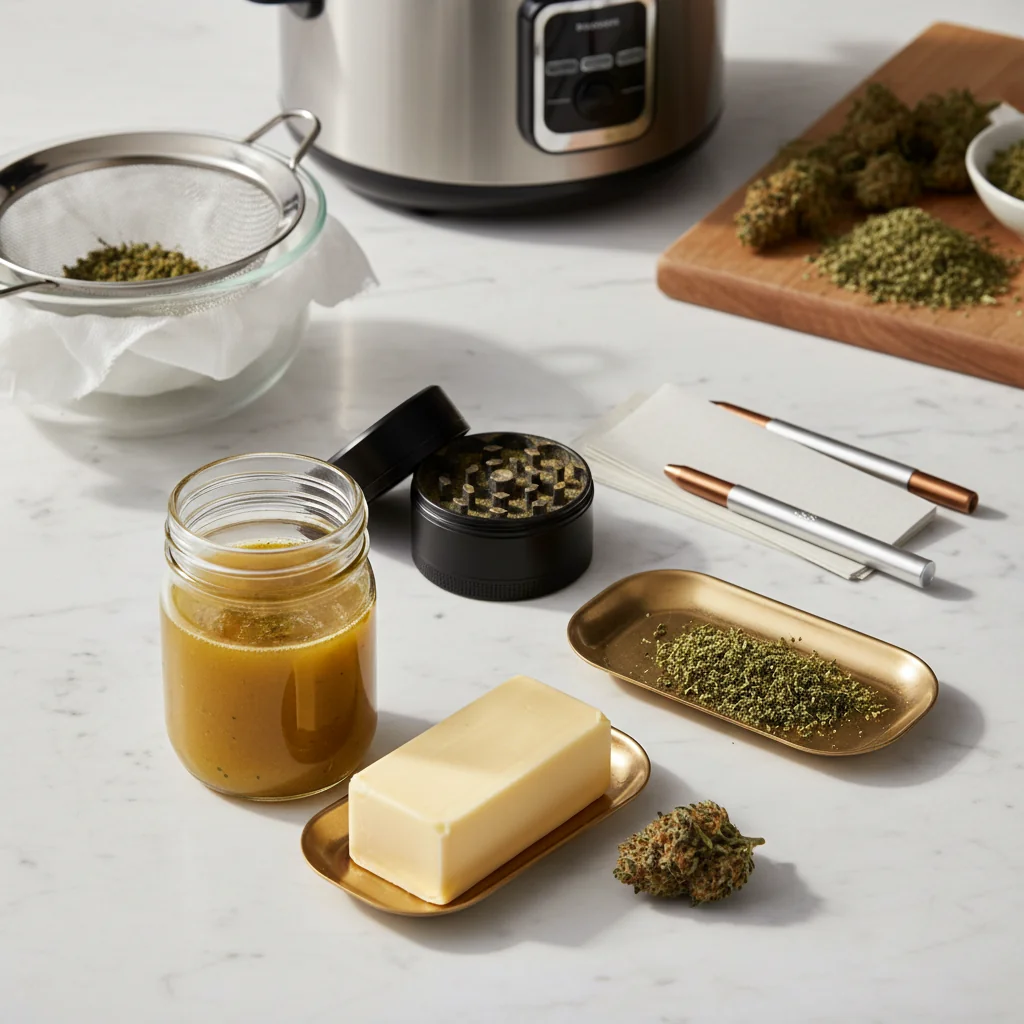
Cannabutter is the foundation of most cannabis edibles. This versatile infusion can be used in any recipe that calls for butter—from brownies and cookies to pasta and popcorn. Making it at home is straightforward, and once you master the technique, you'll have complete control over potency and quality.
This comprehensive guide walks you through every step of making perfect cannabutter, from decarboxylation to storage.
Quick Answer
Cannabutter is made by infusing butter with decarboxylated cannabis. Decarb your cannabis at 240°F for 30-40 minutes, then simmer it with butter and water on low heat for 2-3 hours. Strain out the plant material, refrigerate until butter solidifies, and remove from water. Store refrigerated for up to 2 months or frozen for 6 months.
Table of Contents
- What is Cannabutter?
- Ingredients and Equipment
- Step 1: Decarboxylation
- Step 2: Infusion
- Step 3: Straining
- Step 4: Cooling and Storage
- Calculating Potency
- Common Mistakes
- Pro Tips
- FAQ
What is Cannabutter?
Cannabutter is butter infused with cannabis, specifically the cannabinoids THC and CBD that have been activated through decarboxylation. Because THC is fat-soluble, butter serves as an excellent carrier—the fat absorbs cannabinoids, making them bioavailable when consumed.
Why Butter?
Butter is ideal for cannabis infusion because: - High fat content absorbs cannabinoids efficiently - Used in countless recipes - Familiar cooking ingredient - Creates consistent results - Stores well
Uses for Cannabutter
Once made, cannabutter can substitute regular butter in: - Brownies and cookies - Cakes and muffins - Toast and biscuits - Pasta dishes - Grilled cheese - Popcorn - Mashed potatoes - Any butter-based recipe
Ingredients and Equipment
Ingredients
Basic Recipe (1 cup cannabutter): - 1 cup (2 sticks / 227g) unsalted butter - 7-10 grams cannabis flower (or equivalent trim) - 1 cup water
Quality considerations: - Butter: Use quality unsalted butter. Higher fat content is better. European-style butter works excellently. - Cannabis: Any flower works. Higher THC = more potent butter. See potency calculation below. - Water: Helps regulate temperature and prevents burning.
Equipment
Essential: - Baking sheet and parchment paper (for decarbing) - Medium saucepan or double boiler - Cheesecloth or fine mesh strainer - Rubber band or string - Glass container or jar for storage - Thermometer (recommended)
Optional but helpful: - Grinder - Slow cooker - Infusion machine (Magical Butter, Levo, etc.)
Step 1: Decarboxylation
This step is crucial. Without decarbing, your butter won't be psychoactive.
Why Decarb First?
Raw cannabis contains THCA, which doesn't produce a high. Heat converts THCA to THC. For more details, see our full decarboxylation guide.
Decarbing Instructions
1. Preheat oven to 240°F (115°C) 2. Break up cannabis into small pieces (don't grind too fine) 3. Spread evenly on parchment-lined baking sheet 4. Bake for 30-40 minutes until golden-brown 5. Cool completely before next step
Signs of proper decarb: - Color changed from green to light brown/golden - Dry, crumbly texture - Strong aroma released
Step 2: Infusion
Now you'll transfer the cannabinoids from your decarbed flower into butter.
Stovetop Method (Most Common)
Step-by-step:
1. Add water and butter to saucepan - 1 cup water + 1 cup butter - Water prevents butter from burning
2. Heat on low until butter melts - Keep temperature below 200°F - Never let it boil
3. Add decarbed cannabis - Stir to combine - All plant material should be submerged
4. Simmer on low heat for 2-3 hours - Maintain 160-180°F (70-82°C) - Stir occasionally - Never let it boil (destroys THC) - Add water if level drops too low
5. Monitor temperature - Use a thermometer if possible - Low bubbling at surface is okay - Rapid boiling is too hot
Slow Cooker Method
Benefits: More hands-off, consistent temperature
1. Add butter, water, and decarbed cannabis to slow cooker 2. Set to LOW 3. Cook for 4-6 hours 4. Stir occasionally
Double Boiler Method
Benefits: Most gentle heating, less risk of burning
1. Fill bottom pot with water 2. Place butter and cannabis in top pot 3. Maintain gentle simmer for 3-4 hours 4. Add water to bottom pot as needed
Infusion Machine Method
Devices like Magical Butter automate the entire process: 1. Add decarbed cannabis and butter 2. Select setting and time 3. Machine handles temperature and timing
Step 3: Straining
Now you'll separate the infused butter from plant material.
Straining Instructions
1. Prepare your strainer: - Line a fine mesh strainer with cheesecloth - Or use a double layer of cheesecloth secured with rubber band over a jar
2. Place strainer over container: - Use a heat-safe glass container - Leave room for liquid
3. Carefully pour the mixture: - Let it drain naturally - Don't squeeze the cheesecloth (yet)
4. Let it drain completely: - Wait 10-15 minutes - Gentle pressing at the end is okay - Squeezing too hard pushes plant material through
5. Discard plant material: - The cannabinoids have been extracted - The leftover plant matter has minimal value
What About Leftover Plant Material?
Some uses for spent cannabis: - Composting - Some people add it to recipes (adds fiber, earthy taste) - Generally considered waste after proper infusion
Step 4: Cooling and Storage
Cooling Process
1. Let liquid cool to room temperature (30-60 minutes) 2. Cover and refrigerate overnight or until solidified 3. Remove solid butter from water - The butter will float and solidify on top - The water underneath can be discarded 4. Pat butter dry with paper towels 5. Scrape off any sediment from the bottom of the butter
Why Water Separation Works
During refrigeration: - Butter (fat) rises and solidifies - Water-soluble impurities stay in water - Result: cleaner, milder-tasting butter
Storage Options
Refrigerator: - Airtight container - Lasts 2-3 months - Best for regular use
Freezer: - Wrap in plastic, then foil - Divide into portions first - Lasts 6+ months - Best for long-term storage
Tips: - Label with date and potency - Store in opaque container (light degrades cannabinoids) - Keep away from strong odors
Calculating Potency
Knowing your cannabutter's strength is crucial for proper dosing.
Basic Formula
Milligrams of THC per serving = (Grams of cannabis × THC % × 1000 × 0.8) ÷ Number of servings
The 0.8 factor accounts for ~80% conversion efficiency during decarbing.
Example Calculation
Scenario: - 10 grams of 20% THC flower - Making 1 cup butter (16 tablespoons)
Calculation: - 10g × 0.20 (20% THC) × 1000 = 2000mg THC potential - 2000mg × 0.8 (80% efficiency) = 1600mg THC in butter - 1600mg ÷ 16 tablespoons = 100mg THC per tablespoon
Dosing Guidelines
For more information, see our edibles dosing guide.
General ranges: - Beginner: 2.5-5mg THC - Occasional user: 5-15mg THC - Regular user: 15-30mg THC - Experienced: 30-50mg+ THC
Using the example above (100mg/tablespoon): - Beginners might use 1/4 teaspoon or less per recipe portion - Calculate backwards from your recipe's butter amount
Common Mistakes
1. Skipping Decarboxylation
The most common mistake. Without decarbing, your butter will be weak or inactive.
2. Temperature Too High
Boiling butter destroys THC and creates harsh flavors. Keep it low—160-180°F is ideal.
3. Not Enough Infusion Time
Two hours minimum, three is better. Under-extracted butter leaves potency behind.
4. Over-Grinding Cannabis
Fine powder passes through strainers, creating gritty, plant-tasting butter.
5. Squeezing Cheesecloth Too Hard
Releases chlorophyll and plant matter into your butter, affecting taste.
6. Skipping the Water
Water regulates temperature and pulls out water-soluble impurities. The extra step is worth it.
7. Not Calculating Potency
Guessing leads to over- or under-dosing. Do the math.
8. Using Salted Butter
Salted butter can produce inconsistent results. Use unsalted and add salt to recipes separately.
Pro Tips
1. Use lecithin: Adding 1 tablespoon of sunflower lecithin increases bioavailability 2. Clarified butter/ghee has higher fat content and longer shelf life 3. Trim and shake work fine—just increase the amount used 4. Mark potency clearly on storage containers 5. Make small batches first to dial in your process 6. Low and slow always beats fast and hot 7. Freeze in ice cube trays for pre-portioned doses 8. Let your butter cure for a few days—flavor improves 9. Test a small amount before using in a large recipe 10. Keep a log of batches with notes for improvement
FAQ
How much cannabis should I use?
A common ratio is 1 ounce (28g) per pound of butter. For 1 cup (1/2 pound), use 7-14 grams. More cannabis = stronger butter.
Can I use trim instead of flower?
Yes. Trim contains cannabinoids, though less concentrated. Use 2-3x the amount you'd use of flower.
How long does cannabutter last?
Refrigerated in airtight container: 2-3 months. Frozen: 6+ months. Signs of spoilage match regular butter.
Why is my butter green?
Green color comes from chlorophyll extraction. It doesn't affect potency but may affect taste. The water method helps reduce this.
Can I make it without water?
Yes, but water helps regulate temperature and produces cleaner butter. The extra step is recommended.
Why didn't my edibles work?
Common causes: forgot to decarb, temperature too high (destroyed THC), not enough infusion time, or under-dosed. See our troubleshooting guide.
Can I use margarine or vegan butter?
Yes, as long as it contains fat. Results may vary—look for high-fat plant-based options.
Do I need to use water?
Highly recommended. Water helps regulate temperature and removes water-soluble impurities for better-tasting butter.
How do I make stronger butter?
Use more cannabis, use higher-THC flower, or infuse for longer (up to 4-6 hours on very low heat).
Conclusion
Making cannabutter at home is a rewarding skill that opens up endless possibilities for cannabis edibles. The key steps are simple: decarboxylate first, infuse low and slow, strain carefully, and store properly.
Remember to calculate your potency before baking, start with lower doses, and always label your creations. With practice, you'll develop a consistent process that produces reliably potent, good-tasting cannabutter every time.
Ready to use your cannabutter? Check out our edibles recipes or learn about proper edibles dosing to ensure a safe, enjoyable experience.
Frequently Asked Questions
A common ratio is 7-14 grams per cup of butter. More cannabis equals stronger butter. Start with 7 grams for your first batch.
Refrigerated in airtight container: 2-3 months. Frozen: 6+ months. Signs of spoilage match regular butter.
Yes, always decarb first. Without decarboxylation, your butter will be weak or inactive because THCA hasn't converted to THC.
Green color comes from chlorophyll extraction. It doesn't affect potency but may affect taste. Using water during infusion helps reduce this.
Common causes: forgot to decarb, temperature too high, not enough infusion time, or under-dosed. Always decarb at 240°F for 30-40 minutes first.
Related Guides

Best Cannabis Brownies Recipe: Classic Pot Brownie Guide
Perfect cannabis brownies recipe with step-by-step instructions. Learn proper cannabutter ratios, baking temperatures, dosing calculations, and tips for consistent, delicious pot brownies.

Calculating THC Dosage in Edibles: The Complete Math Guide
Master the math behind cannabis edible dosing. Complete formulas for calculating THC content, extraction efficiency charts, worked examples, and a quick reference cheat sheet.

How to Make Cannabis Chocolate Truffles: Infused Confection Recipe
Elegant cannabis chocolate truffle recipe with precise dosing. No-bake ganache method using cannabis coconut oil. Coating options, flavor variations, and storage tips.