

Comment faire de l'huile de noix de coco : guide complet de perfusion
Comment faire de l'huile de noix de coco : guide complet de perfusion
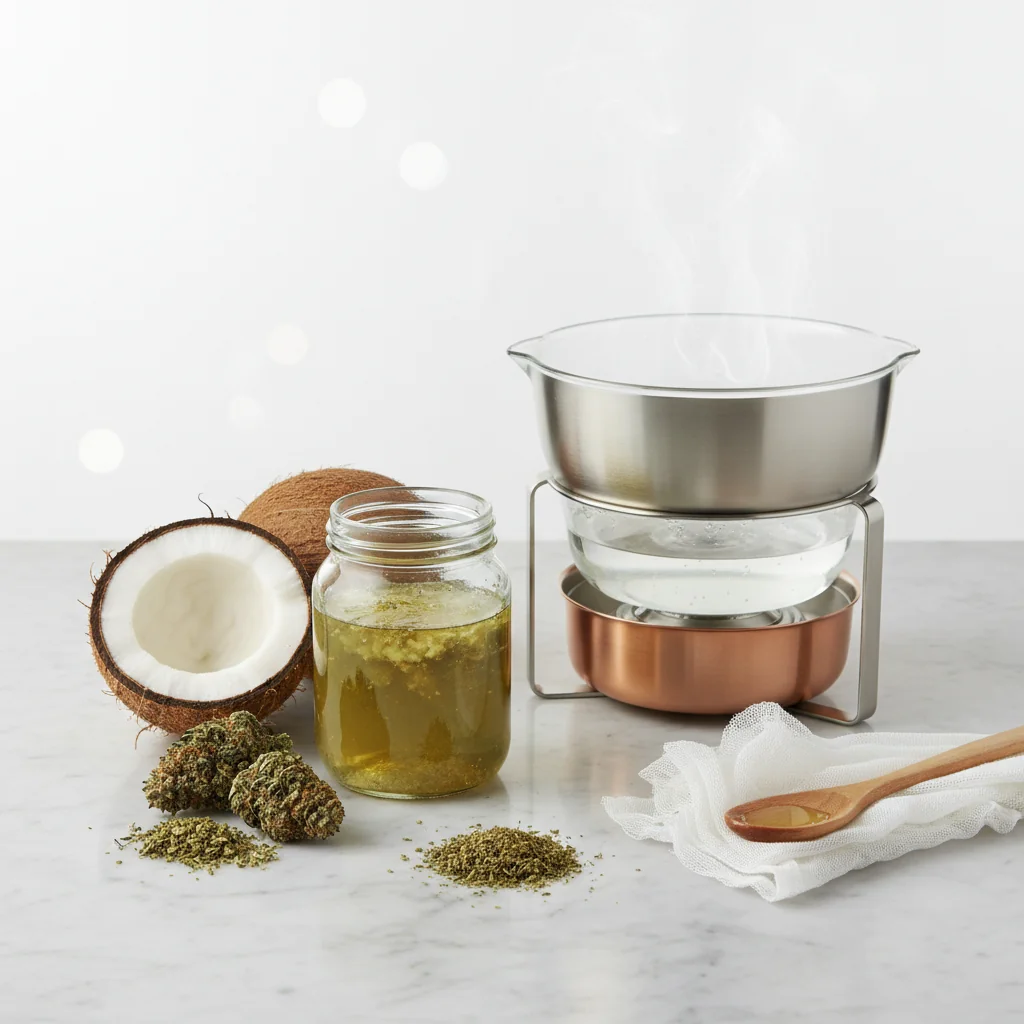
L'huile de coco infusée au cannabis est l'une des bases comestibles les plus polyvalentes. Sa teneur élevée en graisses saturées le rend exceptionnellement efficace pour extraire les cannabinoïdes, tandis que sa saveur neutre fonctionne dans les recettes sucrées et salées.
réponse rapide
Pour faire du cannabis, l'huile de noix de coco : décarboxyler le cannabis à 240 °F pendant 45 minutes, mélanger avec de l'huile de noix de coco dans un bain-marie à 160-180 °F pendant 2 à 4 heures, filtrer à travers une étamine et conserver dans un récipient hermétique. Utilisez 1 tasse d'huile de noix de coco à 7-14 grammes de cannabis décarbé.
Pourquoi l'huile de coco excelle pour l'infusion de cannabis
Contenu supérieur en matières gra
L'huile de coco contient environ 82 % de graisses saturées, soit plus que celles du beurre à 63 %. Les graisses saturées lient les cannabinoïdes plus efficacement que les graisses insaturées.
Plus de graisse = plus d'absorption = plus forte infusion
Avantage MCT
Une grande partie de la graisse de l'huile de coco est constituée de triglycérides à chaîne moyenne (MCT), qui sont métabolisés plus rapidement que les autres graisses. Cela peut entraîner une apparition plus rapide des effets par rapport aux produits comestibles à base de beurre.
polyvalence
- Solide à température ambiante (inférieure à 76 °F)
- Liquide à chaud
- Longue durée de conservation (mois sans réfrigération)
- Profil de saveur neutre
- Végétalien et sans produits laitiers
- Fonctionne dans la cuisson, la cuisson et les capsules
Ce dont vous avez besoin
ingrédients
- 1 tasse (225g) d'huile de noix de coco (raffinée ou non)
- 7 -14 grammes de cannabis décarboxylé
- En option : 1 cuillère à café de lécithine de tournesol
équipement
- Double chaudière ou mijoteuse
- thermomètre
- Éclou de fromage ou passoire à mailles fines
- Pot en verre pour le stockage
- Ustensile remuant
Infusion d'huile de coco étape par étape
Étape 1 : Décarboxyler le cannabis
Étalez du cannabis sur une plaque à pâtisserie tapissée de papier sulfurisé. Cuire au four à 240 °F pendant 40 à 60 minutes jusqu'à ce qu'ils soient dorés. Refroidir complètement.
Étape 2 : Configurer le double-chauffeur
Remplissez le pot de fond avec 1 à 2 pouces d'eau. Placez un bol en verre ou un pot plus petit sur le dessus. Cela empêche la chaleur et la combustion directes.
Pas de double chaudière ?Utilisez la mijoteuse à feu doux ou placez le pot Mason dans une casserole d'eau frémissante.
Étape 3 : Faire fondre l'huile de noix de coco
Ajouter de l'huile de coco sur le dessus du bain-marie. Chauffer jusqu'à ce qu'il soit complètement fondu
faire basculer: Utilisez de l'huile de noix de coco raffinée pour une saveur neutre, non raffinée pour un goût subtil de noix de coco.
Étape 4 : Ajouter du cannabis décarburé
Incorporer le cannabis décarboxylé à l'huile fondue. Assurez-vous que tout le matériel végétal est enduit.
en option: Ajouter 1 cuillère à café de lécithine de tournesol. Cet émulsifiant aide les cannabinoïdes à se lier plus efficacement aux graisses, augmentant potentiellement la puissance.
Étape 5 : Infusez pendant 2 à 4 heures
Maintenez la température entre 160 et 180 °F (70 à 82 °C). Remuer toutes les 30 minutes.
Lignes directrices sur:
- Minimum : 2 heures
- Standard : 3-4 heures
- Maximum : 6 heures (les rendements décroissants au-delà de cela)
Étape 6 : Essuyez soigneusement
Tapisser une passoire avec une étamine sur un récipient résistant à la chaleur. Versez l'huile lentement à travers le cheesecloth.
Appuyez doucement pour extraire l'huile. Évitez de serrer fort - cela ajoute du goût de la plante.
Étape 7 : Stockez correctement
Transférer dans un bocal en verre. L'huile de coco se solidifie à température ambiante, ce qui est très bien pour le stockage.
Méthode de la mijoteuse
Pour les infusions sans intervention :
1. Combinez l'huile de noix de coco fondue et le cannabis décarbé dans la mijoteuse
2 Ajoutez 1/4 tasse d'eau pour éviter les brûlures
3. Réglage le plus bas ou "Gardez au chaud"
4. Infuser pendant 4 à 6 heures
5. Filtrer et laisser l'eau se séparer (le cas échéant)
6. Conserver dans un conteneur hermétique
Choisir votre type d'huile de coco
Huile de noix de coco raffinée
- Pas de goût ni d'odeur de noix de coco
- Point de fumée plus élevé (400 °F)
- Idéal pour la cuisson et la cuisson
- Un peu moins de nutriments
Huile de noix de coco non raffinée (vierge)
- Saveur de noix de coco
- Point de fumée inférieur (350 °F)
- Conserve plus de nutriments
- Mieux pour les applications sans cuisson
Huile de coco fractionnée (huile MCT)
- Toujours liquide
- Aucune saveur
- Idéal pour les teintures et les capsules
- ne solidifie pas
Doser votre huile de noix de coco au cannabis
Calcul de puissance
Exemple de 10 g de cannabis à 20 % de THC:
- 10g x 0,20 x 1000 = 2 000 mg de THC total
- Après perfusion (80% d'efficacité) : 1 600 mg de THC
- par cuillère à soupe (16 par tasse) : 100 mg de THC
Suggestions de service
- débutant: 1/4 cuillère à soupe (25 mg si vous utilisez l'exemple ci-dessus)
- Utilisateurs réguliers: 1/2 cuillère à soupe (50 mg)
- éprouvé: 1 cuillère à soupe (100 mg)
Commencez toujours à basse température et attendez 2 heures avant de consommer davantage.
Utilisations créatives de l'huile de noix de coco du
Cuisiner et pâtisserie
- Remplacez l'huile ou le beurre dans les recettes
- sauter les légumes
- Graisser les moules à pâtisserie
- Ajouter aux smoothies
Consommation directe
- avaler par la cuillerée
- Ajouter au café ou au thé
- Mélanger dans du chocolat chaud
- Mélanger à la farine d'avoine
capsules
- Remplir des capsules de gel vides pour un dosage précis
- Pas de goût, facile à prendre
- Stocker dans un endroit frais et sombre
topiques
- L'huile de noix de coco de cannabis peut être appliquée sur la
- Peut aider à s'attaquer à l'inconfort localisé
- Mélangez avec des huiles essentielles pour des effets améliorés
Stockage et durée de conservation
température ambiante
6 à 12 mois dans un récipient hermétique à l'abri de la lumière. Les propriétés antimicrobiennes naturelles de l'huile de coco prolongent la durée de conservation.
réfrigérateur
12+ mois. L'huile sera solide mais scoopable.
congélateur
Stockage indéfini. se mettre en colèreverglasPlateau de cube pour le contrôle des portions.
signes de détérioration
- odeur ou goût
- Moule (rare mais possible)
- Couleur considérablement modifiée
intervention pour régler une panne
L'huile n'est pas assez puissante
- Le cannabis n'était pas correctement décarboxylé
- Température de perfusion trop basse
- n'a pas infusé assez longtemps
- utilisé trop peu de cannabis
L'huile a un goût très herbacé
- Tissu de fromage pressé trop fort
- Infusé trop longtemps (plus de 8 heures)
- Garniture usagée avec des tiges en excès
L'huile a une texture granuleuse
- Normal - certaines matières végétales sont passées par la crépine
- Filtrez à nouveau avec un maillage plus fin
- N'affecte pas la puissance
Huile de noix de coco de cannabiscannabuteur
L'huile de noix de coco de cannabis est l'infusion la plus polyvalente pour la fabrication comestible moderne. Sa longue durée de vie et sa saveur neutre en font un incontournable de la cuisine.
Step 1:
Step 2:
Step 3:
Step 4:
Step 5:
Frequently Asked Questions
L'huile de coco a une teneur en graisses saturées plus élevée (82 % vs 63 %) qui lie les cannabinoïdes plus efficacement. Il est également végétalien, a une durée de conservation plus longue et une saveur plus neutre.
Utilisez de l'huile de noix de coco raffinée pour une saveur neutre dans les recettes. L'huile de noix de coco non raffinée (virgin) a un goût subtil de noix de coco, qui fonctionne bien dans les smoothies et les recettes tropicales.
Oui, l'huile de noix de coco de cannabis est parfaite pour remplir les capsules de gel. Il fournit un dosage précis sans goût. Conservez les capsules dans un endroit frais et sombre.
L'huile de noix de coco de cannabis correctement stockée dure 6 à 12 mois à température ambiante ou sur un an au réfrigérateur. Les propriétés antimicrobiennes naturelles de l'huile de coco prolongent la durée de conservation.
Related Guides

Best Cannabis Brownies Recipe: Classic Pot Brownie Guide
Perfect cannabis brownies recipe with step-by-step instructions. Learn proper cannabutter ratios, baking temperatures, dosing calculations, and tips for consistent, delicious pot brownies.

Calculating THC Dosage in Edibles: The Complete Math Guide
Master the math behind cannabis edible dosing. Complete formulas for calculating THC content, extraction efficiency charts, worked examples, and a quick reference cheat sheet.

How to Make Cannabis Chocolate Truffles: Infused Confection Recipe
Elegant cannabis chocolate truffle recipe with precise dosing. No-bake ganache method using cannabis coconut oil. Coating options, flavor variations, and storage tips.