

كيفية صنع زيت جوز الهند القنب: دليل التسريب الكامل
كيفية صنع زيت جوز الهند القنب: دليل التسريب الكامل
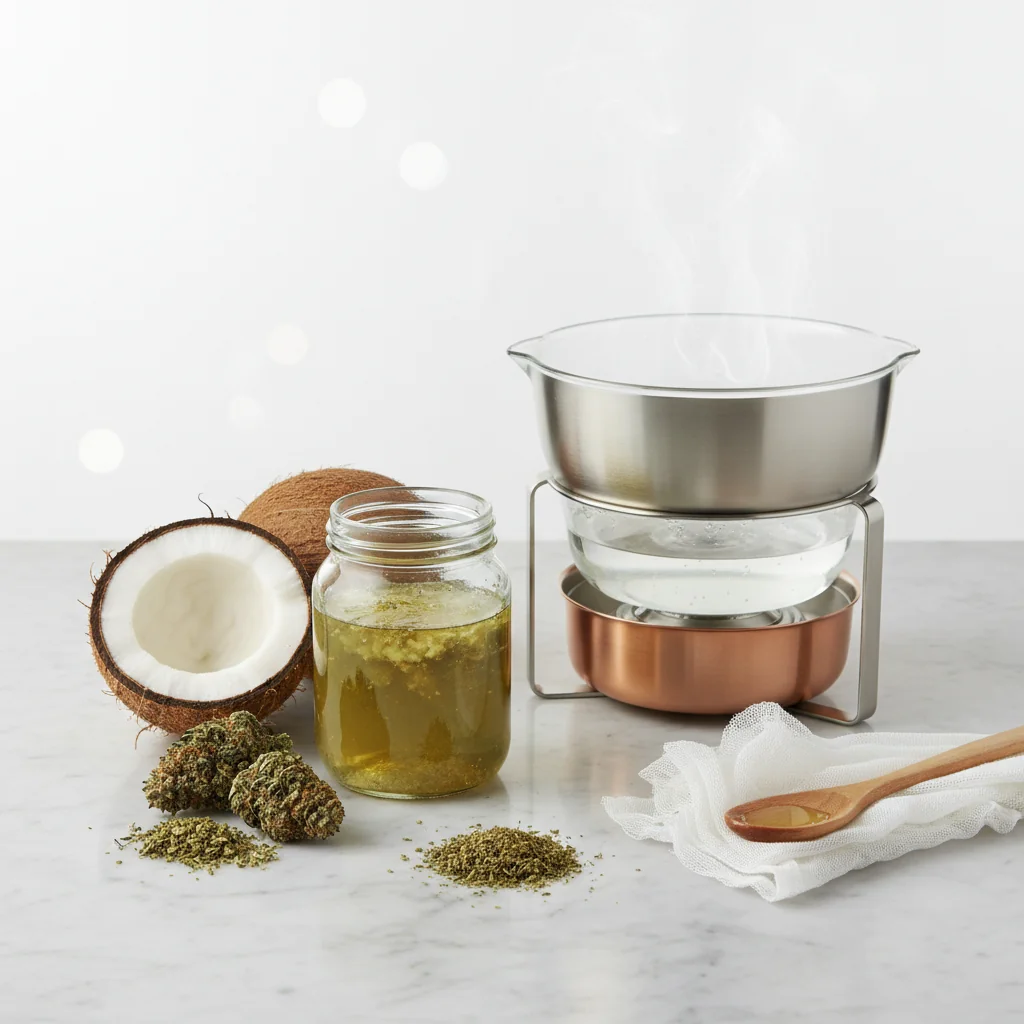
يعتبر زيت جوز الهند المملوء بالقنب أحد أكثر القواعد الصالحة للأكل تنوعًا. محتواه العالي من الدهون المشبعة يجعله فعالاً بشكل استثنائي في استخراج القنب ، بينما تعمل نكهته المحايدة في كل من الوصفات الحلوة والمالحة.
إجابة سريعة
لصنع زيت جوز الهند القنب: حشيشة ديكاربوكسيلات عند 240 درجة فهرنهايت لمدة 45 دقيقة ، امزجها مع زيت جوز الهند في غلاية مزدوجة عند 160-180 درجة فهرنهايت لمدة 2-4 ساعات ، صفيها من خلال القماش ، واحفظها في وعاء محكم الإغلاق. استخدم 1 كوب من زيت جوز الهند إلى 7-14 جرام من القنب المكدس.
لماذا يتفوق زيت جوز الهند في تسريب القنب
محتوى الدهون المتفوق
يحتوي زيت جوز الهند على حوالي 82٪ دهون مشبعة - أعلى من الزبدة 63٪. الدهون المشبعة تربط القنب بكفاءة أكبر من الدهون غير المشبعة.
المزيد من الدهون = امتصاص أكبر = تسريب أقوى
ميزة MCT
الكثير من دهون جوز الهند عبارة عن دهون ثلاثية متوسطة السلسلة (MCTs) ، والتي يتم استقلابها بشكل أسرع من الدهون الأخرى. يمكن أن يؤدي هذا إلى ظهور تأثيرات أسرع مقارنة بالأطعمة التي تحتوي على الزبدة.
تعددية الاستخدامات
- صلبة في درجة حرارة الغرفة (أقل من 76 درجة فهرنهايت)
- سائل عندما يكون دافئ
- عمر الصلاحية الطويل (شهور بدون تبريد)
- ملف نكهة محايدة
- نباتي وخالي من منتجات الألبان
- يعمل في الخبز والطبخ والكبسولات
ما تحتاجه
مقادير
- 1 كوب (225 جم) زيت جوز الهند (مكرر أو غير مكرر)
- 7 -14 جرام من القنب المنزوعة الكربوكسيل
- اختياري: 1 ملعقة صغيرة ليسيثين عباد الشمس
تجهيزات
- غلاية مزدوجة أو طباخ بطيء
- ميزان الحرارة
- شاش أو مصفاة شبكية دقيقة
- جرة زجاجية للتخزين
- أدوات التحريك
ضخ زيت جوز الهند خطوة بخطوة
الخطوة 1: قنب ديكاربوكسيل
انشر القنب على لوح خبز مبطن بالرق. اخبزيها على حرارة 240 درجة فهرنهايت لمدة 40-60 دقيقة حتى يصبح لونها بنياً ذهبياً. تبرد تماما.
الخطوة 2: إعداد غلاية مزدوجة
املأ الوعاء السفلي بـ 1-2 بوصة من الماء. ضع وعاء زجاجي أو وعاء أصغر في الأعلى. هذا يمنع الحرارة المباشرة والحرق.
لا غلاية مزدوجة؟استخدم طباخًا بطيئًا على مستوى منخفض ، أو ضع جرة ميسون في وعاء من الماء المغلي.
الخطوة 3: تذوب زيت جوز الهند
أضف زيت جوز الهند إلى أعلى الغلاية المزدوجة. سخني حتى تذوب بالكامل.
مال: استخدم زيت جوز الهند المكرر للحصول على نكهة محايدة ، غير مكرر لطعم جوز الهند الخفيف.
الخطوة 4: إضافة القنب الكربيد
يقلب القنب منزوع الكربوكسيل إلى زيت مذاب. تأكد من طلاء جميع المواد النباتية.
غير ملائم: أضف 1 ملعقة صغيرة ليسيثين عباد الشمس. يساعد هذا المستحلب على ربط القنب بالدهون بشكل أكثر كفاءة ، مما قد يزيد من الفاعلية.
الخطوة 5: ينقع لمدة 2-4 ساعات
الحفاظ على درجة الحرارة بين 160-180 درجة فهرنهايت (70-82 درجة مئوية). يقلب كل 30 دقيقة.
إرشادات الوقت:
- الحد الأدنى: 2 ساعة
- قياسي: 3-4 ساعات
- الحد الأقصى: 6 ساعات (تقلص العوائد بعد ذلك)
الخطوة 6: إجهاد
مصفاة مع قماش الجبن فوق حاوية مقاومة للحرارة. صب الزيت ببطء من خلال القماش القطني.
اضغط برفق لاستخراج الزيت. تجنب الضغط بشدة - وهذا يضيف طعم النبات.
الخطوة 7: تخزينها بشكل صحيح
نقل إلى جرة زجاجية. زيت جوز الهند يتصلب في درجة حرارة الغرفة وهو جيد للتخزين.
طريقة طبخ بطيء
للتسريب:
1. يُمزج زيت جوز الهند المذاب والقنب المكدس في طباخ بطيء
2 أضف 1/4 كوب ماء لمنع الحرق
3. اضبط على أدنى إعداد أو "حافظ على الدفء"
4. ينقع لمدة 4-6 ساعات
5. سلالة ودع الماء ينفصل (إن وجد)
6. تخزين في حاوية محكم الغلق
اختيار نوع زيت جوز الهند
زيت جوز الهند المكرر
- لا طعم أو رائحة جوز الهند
- نقطة دخان أعلى (400 درجة فهرنهايت)
- أفضل للخبز والطبخ
- مغذيات أقل بقليل
زيت جوز الهند غير المكرر (العذراء)
- نكهة جوز الهند اللطيفة
- نقطة دخان منخفضة (350 درجة فهرنهايت)
- يحتفظ بمزيد من العناصر الغذائية
- أفضل لتطبيقات عدم الطهي
زيت جوز الهند المجزأ (زيت MCT)
- دائما سائل
- لا نكهة
- مثالي للصبغات والكبسولات
- لا يثبت
جرعات زيت جوز الهند القنب
حساب الفاعلية
مثال مع 10 جرام من القنب بنسبة 20٪ THC:
- 10 جرام × 0.20 × 1000 = 2000 مجم إجمالي THC
- بعد التسريب (الكفاءة 80%): 1600 مجم THC
- لكل ملعقة (16 كوب): 100 مجم THC
اقتراحات الخدمة
- مستهل: 1/4 ملعقة كبيرة (25 مجم إذا كنت تستخدم المثال أعلاه)
- المستخدمون العاديون: 1/2 ملعقة كبيرة (50 مجم)
- محنك: 1 ملعقة كبيرة (100 مجم)
ابدأ دائمًا منخفضًا وانتظر ساعتين قبل استهلاك المزيد.
استخدامات مبتكرة لزيت جوز الهند القنب
الطبخ والخبز
- استبدل أي زيت أو زبدة في الوصفات
- سوتيه خضروات
- ادهني صواني الخبز
- أضف إلى العصائر
الاستهلاك المباشر
- ابتلاع بالملعقة
- أضف إلى القهوة أو الشاي
- امزجي في الشوكولاتة الساخنة
- تخلط في دقيق الشوفان
كبسولات
- ملء كبسولات الجل الفارغة لجرعات دقيقة
- لا طعم ، سهل الاستيعاب
- تخزين في مكان بارد ومظلم
مواضيع
- يمكن تطبيق زيت جوز الهند على الجلد
- قد يساعد في حل الانزعاج الموضعي
- امزج مع الزيوت الأساسية للحصول على تأثيرات معززة
التخزين ومدة الصلاحية
درجة حرارة الغرفة
6-12 شهرًا في حاوية محكمة الإغلاق بعيدًا عن الضوء. تمتد خصائص مضادات الميكروبات الطبيعية لزيت جوز الهند إلى صلاحية الصلاحية.
ثلاجة
12+ شهر. سيكون الزيت صلبًا ولكن قابلًا للغسل.
فريزر
تخزين غير محدد. جمدجليدصينية مكعب للتحكم في جزء.
علامات الفساد
- من الرائحة أو الذوق
- قالب (نادر ولكن ممكن)
- تغير لونه بشكل كبير
استكشاف الأخطاء وإصلاحها
النفط ليس قويا بما فيه الكفاية
- لم يكن القنب منزوع الكربوكسيل بشكل صحيح
- درجة حرارة التسريب منخفضة للغاية
- لم تنقش لفترة كافية
- استخدم القليل من الحشيش
طعم الزيت معشب جدا
- ضمادة جبنية قاسية جدا
- ينقع طويلا جدا (أكثر من 8 ساعات)
- تستخدم تقليم مع سيقان زائدة
الزيت له نسيج محبب
- عادي - بعض المواد النباتية تمر عبر مصفاة
- سلالة مرة أخرى مع شبكة أدق
- لا يؤثر على الفاعلية
زيت جوز الهند القنب مقابلخادمة المستنشق
زيت جوز الهند القنب هو التسريب الأكثر تنوعًا لصنع الأكل الحديث. مدة صلاحية طويلة ونكهة محايدة تجعلها عنصرًا أساسيًا في المطبخ.
Step 1:
Step 2:
Step 3:
Step 4:
Step 5:
Frequently Asked Questions
يحتوي زيت جوز الهند على نسبة أعلى من الدهون المشبعة (82٪ مقابل 63٪) والتي تربط القنب بشكل أكثر كفاءة. كما أنها نباتية ، ولها مدة صلاحية أطول ، ونكهة أكثر حيادية.
استخدم زيت جوز الهند المكرر للحصول على نكهة محايدة في الوصفات. زيت جوز الهند غير المكرر (البكر) له طعم جوز الهند اللطيف ، والذي يعمل بشكل جيد في العصائر والوصفات الاستوائية.
نعم، زيت جوز الهند القنب مثالي لملء كبسولات الجل. يوفر جرعات دقيقة بدون طعم. قم بتخزين الكبسولات في مكان بارد ومظلم.
يدوم زيت جوز الهند القنب المخزن بشكل صحيح من 6 إلى 12 شهرًا في درجة حرارة الغرفة ، أو أكثر من عام مبرد. تمتد خصائص مضادات الميكروبات الطبيعية لزيت جوز الهند إلى صلاحية الصلاحية.
Related Guides

Best Cannabis Brownies Recipe: Classic Pot Brownie Guide
Perfect cannabis brownies recipe with step-by-step instructions. Learn proper cannabutter ratios, baking temperatures, dosing calculations, and tips for consistent, delicious pot brownies.

Calculating THC Dosage in Edibles: The Complete Math Guide
Master the math behind cannabis edible dosing. Complete formulas for calculating THC content, extraction efficiency charts, worked examples, and a quick reference cheat sheet.

How to Make Cannabis Chocolate Truffles: Infused Confection Recipe
Elegant cannabis chocolate truffle recipe with precise dosing. No-bake ganache method using cannabis coconut oil. Coating options, flavor variations, and storage tips.