

大麻儲存的溫度與濕度指南

Lisa Thompson
Storage & Preservation Specialist
大麻儲存的溫度與濕度指南
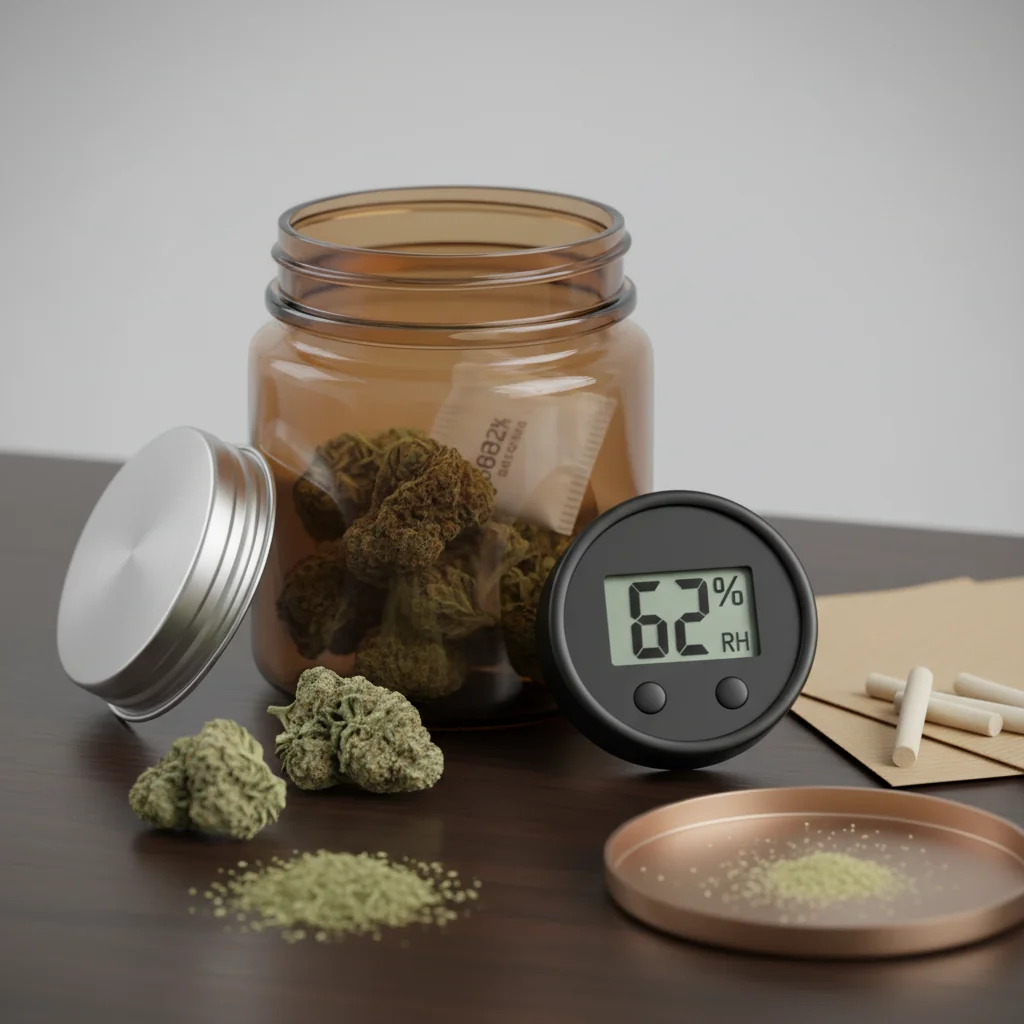
溫度和濕度是影響大麻儲存品質的兩個最關鍵環境因素。了解如何控制這些元素可以決定新鮮、強效的花朵與乾燥、降解的大麻之間的差異。本綜合指南解釋了最佳儲存條件的科學和實踐。
快速回答
理想的大麻儲存條件:溫度在60-70°F(15-21°C)之間,相對濕度在58-62%之間。超過77°F的溫度會加速THC降解;超過65%的濕度會促進霉菌生長。在密閉容器中使用濕度包(Boveda或Integra),儲存在陰涼的地方,並用濕度計進行監控。
為什麼溫度和濕度很重要
大麻隨時間的變化
大麻是一種有機材料,通過幾個過程降解:
氧化: 接觸氧氣會將THC分解為CBN(較少精神活性)
光照: 紫外線會降解大麻素和萜類化合物
熱損傷: 高溫會加速所有降解過程
濕度問題: 太乾 = 脆弱的毛狀體;太濕 = 霉菌風險
適當的溫度和濕度控制可以減緩所有這些過程。
有關儲存容器和濕度控制,請查看 MunchMakers防臭儲存。有關濕度測量科學, 國家氣象局 提供全面的氣候信息。
大麻降解的科學
溫度影響
臨界溫度: 77°F (25°C) 是降解明顯加速的溫度。
濕度影響
目標濕度: 58% 以偏好乾燥,62% 以獲得更多濕度。
理解相對濕度
什麼是相對濕度?
相對濕度 (RH) 測量空氣中水蒸氣的量,相對於在該溫度下它能容納的最大量。
關鍵概念: 溫暖的空氣能容納更多水分。因此,在溫暖的條件下,相同量的水蒸氣顯示為較低的相對濕度,而在寒冷的條件下則顯示為較高的相對濕度。
這就是為什麼溫度和濕度是相互關聯的 - 你無法控制一個而不影響另一個。
為什麼58-62%是最佳範圍
低於58%:
- 大麻變得脆弱
- 樹脂腺破裂並掉落
- 煙霧刺喉,熱
- 萜類揮發
- 紙張不易粘合(用於捲煙)
超過62%:
- 霉菌孢子可以發芽
- 大麻變得過於潮濕
- 燃燒不均
- 可能會「重新濕潤」,需要重新固化
濕度控制方法
雙向濕度包
它們是什麼:包含鹽溶液的包裝,可以釋放或吸收水分以維持特定的相對濕度(RH)水平。
熱門品牌:
- Boveda:行業標準,精確控制
- Integra Boost:類似技術,顏色指示器
它們是如何工作的:
- 在62% RH的包裝在低濕度環境中:釋放水分
- 在62% RH的包裝在高濕度環境中:吸收水分
- 在目標相對濕度下保持平衡
尺寸:
- 1克包裝:小罐(1/8盎司)
- 4克包裝:中罐(最多1/2盎司)
- 8克包裝:大罐(最多1盎司)
- 67克包裝:雪茄盒和大宗儲存
何時更換:當包裝感覺堅硬/脆而不是柔軟時。通常2-4個月。
替代濕度方法
DIY選項 (不太精確):
柑橘皮:快速增加水分,但有霉菌風險。僅適用於短期(幾小時)。
生菜葉:類似於柑橘 - 快速解決方案,非長期解決方案。
小容器中的蒸餾水:可以在雪茄盒中使用,但需要監控。
建議:雙向濕度包便宜且可靠。使用它們。
溫度控制方法
位置選擇
最佳儲存位置:
- 內部壁櫥(穩定溫度)
- 地下室(如果乾燥且穩定)
- 遠離電器的櫃子
- 抽屜
避免:
- 靠近窗戶(溫度波動)
- 靠近HVAC通風口(乾燥空氣)
- 靠近爐子/電器(熱量)
- 車庫(極端波動)
- 冰箱(見下文)
冰箱問題
常見迷思:將大麻儲存在冰箱中可以保持新鮮。
現實:冰箱存在問題,因為:
- 濕度水平通常為30-40%(過於乾燥)
- 打開門時溫度會波動
- 取出時的冷凝水可能會增加不必要的濕氣
- 強烈的食物氣味可能會吸附到大麻上
冷凍庫:更糟 - 當冷凍時,樹脂腺會變脆並斷裂,處理會造成重大損失。
判決:在適當容器中室溫儲存對於大多數情況來說優於冰箱。
何時冷藏是合理的
例外:在真空密封容器中長期儲存(6個月以上)可能會受益於較低的溫度。但這是針對大宗儲存,而非日常使用。
監控您的環境
濕度計
它們測量什麼:相對濕度(通常還有溫度)
類型:
數字濕度計 ($5-20):
- 通常準確到±3-5%
- 易於閱讀
- 電池供電
- 有些具有最小/最大記憶功能
類比濕度計 ($3-15):
- 準確度較低(±10%)
- 需要校準
- 反應較慢
- 可能不可靠
迷你濕度計 ($3-8):
- 可放入罐子內
- 小顯示屏
- 基本但實用
推薦:為每個儲存罐購買一個數字迷你濕度計。它們便宜且非常重要。
校準您的濕度計
鹽測試方法:
1. 將濕度計放入密封容器中,內有鹽/水混合物
2. 等待8-12小時
3. 應顯示75%相對濕度
4. 記下差異以進行偏移調整
大多數便宜的濕度計偏差2-5%。了解您的偏移量可以提高準確性。
最佳儲存設置
完整系統
容器:密封玻璃(梅森罐、CVault等)
濕度控制:根據容器大小選擇Boveda或Integra包
監控:迷你濕度計放在內部或透過玻璃可見
位置:涼爽、黑暗、穩定的溫度區域
光線阻擋:琥珀色玻璃或不透明容器,或黑暗的儲存位置
設置檢查清單
1. 選擇合適的容器大小(不要在大型罐子中儲存少量物品)
2. 添加 濕度包 根據您的偏好評級(58%或62%)
3. 將濕度計放入內部或使用帶內建顯示屏的蓋子
4. 存放在穩定的溫度區域(60-70°F)
5. 在第一個月每週檢查一次,然後每月檢查一次
季節性考量
夏季儲存
挑戰:
- 較高的環境溫度
- 空調可能會過度乾燥
- 停電風險導致熱暴露
解決方案:
- 將物品存放在家中最涼爽的地方(地下室、內部衣櫃)
- 如果空調持續運行,則添加額外的濕度包
- 考慮在冷卻器中使用密封容器以備停電(不冷凍)
冬季儲存
挑戰:
- 供暖系統會大幅降低室內濕度
- 冬季家庭的相對濕度通常為25-35%
- 靠近外牆的寒冷房間
解決方案:
- 濕度包需要加倍使用 - 更頻繁地更換
- 遠離加熱器和散熱器
- 考慮在儲存區域附近添加房間加濕器
環境問題的跡象
儲存過於乾燥的跡象
- 大麻碎裂而不是斷裂
- 刺喉的刺鼻煙霧
- 容器中可見的樹脂粉塵
- 紙張不會粘附在大麻上
- 脆弱的棕色外觀
儲存過於潮濕的跡象
- 大麻感覺潮濕或海綿狀
- 可見的白色絨毛(霉菌)
- 氨或霉味
- 無法正常研磨(粘附)
- 延長燃燒時間,不均勻燃燒
熱損傷的跡象
- 棕色發展
- 香氣喪失
- 儘管有濕度控制仍然乾燥
- 效力降低
- "乾草"氣味出現
恢復策略
重新水合過於乾燥的大麻
使用濕度包:
- 將62%的Boveda放入容器中
- 密封並等待24-48小時
- 檢查並在需要時重複
- 對於中度乾燥效果良好
注意:因蒸發而損失的萜類無法恢復。重新水合恢復濕度,而不是原始品質。
處理過於潮濕的大麻
快速乾燥:
- 從容器中取出
- 暴露30-60分鐘
- 放回含58%包的容器中
- 密切監控
如果懷疑有霉菌:丟棄。霉菌會散播微小的孢子。健康風險不值得。
長期儲存(6個月以上)
特殊考量
為了延長儲存,額外的預防措施有助於:
真空密封:去除氧氣,顯著減緩氧化
較大的濕度包:在長期儲存期間不會耗盡
較低的溫度:60-65°F比70°F更適合長期儲存
最小開啟:每次開啟都會引入新鮮氧氣
分開容器:不要將一個月的供應與一年的供應儲存一起
預期的降解時間表
常見錯誤
錯誤 1:使用過大的容器
問題:大空氣空間意味著更多氧氣,更快降解
解決方案:使用適合您數量的容器(理想為 2/3 滿)
錯誤 2:儲存於熱源附近
問題:即使靠近電子產品和家電也會提高溫度
解決方案:用溫度計對您的儲存位置進行 24 小時的審核
錯誤 3:頻繁開啟
問題:每次開啟都會用環境空氣(通常更乾燥)替換潮濕空氣
解決方案:將日常使用的儲備與大宗儲存分開
錯誤 4:忽視濕度包的壽命
問題:失效的包無法控制濕度
解決方案:每月檢查,當變硬/脆時更換
錯誤 5:混合不同的濕度需求
問題:不同的品種可能偏好不同的相對濕度
解決方案:分開儲存,特別是印度大麻(通常喜歡較乾燥)與薰衣草大麻
常見問題
問:我可以用雪茄保濕盒來儲存大麻嗎?
答:可以,但傳統的保濕盒目標是70%相對濕度(對於大麻來說太高了)。你可以用Boveda包替換保濕裝置,效果很好。避免使用雪松內襯的版本——木油可能會轉移風味。
問:我怎麼知道我的濕度包是否有效?
答:它應該感覺柔軟且有彈性。當它變硬或脆時,表示已經耗盡。Integra Boost包有顏色指示器,顯示何時需要更換。
問:55%的濕度對大麻來說安全嗎?
答:55%不會導致霉菌,但偏乾。你可能會注意到煙霧稍微刺喉,香氣不那麼明顯。58%通常被認為是品質保存的最低標準。
本指南僅供教育用途。大麻法律因地區而異。正確的儲存有助於維持合法獲得的大麻產品的品質。
Frequently Asked Questions
可以,但傳統的濕度箱目標是70%相對濕度(對於大麻來說太高)。你可以用Boveda包替換濕度裝置,這樣效果很好。避免使用雪松內襯的版本——木材油脂可能會轉移風味。
Related Guides

Best Cannabis Storage Containers 2026: Complete Buying Guide
# Best Cannabis Storage Containers 2026: Complete Buying Guide ## Introduction In the evolving world of cannabis, the importance of proper storage cannot be overstated. As cannabis enthusiasts continue to seek the optimal experience, maintaining the freshness, potency, and flavor of their stash be
Best Weed Jars: Cannabis Storage Containers Guide
Complete guide to cannabis storage jars and containers: why storage matters, best jar types including mason jars, humidity control, what to avoid, and storage tips for different quantities.
Boveda Packs for Cannabis: Complete Humidity Control Guide
Learn how to use Boveda humidity packs for cannabis storage. Understand 58% vs 62% RH, pack sizing, replacement timing, and why humidity control matters for your weed.