

Anatomia de um bong: cada parte explicada

Emma Chen
Glass Specialist
Anatomia de um bong: cada parte explicada
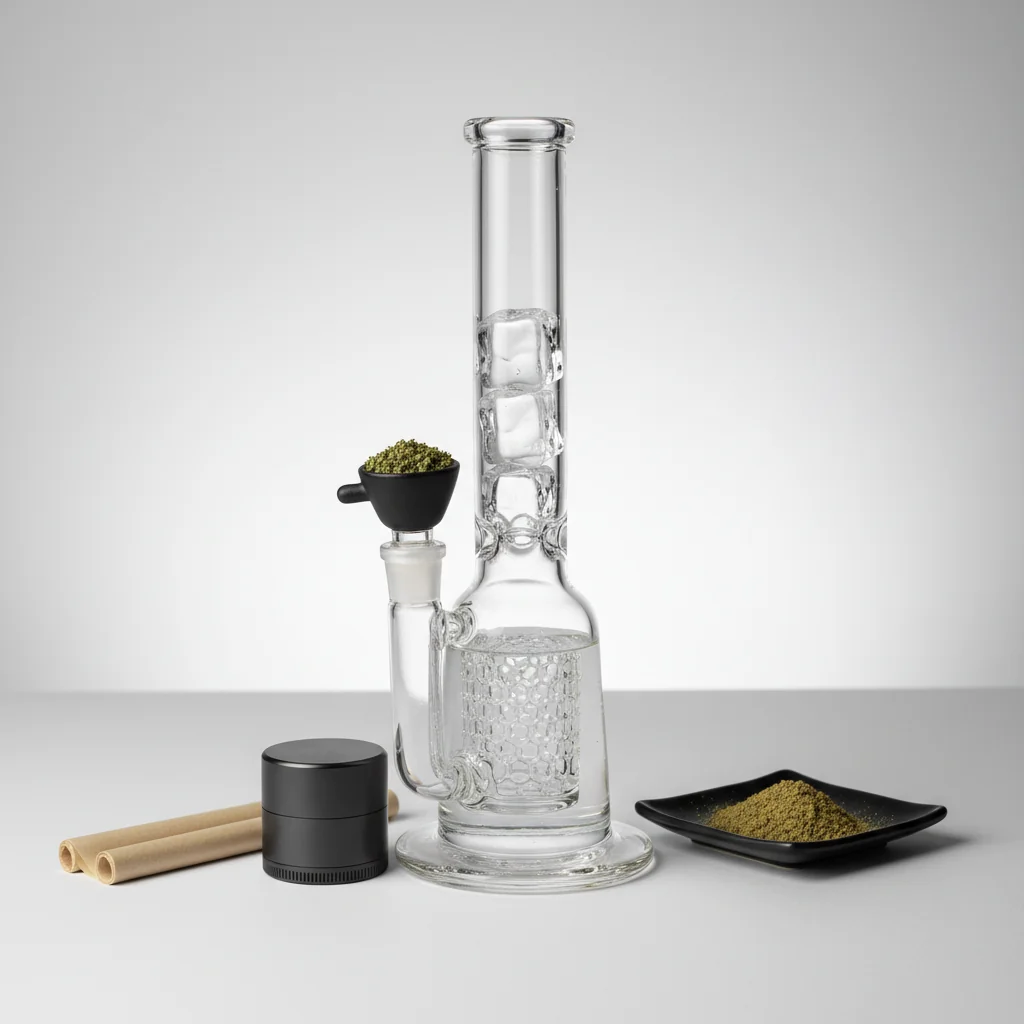
Compreender a anatomia do seu Bong ajuda você a usá-lo adequadamente, solucionar problemas e tomar decisões informadas sobre a compra. Emparelhe seu bong com uma qualidade[ moedor de ervas](https://munchmakers.com/product-category/4-piece-grinders/) para obter os melhores resultados. Esteja você comprando seu primeiro bong ou atualizando componentes, saber o que cada parte faz é essencial.
resposta rápida
Um bong básico tem essas partes essenciais: tubo (câmara principal), base (reservatório de água), bocal (abertura superior), tronco para baixo (tubo que se estende na água) e tigela (onde você embala a maconha). Os componentes opcionais incluem percoladores (filtração extra),geloApanhadores (esfriamento de fumaça), protetores de respingos e coletores de cinzas.
Partes essenciais (todo bong tem essas)
O tubo/câmara
O corpo vertical principal do bong onde a fumaça se acumula antes de você inalar.
Função:
- Segura a fumaça antes de limpar
- Permite que você veja a densidade da fumaça
- Contém recursos opcionais, como coques e coletores de gelo
Materiais:
- vidro: mais comum, sabor limpo, frágil -Padrões ASTMDefina a qualidade do borossilicato
- silicone: durável, portátil, flexível
- acrílico: Orçamento, durável, não ideal para o gosto
- cerâmico: Artístico, pesado, frágil
O tamanho importa:
- Tubos pequenos (8-10"): menos fumaça, mais fácil de limpar, portátil
- Tubos médios (12-16"): equilíbrio entre suavidade e praticidade
- Tubos grandes (18"+): capacidade máxima de fumaça, somente uso doméstico
a base
A seção inferior que contém água e fornece estabilidade.
Formas comuns:
Base do béquer:
- Amplo, triangular (como lab beaker)
- design mais estável
- Retém mais água = mais filtragem
- Dificuldades de limpar cantos
Tubo reto:
- Cilindro uniforme de cima para baixo
- Menos estável (precisa de superfície plana)
- mais fácil de limpar
- Menos capacidade de água
Base redonda:
- Bolha ou forma de esfera
- estabilidade moderada
- aparição artística
- Capacidade moderada de água
Função:
- Retém água para filtração
- fornece estabilidade
- Base maior = mais água = mais frio e mais suaves
o bocal
A abertura no topo onde você coloca os lábios.
Tipos de design:
Boquilha alargada:
- As bordas se curvam para fora
- selo confortável
- design mais comum
Borda reta:
- O tubo termina sem flare
- Alguns acham menos confortável
- Pode adicionar acessório para bocal
pescoço dobrado:
- Tubo dobra antes do bocal
- Angulado para maior conforto
- Mantém a água mais longe do rosto
- Reduz o risco de respingos
Uso adequado:
- Os lábios vão ligeiramente para dentro da abertura
- Crie um selo hermético
- Não enrole os lábios por fora (perde o selo)
a descida
Um tubo que se estende da junta da tigela para dentro da água. É aqui que a mágica acontece.
Função:
- Carrega fumaça da tigela na água
- Cria bolhas que filtram a fumaça
- Os orifícios/fendas na parte inferior determinam o tamanho da bolha
Tipos:
Downstem padrão:
- Tubo simples com uma abertura ou algumas fendas
- filtração básica
- Fácil de limpar
- mais acessível
Difundido para baixo:
- Várias fendas ou orifícios na parte inferior
- Cria bolhas menores = mais filtragem
- Acertos mais suaves
- mais caro
Downstem fixo:
- Construído em Bong (não removível)
- Alguns bongs científicos usam isso
- Não pode ser atualizado ou facilmente limpo
Dimensionamento:
- tamanho da junta: 14 mm ou 18 mm (deve combinar com seu bong)
- comprimento: medido em polegadas, varia de acordo com o bong
- Deve estender cerca de 1" na água quando o bong estiver cheio
Nota de substituição:
Os troncos são consumíveis - quebram ou ficam entupidos. Ter um sobressalente é inteligente.
A tigela / slide
A peça removível onde você embala sua cannabis. Também chamado de "slide" porque você o desliza para dentro e para fora.
Função:
- detém cannabis
- Removível para limpar a fumaça (a maioria dos bongs)
- Pode atualizar para diferentes experiências
Tipos:
Tigela padrão:
- Cone simples ou forma de copo
- Vários tamanhos (pessoal a festa)
- mais comum
Tigela da tela:
- Tela embutida evita detritos
- mais caro
- Dura mais sem telas de substituição
Empurre a tigela:
- desliza em vez de levantar
- menos comum
Tamanhos de juntas:
- 14mm: bongs mais comuns, médios
- 18mm: bongs grandes, tigelas maiores
- 10mm: pequenos/mini bongs (raras)
A tigela deve combinar com o tamanho da articulação de Bong(ou use adaptador).
Componentes opcionais (bongos aprimorados)
Percoladores (perca)
Dispositivos de filtração adicionais dentro do tubo que resfriam e filtram ainda mais a fumaça.
Como eles funcionam:
Force a fumaça através da água ou pequenos orifícios várias vezes, criando mais bolhas e filtragem.
Tipos comuns:
Perca da árvore:
- Múltiplos braços pendurados
- Cada braço tem fendas
- Boa filtragem, look icônico
- pode ser frágil
Perca do favo de mel:
- Disco plano com muitos orifícios
- Cria pequenas bolhas
- Ótima filtragem
- relativamente durável
Perca do chuveiro:
- Tubo com fendas apontando para baixo
- como um chuveiro (daí o nome)
- boa filtragem
- Fácil de limpar
Turbina/Cyclone PERC:
- Cria efeito de água giratória
- Apelo visual + filtragem
- arrasto moderado
Perca em linha:
- Tubo horizontal com fendas
- Muitas vezes na base de bongs científicos
- Excelente difusão
Matriz Perca:
- Combina vários estilos de PERC
- Filtragem máxima
- arrasto mais alto
Tradeoff:
Mais PERCs = acertos mais suaves, mas mais arrasto (mais difícil de puxar) e mais difícil de limpar.
coletor de gelo / pitada de gelo
Entalhes ou beliscões no tubo que seguram cubos de gelo acima da água.
Função:
- Gelo esfria fumaça enquanto passa
- Resulta em golpes mais frios e suaves
- Especialmente útil para grandes sucessos
Projeto:
- Geralmente 3 pequenos entalhes de vidro
- Posicionado acima da linha d'água
- Alguns bongs têm câmaras de coleta de gelo em vez disso
Usando gelo:
- Adicione os cubos de gelo após o enchimento da água
- cair através do bocal
- Eles vão pegar nos entalhes
- Substitua à medida que derretem
Nota:
Nem todos os bongs têm coletores de gelo. É um recurso opcional para procurar ao comprar.
guarda respingo
Uma cúpula ou barreira acima da água que impede que a água chegue à sua boca.
Função:
- Bloqueia o respingo de água durante a inalação forte
- Permite níveis mais altos de água
- Comum em bongs com múltiplos percs
Projeto:
- Cúpula pequena com aberturas para fumaça
- Posicionado acima da água/perc
- Fumaça passa, água não pode
coletor de cinzas
Acessório externo que pega cinzas e detritos antes de entrar no bong principal.
Função:
- Pré-filtros fumam
- Mantém o limpador principal por mais tempo
- Freqüentemente adiciona outro coador
Anexo:
- Vai entre a tigela e a haste inferior
- Possui câmara própria de água
- Combina o tamanho da articulação de Bong
Tradeoff:
Adiciona complexidade e altura, mas reduz significativamente a frequência de limpeza do bong principal.
buraco de carbureto
Um orifício na lateral do tubo (em vez de tigela removível).
Função:
- Tampa durante a inspiração
- Liberação para limpar a câmara
- Alternativa para uma tigela removível
Mais comum em:
- Bongs mais simples/mais baratos
- Tubulações (recurso padrão)
- desenhos mais antigos
A maioria dos bongs de vidro modernos usa tigelas removíveis.
Como as peças funcionam juntas
O processo:
1. irrigarPreenche a base e as fendas dobráveis
2. baciaDetém a cannabis, assentada na articulação acima do cano para baixo
3. você tigela leve eInspire através do bocal
4. abaixoCarrega fumaça debaixo d'água, criando bolhas
5. filtros(se presente) adicione mais filtragem
6. fumaça sobetubo
7. coletor de gelo(se presente) esfria ainda mais
8. você removebacia(ou solte carb) para limpar
9. guarda respingo(se presente) evita que a água entre na boca
10. A fumaça entra nos pulmões atravésbocal
Atualizando seu bong
Muitos componentes são intercambiáveis:
Atualizações fáceis:
- Tigela melhor (tamanho diferente, tela incluída)
- Downstem difuso (substitui o padrão)
- Apanhador de cinzas (adiciona)
Juntas correspondentes:
Tudo deve corresponder ao tamanho da junta do seu bong (normalmente 14 mm ou 18 mm).
Adaptadores:
Permitir tamanhos de mistura:
- Bong de 18 mm com tigela de 14 mm? Use adaptador de 18 mm para 14 mm
- Abre opções de acessórios
Escolhendo com base em peças
Para iniciantes:
- tubo ou béquer simples
- Padrão Downstem (talvez difuso)
- sem percs ou perc único
- Fácil de usar e limpar
Para golpes suaves:
- Vários percoladores
- coletor de gelo
- Downstem difuso
- Mais complexo, mas mais suave
Para uma limpeza fácil:
- design de tubo reto
- PERCs mínimos (ou designs fáceis de limpar como o favo de mel)
- Downstem removível
- Evite percs intrincados de árvores
Para durabilidade:
- Vidro grosso (5mm+)
- Silicone (se não vidro)
- Design simples (menos peças frágeis)
- Base do béquer (mais estável)
Este guia é para fins educacionais. As leis de cannabis variam de acordo com a jurisdição.
Frequently Asked Questions
O tronco é indiscutivelmente mais importante - ele conecta a tigela à água e cria a filtração. Sem um tronco adequado, a fumaça não seria filtrada. O nível da água (cobrindo o tronco) determina a qualidade da filtração.
Related Guides
Ash Catcher Guide: Keep Your Bong Clean Longer
Complete guide to ash catchers for bongs: what they do, types including dry and percolator ash catchers, joint sizes and angles, how to use and clean them, and how to choose the right one.

Ash Catchers: What They Do and Why Use One
Learn what ash catchers do, how they keep your bong clean, and whether you need one. Understand different types, how to choose the right size, and maintenance tips.
Beaker vs Straight Tube Bongs: Which Style is Better?
Comprehensive guide about beaker vs straight tube bongs: which style is better?. Learn everything you need to know with expert tips and detailed instructions.