

Bong Percolator Types Uitleg: Complete Visuele Gids

Emma Chen
Glass Specialist
Bong Percolator Types Uitleg: Complete Visuele Gids
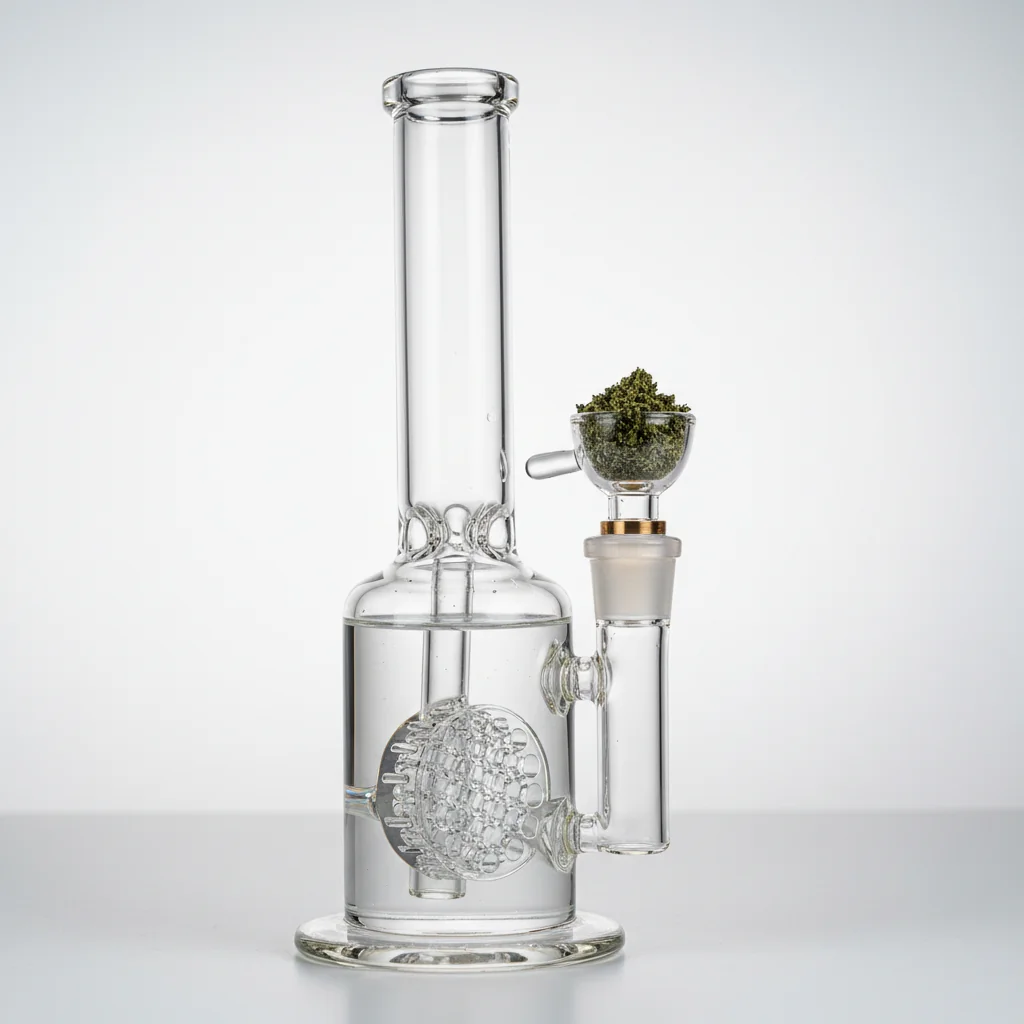
Percolators zijn de filtratiesystemen binnen bongs die rook in kleinere bubbels breken, waardoor elke trek koelt en gefilterd wordt. Onderzoek van PubMed studies verkent hoe waterfiltratie de rook samenstelling beïnvloedt. Verschillende perc ontwerpen bieden verschillende niveaus van soepelheid, weerstand en schoonmaakgemak. Deze gids legt elk belangrijk percolator type uit, zodat je de juiste kunt kiezen voor jouw voorkeuren.
Snelle Antwoord
De meest voorkomende percolator types zijn: boompercs (meerdere armen), honingraatpercs (platte schijf met gaatjes), douchekoppercs (gespleten koepel), inline percs (horizontale buis) en turbinepercs (gehoekte sleuven die spin creëren). Honingraat- en matrixpercs bieden maximale diffusie maar meer weerstand. Boompercs bieden een balans tussen soepelheid en luchtstroom. Eenvoudigere ontwerpen zoals downstems en douchekoppen zijn het gemakkelijkst schoon te maken.
Hoe Percolators Werken
Basisprincipe:
Alle percolators werken door rook door water te dwingen via kleine gaatjes of sleuven. Dit breekt de rook in veel kleine bubbels, die:
1. Vergroot het contactoppervlak met water
2. Koelt rook effectiever
3. Filtert meer deeltjes eruit
4. Levert soepelere trekjes
Belangrijk compromis:
Meer diffusie (kleinere bubbels, meer gaatjes) = soepelere trekjes maar moeilijker te trekken en meer schoonmaak vereist.
Downstem (De Originele Perc)
Wat het is:
Een eenvoudige buis die van de kom in het water steekt, meestal met sleuven aan de onderkant.
Hoe het werkt:
- Rook reist naar beneden door de buis
- Verlaat via sleuven in het water
- Basis maar effectieve filtratie
Voordelen:
- Eenvoudig en betrouwbaar
- Gemakkelijk schoon te maken
- Gemakkelijk te vervangen
- Minimale weerstand
- Betaalbaar
Bewaar je cannabis op de juiste manier in geurvrije opslag om de kwaliteit tussen sessies te behouden.
Nadelen:
- Minder diffusie dan geavanceerde percolatoren
- Kan breken als het valt
- Basisfiltratie alleen
Het beste voor: Beginners, degenen die eenvoud en gemakkelijke onderhoud willen
Diffusieniveau: Laag tot gemiddeld (afhankelijk van het aantal sleuven)
Boompercolator
Wat het is:
Meerdere armen (typisch 4-16) die naar beneden uitsteken vanuit een centrale hub, elk met sleuven aan de onderkant.
Hoe het werkt:
- Rook komt de centrale kamer binnen
- Verspreidt zich door meerdere armen
- Elke arm laat luchtbellen vrij door sleuven
- Meer armen = meer diffusie
Variaties:
- 4-armige boom (basis)
- 8-armige boom (standaard)
- 12-16 armige boom (zware diffusie)
- Vaste vs. verwijderbare ontwerpen
Voordelen:
- Uitstekende balans tussen diffusie en weerstand
- Visueel indrukwekkend
- Zachte trek
- Beschikbaar in veel configuraties
Nadelen:
- Armen kunnen breken
- Moeilijker schoon te maken dan eenvoudige percolatoren
- Duurder
- Kwaliteit varieert aanzienlijk
Het beste voor: Gebruikers die zachte trekken met gematigde weerstand en esthetische aantrekkingskracht willen
Diffusieniveau: Gemiddeld tot hoog
Honingraatpercolator
Wat het is:
Een platte schijf met tientallen kleine gaten, horizontaal gepositioneerd in de buis.
Hoe het werkt:
- Rook stijgt omhoog door de schijf
- Elke opening creëert een kleine bubbel
- Massaal contactoppervlak
- Vaak gestapeld (2-3 schijven)
Variaties:
- Enkele honingraat
- Dubbel/drievoudig gestapeld
- Verschillende openinggroottes
- Gecombineerd met andere percs
Voordelen:
- Maximale diffusie
- Zeer soepele trek
- Laag profiel ontwerp
- Duurzaam (geen kwetsbare onderdelen)
- Kan meerdere schijven stapelen
Nadelen:
- Significante weerstand (moeilijkere trek)
- Verstopt gemakkelijk zonder regelmatige reiniging
- Kan de smaakintensiteit verminderen
- Vereist meer water
Het beste voor: Gebruikers die soepelheid boven trekgemak prioriteren, smaak is geen primaire zorg
Diffusieniveau: Zeer hoog
Douchekop Percolator
Wat het is:
Een koepel of buis met sleuven rond de onderrand, die lijkt op een douchekop.
Hoe het werkt:
- Rook komt de koepelkamer binnen
- Verlaat via de sleuven rond de omtrek
- Creëert een ring van bubbels
- Schoon, efficiënt ontwerp
Variaties:
- Standaard douchekop (verticale koepel)
- UFO perc (afgeplatte douchekop)
- Banden perc (horizontale schijf met rand sleuven)
- Verschillende aantal sleuven
Voordelen:
- Goede diffusie zonder overmatige weerstand
- Relatief gemakkelijk schoon te maken
- Duurzaam ontwerp
- Consistente prestaties
Nadelen:
- Minder diffusie dan honingraat
- Kan spetteren als het waterniveau niet goed is
- Kwaliteit varieert per fabrikant
Het beste voor: Balans van soepelheid, luchtstroom en reinigbaarheid
Diffusieniveau: Gemiddeld tot hoog
Inline Percolator
Wat het is:
Een horizontale buis met sleuven langs de lengte, geplaatst aan de basis van de bong.
Hoe het werkt:
- Rook komt de horizontale buis binnen
- Verlaat via meerdere sleuven langs de lengte
- Creëert een lijn van bubbels
- Vaak gecombineerd met andere percs erboven
Variaties:
- Standaard inline (enkele buis)
- Gerasterde inline (rooster van sleuven)
- Stereo matrix (twee parallelle buizen)
- Verschillende sleuvenpatronen
Voordelen:
- Weinig weerstand voor goede diffusie
- Stevige constructie
- Goede basis voor het stapelen van percs
- Gelijke bubbeldistributie
Nadelen:
- Neemt horizontale ruimte in beslag
- Kan moeilijker schoon te maken zijn
- Beperkt tot bepaalde bongvormen
Het beste voor: Gebruikers die diffusie willen met minimale weerstand, basis perc in multi-perc opstellingen
Diffusieniveau: Gemiddeld
Turbine Percolator (Cycloon)
Wat het is:
Een schijf met schuine sleuven die een draaiende vortex van water en rook creëert.
Hoe het werkt:
- Rook passeert door de schuine sleuven
- Creëert een draaiende tornado-effect
- Water spettert omhoog langs de zijkanten van de buis
- Visueel en functioneel
Variaties:
- Enkele turbine
- Dubbele turbine
- Gecombineerd met andere percs
- Verschillende hoekconfiguraties
Voordelen:
- Visueel verbluffend
- Voorkomt spetteren
- Goede diffusie
- Gemiddelde weerstand
Nadelen:
- Waterniveau moet precies zijn
- Minder diffusie dan honingraat
- Kan luidruchtig zijn
- Vereist schoon water voor visueel effect
Het beste voor: Gebruikers die esthetiek en spetterpreventie waarderen, gemiddelde diffusie
Diffusieniveau: Gemiddeld
Matrix Percolator
Wat het is:
Een cilinder met zowel horizontale als verticale sleuven die een rasterpatroon creëren.
Hoe het werkt:
- Rook komt het midden van de cilinder binnen
- Verlaat via het raster van sleuven
- Massief diffusiegebied
- Creëert veel kleine luchtbellen
Variaties:
- Standaard matrix
- Stereo matrix (dubbel)
- Verschillende rasterdichtheden
- Gecombineerd met andere percs
Voordelen:
- Uitstekende diffusie
- Zachte hits
- Compact ontwerp
- Duurzaam (geen dunne armen)
Nadelen:
- Hoge weerstand
- Moeilijk schoon te maken van binnen
- Verstopt zonder onderhoud
- Kan smaken dempen
Beste voor: Maximale soepelheidzoekers, degenen die regelmatig schoonmaken
Diffusieniveau: Zeer hoog
Zwitserse Percolator
Wat het is:
Een verticale schijf met grote gaten, die lijkt op Zwitserse kaas.
Hoe het werkt:
- Rook stroomt rond de gaten
- Creëert turbulentie en diffusie
- Water vult zich rond de gaten
- Unieke esthetiek
Variaties:
- Standaard Zwitsers
- Fab egg (ronde vorm)
- Verschillende gatgroottes en patronen
Voordelen:
- Zeer soepele hits
- Mooie vormgeving
- Goede diffusie met lage weerstand
- Gemakkelijk om waterniveau te zien
Nadelen:
- Complex om te vervaardigen (duur)
- Kan kwetsbaar zijn
- Moeilijker schoon te maken
- Premium prijsstelling
Beste voor: Verzamelaars, degenen die unieke esthetiek met functionaliteit willen
Diffusieniveau: Gemiddeld tot hoog
Fritted Disc Percolator
Wat het is:
Een schijf gemaakt van gesinterde glasdeeltjes, die duizenden microscopische gaten creëert.
Hoe het werkt:
- Rook passeert door de poreuze schijf
- Creëert extreem fijne bubbels
- Maximale mogelijke diffusie
- Bijna als schuim
Voordelen:
- Zachtste mogelijke hits
- Maximale filtratie
- Unieke ervaring
Nadelen:
- Extreem hoge weerstand
- Verstopt zeer snel
- Bijna onmogelijk volledig schoon te maken
- Vereist frequente onderhoud
- Niet praktisch voor dagelijks gebruik
Het beste voor: Occasioneel gebruik, liefhebbers van zachtheid, ervaren gebruikers
Diffusieniveau: Extreem
Vergelijking van Percolator Types
Enkele vs. Meerdere Percolators
Enkele perc bongs:
- Gemakkelijker schoon te maken
- Minder weerstand
- Betere smaakbehoud
- Lagere prijs
- Eenvoudigere functie
Multi-perc bongs:
- Zachtere trekjes
- Meer filtratie
- Koelere rook
- Hogere weerstand
- Meer onderhoud
- Hogere prijs
De stapelmythe:
Meer percs betekent niet altijd beter. Twee kwaliteitspercs presteren beter dan vier goedkope. Na 2-3 percs krijg je afnemende rendementen en een significante toename van de weerstand.
De juiste percolator kiezen
Prioriteit geven aan soepelheid?
Kies: Honingraat, matrix of gefrituurde schijf
Verwacht: Meer weerstand, meer schoonmaak
Prioriteit geven aan een gemakkelijke trek?
Kies: Downstem, inline of douchekop
Verwacht: Minder diffusie, maar nog steeds soepel
Prioriteit geven aan gemakkelijk schoonmaken?
Kies: Downstem, douchekop of turbine
Vermijd: Boompercs, gefrituurde schijven
Prioriteit geven aan smaak?
Kies: Eenvoudige downstem of enkele douchekop
Vermijd: Zware diffusiepercs (ze filteren ook smaak)
Prioriteit geven aan esthetiek?
Kies: Zwitserse, turbine of boompercs
Deze bieden visuele interesse terwijl ze goed functioneren
Percolators onderhouden
Alle percs hebben regelmatig schoonmaken nodig:
- Spoel na elke sessie met heet water
- Diep reinigen wekelijks (alcohol + zout)
- Complexere percs hebben meer aandacht nodig
- Verstopte percs werken niet goed
Tekenen dat je perc schoongemaakt moet worden:
- Beperkte luchtstroom
- Ongelijke bubbels
- Zichtbare ophoping
- Verschillende geluiden bij het trekken
De conclusie
Voor beginners: Begin met een eenvoudige downstem of showerhead perc. Leer je voorkeuren kennen voordat je investeert in complexe ontwerpen.
Voor dagelijkse gebruikers: Showerhead of inline percs bieden de beste balans tussen soepelheid en onderhoud.
Voor liefhebbers van soepelheid: Honeycomb of matrix percs bieden maximale diffusie, maar zorg voor regelmatig schoonmaken.
Voor verzamelaars: Swiss percs en kwaliteits boom percs bieden zowel functionaliteit als esthetische aantrekkingskracht.
Vergeet niet: De beste percolator is degene die je daadwerkelijk schoonmaakt en onderhoudt. Een vieze honeycomb presteert slechter dan een schone downstem.
Deze gids is voor educatieve doeleinden. Cannabiswetten variëren per jurisdictie.
Frequently Asked Questions
Honingraat- en matrixpercolators bieden doorgaans de soepelste trekjes door maximale diffusie via veel kleine gaatjes. Echter, meer diffusie betekent meer weerstand. Boompercs met 8+ armen excelleren ook in soepelheid.
Niet per se. Hoewel meerdere percs de filtratie en soepelheid verhogen, voegen ze ook weerstand toe (moeilijker om te trekken), maken ze schoonmaken moeilijker en kunnen ze de smaakintensiteit verminderen. 1-2 kwaliteitspercs presteren vaak beter dan 3+ goedkope.
Kleine gaatjes of sleuven, vuile percs of onjuiste waterniveaus veroorzaken overmatige weerstand. Probeer het waterniveau te verlagen, grondig schoon te maken of te accepteren dat percs met zware diffusie (honingraat, matrix) van nature meer weerstand hebben.
Related Guides
Ash Catcher Guide: Keep Your Bong Clean Longer
Complete guide to ash catchers for bongs: what they do, types including dry and percolator ash catchers, joint sizes and angles, how to use and clean them, and how to choose the right one.

Ash Catchers: What They Do and Why Use One
Learn what ash catchers do, how they keep your bong clean, and whether you need one. Understand different types, how to choose the right size, and maintenance tips.
Beaker vs Straight Tube Bongs: Which Style is Better?
Comprehensive guide about beaker vs straight tube bongs: which style is better?. Learn everything you need to know with expert tips and detailed instructions.