

מדריך לטמפרטורה וללחות לאחסון קנאביס

Lisa Thompson
Storage & Preservation Specialist
מדריך לטמפרטורה וללחות לאחסון קנאביס
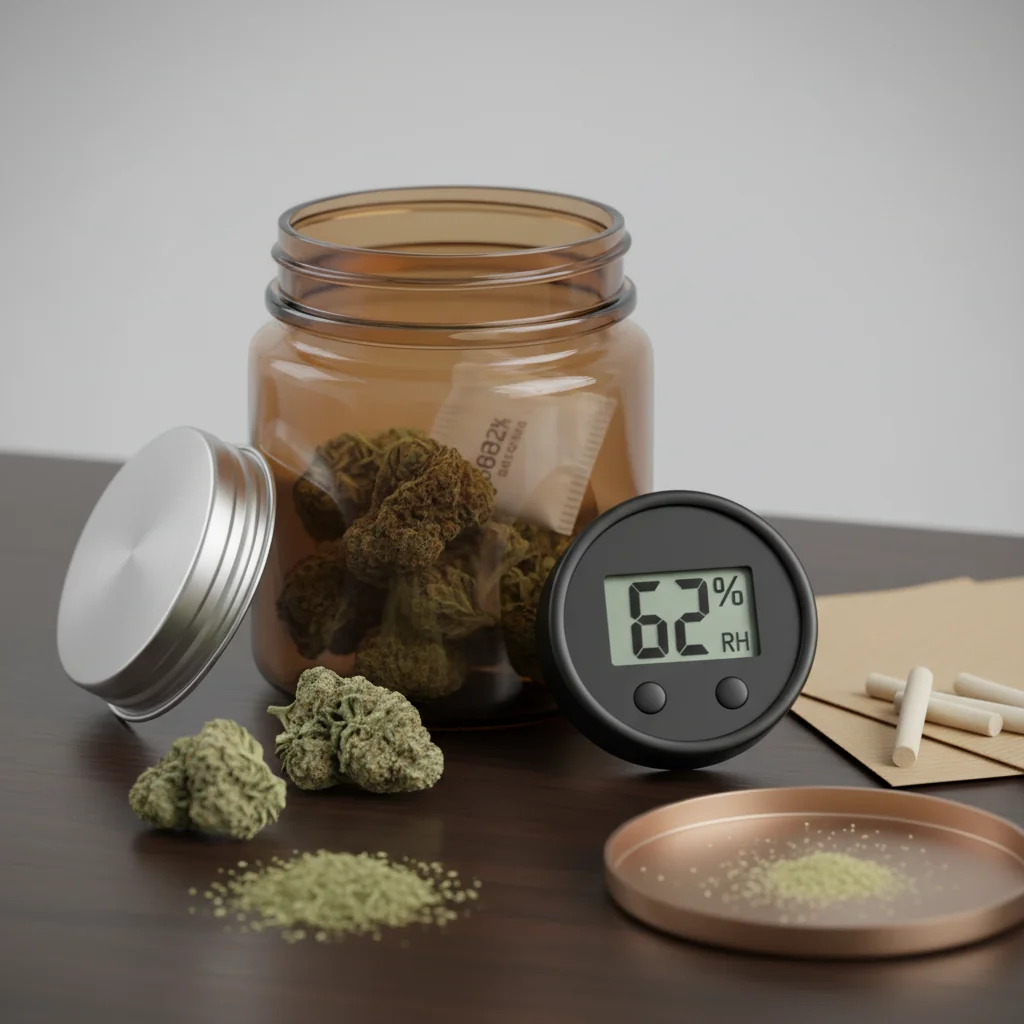
טמפרטורה ולחות הם שני הגורמים הסביבתיים הקריטיים ביותר המשפיעים על איכות הקנאביס במהלך האחסון. הבנת איך לשלוט באלמנטים הללו יכולה להיות ההבדל בין פרח טרי וחזק לקנאביס יבש ומתדרדר. מדריך מקיף זה מסביר את המדע והפרקטיקה של תנאי אחסון אופטימליים.
תשובה מהירה
תנאי אחסון אידיאליים לקנאביס: טמפרטורה בין 60-70°F (15-21°C), לחות יחסית בין 58-62%. טמפרטורות מעל 77°F מאיצות את התדרדרות ה-THC; לחות מעל 65% מקדמת עובש. השתמש בחבילות לחות (Boveda או Integra) במיכלים אטומים לאוויר, אחסן במקומות כהים וקרים, ונטר עם היגרומטר.
למה טמפרטורה ולחות חשובים
מה קורה לקנאביס עם הזמן
קנאביס הוא חומר אורגני שמתדרדר דרך מספר תהליכים:
חמצון: חשיפה לחמצן מפרקת THC ל-CBN (פחות פסיכואקטיבי)
חשיפה לאור: קרני UV מפרקות קנבינואידים וטרפנים
נזק מחום: טמפרטורות גבוהות מאיצות את כל תהליכי התדרדרות
בעיות לחות: יבש מדי = טריכומות שבירות; רטוב מדי = סיכון לעובש
שליטה נכונה בטמפרטורה ולחות מאטה את כל אלה.
למיכלי אחסון ושליטה בלחות, בדוק את MunchMakers אחסון חסין ריחות. למדע מדידת לחות, שירות המטאורולוגי הלאומי מספק מידע אקלימי מקיף.
המדע של תדרדרות קנאביס
השפעות טמפרטורה
טמפרטורה קריטית: 25°C (77°F) היא הנקודה שבה הה degradation明显 מאיצה.
השפעות לחות
לחות יעד: 58% להעדפה יבשה, 62% ליותר לחות.
הבנת לחות יחסית
מהי לחות יחסית?
לחות יחסית (RH) מודדת כמה אדי מים יש באוויר בהשוואה למקסימום שהיא יכולה להכיל בטמפרטורה זו.
מושג מפתח: אוויר חם מחזיק יותר לחות. כך שכמות זהה של אדי מים נקראת RH נמוכה בתנאים חמים, RH גבוהה בתנאים קרים.
זו הסיבה שטמפרטורה ולחות קשורים - אינך יכול לשלוט באחד מבלי להשפיע על השני.
למה 58-62% הוא הטווח המתוק
מתחת ל-58%:
- הקנאביס הופך לשביר
- טריכומות מתפצלות ונופלות
- עשן קשה וחם
- טרפנים מתאדים
- נייר לא נדבק היטב (לגלגול)
מעל 62%:
- נבגי עובש יכולים לנבוט
- קנאביס הופך ללח מדי
- שריפה לא אחידה
- עשוי "להירטב" מחדש ולדרוש חידוש
שיטות לשליטה בלחות
חבילות לחות דו-כיווניות
מה הן: חבילות המכילות פתרונות מלח שמשחררים או סופגים לחות כדי לשמור על רמות RH ספציפיות.
מותגים פופולריים:
- בובדה: תקן תעשייתי, שליטה מדויקת
- אינטגרה בוסט: טכנולוגיה דומה, אינדיקטור צבע
איך הן פועלות:
- בחבילה של 62% RH בסביבה עם לחות נמוכה: משחררת לחות
- בחבילה של 62% RH בסביבה עם לחות גבוהה: סופגת לחות
- שומרת על שווי משקל ברמת RH יעד
גדלים:
- חבילות של 1 גרם: צנצנות קטנות (1/8 אונקיה)
- חבילות של 4 גרם: צנצנות בינוניות (עד 1/2 אונקיה)
- חבילות של 8 גרם: צנצנות גדולות (עד 1 אונקיה)
- חבילות של 67 גרם: הומידורים ואחסון בכמויות גדולות
מתי להחליף: כאשר החבילה מרגישה קשה/פריכה במקום רכה. בדרך כלל 2-4 חודשים.
שיטות חלופיות לשליטה בלחות
אפשרויות עשה זאת בעצמך (פחות מדויק):
קליפת הדר: מוסיפה לחות במהירות אך מסכנת עובש. רק לטווח קצר (שעות).
עלעל חסה: דומה להדר - פתרון מהיר, לא פתרון לטווח ארוך.
מים מזוקקים במיכל קטן: יכול לעבוד בהומידורים, דורש מעקב.
המלצה: חבילות לחות דו-כיווניות זולות ואמינות. השתמשו בהן.
שיטות בקרת טמפרטורה
בחירת מיקום
מיקומי אחסון הטובים ביותר:
- ארונות פנימיים (טמפרטורה יציבה)
- מרתף (אם יבש ועקבי)
- ארון רחוק ממכשירים
- מגירת שידה
להימנע מ:
- ליד חלונות (שינויים בטמפרטורה)
- ליד פתחי HVAC (אוויר יבש)
- ליד כיריים/מכשירים (חום)
- מוסך (שינויים קיצוניים)
- מקרר (ראה למטה)
שאלת המקרר
מיתוס נפוץ: אחסון קנאביס במקרר שומר עליו טרי.
מציאות: מקררים הם בעייתיים מכיוון ש:
- רמות הלחות הן בדרך כלל 30-40% (יבש מדי)
- הטמפרטורה משתנה כאשר הדלת נפתחת
- עיבוי כאשר הוצא יכול להוסיף לחות לא רצויה
- ריחות חזקים של אוכל יכולים להיספג בקנאביס
מקפיא: אפילו גרוע יותר - טריכומות הופכות לשבירות ונשברות כאשר קפואות, טיפול גורם לאובדן משמעותי.
פסק דין: טמפרטורת חדר במיכל מתאים עדיפה על קירור ברוב המקרים.
מתי קירור הגיוני
יוצא דופן: אחסון לטווח ארוך מאוד (6+ חודשים) במיכלים אטומים לאוויר עשוי להרוויח מטמפרטורות קרירות. אבל זה עבור אחסון בכמויות גדולות, לא לשימוש רגיל.
ניטור הסביבה שלך
היגרומטרים
מה הם מודדים: לחות יחסית (ובדרך כלל טמפרטורה)
סוגים:
היגרומטרים דיגיטליים (5-20 דולר):
- מדויקים ל±3-5% בדרך כלל
- קל לקרוא
- פועל על סוללות
- חלקם כוללים זיכרון מינימום/מקסימום
היגרומטרים אנלוגיים (3-15 דולר):
- פחות מדויקים (±10%)
- דורשים כיול
- תגובה איטית יותר
- עשויים להיות לא מהימנים
היגרומטרים מיניאטוריים (3-8 דולר):
- מתאימים בתוך צנצנות
- תצוגה קטנה
- בסיסי אך פונקציונלי
המלצה: קנה היגרומטר דיגיטלי מיניאטורי לכל צנצנת אחסון. הם זולים ובלתי נפרדים.
כיול ההיגרומטר שלך
שיטת בדיקת מלח:
1. הנח את ההיגרומטר במיכל סגור עם תערובת מלח/מים
2. המתן 8-12 שעות
3. צריך לקרוא 75% RH
4. רשום את ההפרש כדי לתקן
רוב ההיגרומטרים הזולים טועים ב-2-5%. ידיעת ההפרש שלך משפרת את הדיוק.
הגדרת אחסון אופטימלית
המערכת המלאה
מיכל: זכוכית אטומה (צנצנת מייסון, CVault וכו')
בקרת לחות: חבילת Boveda או Integra בגודל מתאים למיכל
ניטור: היגרומטר מיניאטורי בתוך או נראה דרך זכוכית
מיקום: מקום קר, חשוך, עם טמפרטורה יציבה
חסימת אור: זכוכית ענבר או מיכל אטום, או מקום אחסון חשוך
רשימת בדיקה להגדרה
1. בחר גודל מיכל מתאים (אל תאחסן כמויות קטנות בצנצנות גדולות)
2. הוסף חבילת לחות דורג לפי העדפתך (58% או 62%)
3. הנח את מד הלחות בפנים או השתמש במכסה עם תצוגה מובנית
4. אחסן במקום עם טמפרטורה יציבה (60-70°F)
5. בדוק שבועי במשך החודש הראשון, ואז חודשי
שיקולים עונתיים
אחסון בקיץ
אתגרים:
- טמפרטורות סביבה גבוהות יותר
- מיזוג אוויר יכול לייבש יתר על המידה
- סכנת הפסקות חשמל לחשיפה לחום
פתרונות:
- אחסן בחלק הקר ביותר של הבית (מרתף, ארון פנימי)
- הוסף חבילת לחות נוספת אם המזגן פועל כל הזמן
- שקול להשתמש במיכל סגור במקרר להפסקות (לא קפוא)
אחסון בחורף
אתגרים:
- מערכות חימום מפחיתות באופן דרסטי את הלחות הפנימית
- בתים לעיתים קרובות 25-35% RH בחורף
- חדרים קרים ליד קירות חיצוניים
פתרונות:
- חבילות לחות פועלות שעות נוספות - החלף יותר בתדירות
- שמור רחוק מחימום ומרדיאטורים
- שקול להוסיף מכשיר לחות לחדר ליד אזור האחסון
סימנים לבעיות סביבתיות
סימנים לאחסון יבש מדי
- קנאביס מתפורר במקום להתפצל
- עשן חזק שפוגע בגרון
- אבקת טריכומות נראית במיכל
- ניירות לא נדבקים לקנאביס
- מראה שביר וחום
סימנים לאחסון לח מדי
- קנאביס מרגיש רטוב או ספוגי
- fuzz לבן נראה (עובש)
- ריח של אמוניה או ריח לח
- לא טוחן כראוי (נדבק)
- זמן בעירה ממושך, בעירה לא אחידה
סימני נזק מחום
- התפתחות צבע חום
- אובדן ארומה
- יבש למרות שליטת לחות
- פוטנציה מופחתת
- "ריח של חציר" מתפתח
אסטרטגיות התאוששות
החזרת לחות לקנאביס יבש מדי
עם חבילת לחות:
- הוסף 62% בובדה למיכל
- סגור וחכה 24-48 שעות
- בדוק וחזור על התהליך אם צריך
- עובד היטב עבור ייבוש מתון
הערה: טרטנים שאבדו בגלל אידוי לא יכולים להתאושש. החזרת לחות מחזירה את הלחות, לא את האיכות המקורית.
התמודדות עם קנאביס לח מדי
ייבוש מהיר:
- הסר מהמיכל
- השאר חשוף במשך 30-60 דקות
- החזר למיכל עם חבילת 58%
- נטר מקרוב
אם יש חשש לעובש: יש לזרוק. עובש מפיץ נבגים מיקרוסקופיים בכל מקום. לא שווה את הסיכון הבריאותי.
אחסון לטווח ארוך (6+ חודשים)
שיקולים מיוחדים
לאחסון ממושך, אמצעי זהירות נוספים עוזרים:
איטום ואקום: מסיר חמצן, מאט את החמצון באופן משמעותי
חבילות לחות גדולות יותר: לא ייגמרו במהלך אחסון ארוך
טמפרטורות קרירות: 60-65°F עדיף על 70°F לאחסון לטווח ארוך
פתיחה מינימלית: כל פתיחה מכניסה חמצן חדש
מיכלים נפרדים: אל תאחסן אספקת חודש עם אספקת שנה
צפוי לוח זמנים של התדרדרות
טעויות נפוצות
טעות 1: שימוש במיכל גדול מדי
בעיה: חלל אוויר גדול משמעותו יותר חמצן, הידרדרות מהירה יותר
פתרון: השתמש במיכל בגודל המתאים לכמות שלך (מלא ב-2/3 אידיאלי)
טעות 2: אחסון ליד מקורות חום
בעיה: אפילו קרבה לאלקטרוניקה, מכשירים מעלה את הטמפרטורה
פתרון: בדוק את מקום האחסון שלך עם מד חום במשך 24 שעות
טעות 3: פתיחה תכופה
בעיה: כל פתיחה מחליפה אוויר לח באוויר הסובב (לעיתים יבש יותר)
פתרון: שמור את המלאי לשימוש יומי בנפרד מאחסון בכמויות גדולות
טעות 4: התעלמות מחיי חבילת הלחות
בעיה: חבילות מתות לא שולטות בלחות
פתרון: בדוק מדי חודש, החלף כאשר הן קשות/פריכות
טעות 5: שילוב צרכי לחות שונים
בעיה: זנים שונים עשויים להעדיף RH שונה
פתרון: אחסן בנפרד, במיוחד אינדיקה (לעיתים קרובות מעדיפה יובש) מול סאטיבה
שאלות נפוצות
ש: האם אני יכול להשתמש בחדר לחות סיגרים עבור קנאביס?
ת: כן, אבל חדרי לחות מסורתיים מכוונים ל-70% לחות יחסית (גבוה מדי עבור קנאביס). אתה יכול להחליף את מכשיר הלחות עם חבילות בובדה וזה עובד היטב. הימנע מגרסאות עם ציפוי ארז - שמני העץ יכולים להעביר טעם.
ש: איך אני יודע אם חבילת הלחות שלי פועלת?
ת: היא צריכה להרגיש רכה וגמישה. כאשר היא קשה או פריכה, היא סיימה את תפקודה. חבילות אינטגרה בוסט כוללות אינדיקטור צבע שמראה מתי יש צורך בהחלפה.
ש: האם 55% לחות בטוחה עבור קנאביס?
ת: 55% לא יגרום לעובש אבל זה בצד היבש. אתה עשוי noticing עשן מעט קשה יותר וריח פחות בולט. 58% נחשב בדרך כלל כמינימום לשימור איכות.
המדריך הזה מיועד למטרות חינוכיות. חוקים לגבי קנאביס משתנים לפי שיפוט. אחסון נכון עוזר לשמור על איכות המוצרים שהושגו באופן חוקי.
Frequently Asked Questions
כן, אבל חדרי לחות מסורתיים מכוונים ל-70% RH (גבוה מדי עבור קנאביס). אתה יכול להחליף את מכשיר הלחות בחבילות Boveda וזה עובד היטב. הימנע מגרסאות מצופות ארז - שמני העץ יכולים להעביר טעם.
Related Guides

Best Cannabis Storage Containers 2026: Complete Buying Guide
# Best Cannabis Storage Containers 2026: Complete Buying Guide ## Introduction In the evolving world of cannabis, the importance of proper storage cannot be overstated. As cannabis enthusiasts continue to seek the optimal experience, maintaining the freshness, potency, and flavor of their stash be
Best Weed Jars: Cannabis Storage Containers Guide
Complete guide to cannabis storage jars and containers: why storage matters, best jar types including mason jars, humidity control, what to avoid, and storage tips for different quantities.
Boveda Packs for Cannabis: Complete Humidity Control Guide
Learn how to use Boveda humidity packs for cannabis storage. Understand 58% vs 62% RH, pack sizing, replacement timing, and why humidity control matters for your weed.