
How to Roll a Joint: Step-by-Step Guide for Beginners

Mike Rodriguez
Rolling Expert
[How to Roll a Joint](/guide/how-to-roll-perfect-joint): Step-by-Step Guide for Beginners
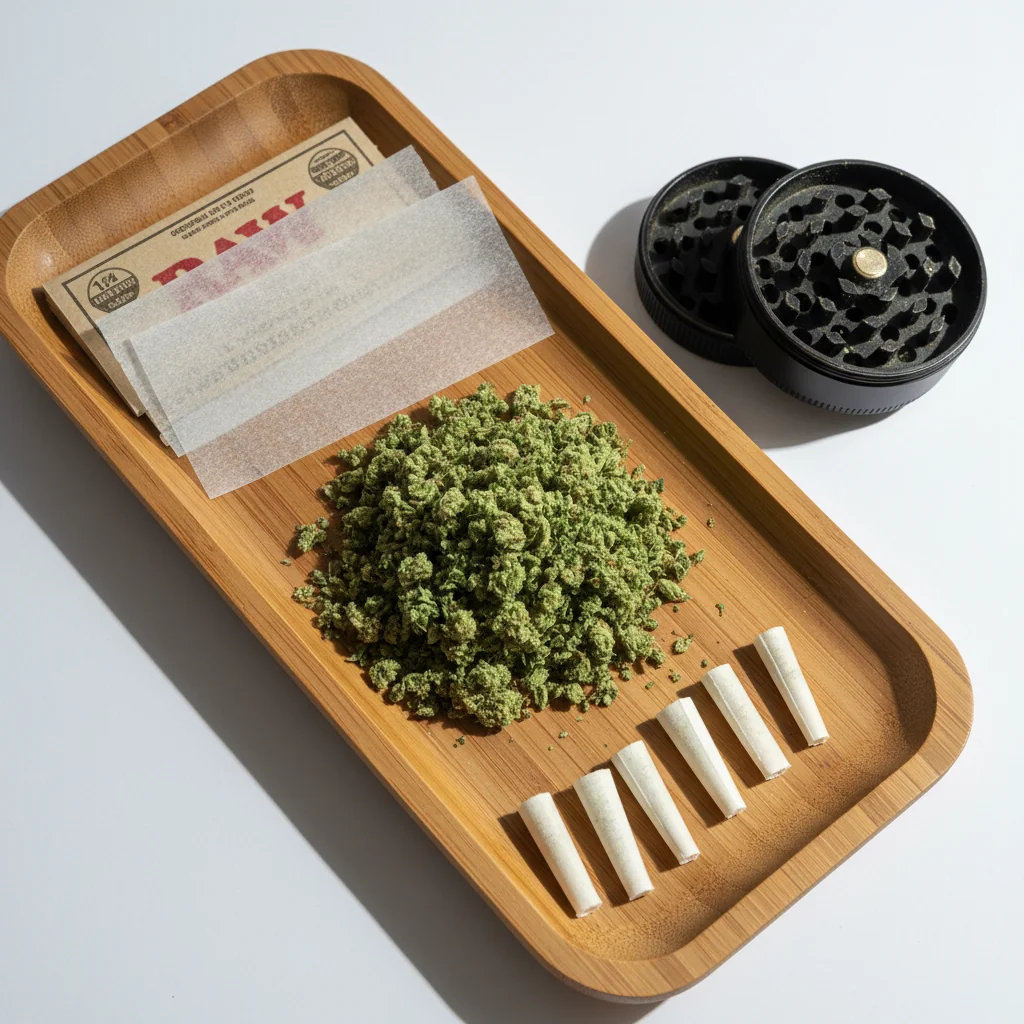
Rolling a joint is a fundamental cannabis skill that seems difficult until it clicks. With the right technique and a bit of practice, you'll go from fumbling to rolling clean, even-burning joints in no time. This guide breaks down every step.
Quick Answer
To roll a joint: 1) Grind cannabis medium-fine, 2) Make a filter/crutch, 3) Lay paper with glue strip up and facing you, 4) Add filter to one end, 5) Distribute ground cannabis evenly, 6) Shape by rolling back and forth between fingers, 7) Tuck non-glue edge, roll up, 8) Lick and seal, 9) Pack the tip, twist to close. Practice makes perfect—expect your first few to be rough.
Table of Contents
- What You'll Need
- Preparing Your Cannabis
- Making a Filter/Crutch
- Step-by-Step Rolling
- The Tuck and Roll
- Finishing Your Joint
- Troubleshooting Common Problems
- Advanced Techniques
- FAQ
What You'll Need
Essential Supplies
1. Cannabis (0.5-1g for a standard joint) 2. Rolling papers (quality papers make a difference) 3. Grinder (see our grinder guide) 4. Filter material (paper tips, business cards, or pre-made filters)
Helpful Additions
- Rolling tray (keeps things organized)
- Poker tool (for packing—pen, chopstick work too)
- Lighter (for the end result)
Choosing Rolling Papers
Recommended for beginners: Hemp papers in 1¼ size.
Preparing Your Cannabis
Why Grinding Matters
Proper grinding ensures: - Even burning - Consistent airflow - Better taste - Easier rolling
The Right Consistency
Medium-fine grind: - Fine enough to pack evenly - Not so fine it clogs airflow - Breaks apart easily but holds together
Avoid: - Chunks (uneven burning) - Powder (restricted airflow) - Stems (poke through paper)
How Much to Use
For learning, start with 0.5g—it's easier to roll with moderate amounts.
Making a Filter/Crutch
Why Use a Filter
Filters (also called crutches or tips): - Improve airflow - Prevent "scooby snacks" (bits in mouth) - Give you something to hold - Let you smoke the entire joint - Add structural support
Materials
- Pre-made filter tips (easiest)
- Business cards
- Index cards
- Rolling paper packaging
Avoid: Cardboard with ink, glossy paper, anything treated with chemicals.
How to Make a Filter
The Accordion Method:
1. Cut/tear a strip about 2.5" x 0.75" (6cm x 2cm) 2. Make 3-4 small accordion folds at one end 3. Roll the remaining paper around the folds 4. Let it spring back slightly (creates M or W shape inside)
The Spiral Method:
1. Same size strip 2. Simply roll it tightly 3. Let it unroll slightly to size
Filter Tips
- Match filter diameter to joint size
- Tight enough to stay in place
- Loose enough to draw through
- Make several at once for future use
Step-by-Step Rolling
Step 1: Set Up Your Paper
1. Hold paper with glue strip at top, facing you 2. Make a gentle U-shape (trough for cannabis) 3. Position filter at one end
Step 2: Add Cannabis
1. Distribute ground cannabis along the paper 2. Use slightly less near the filter (it'll push down) 3. Aim for even distribution 4. More in the middle creates a cone shape
Step 3: Shape the Joint
1. Hold paper between thumbs and forefingers 2. Roll back and forth gently 3. Pack cannabis into cylindrical shape 4. Don't over-handle—paper weakens with moisture
Step 4: Ready to Roll
Before the tuck: - Cannabis should be shaped into a cylinder - Filter should be positioned in place - Paper should still be open (not tucked)
The Tuck and Roll
This is the crucial step most beginners struggle with.
The Technique
1. Roll down: Use thumbs to roll the front edge (non-glue side) down toward cannabis 2. Tuck: Push the front edge under the cannabis 3. Use the filter: If present, tuck the paper around the filter first—it anchors everything 4. Roll up: Once tucked, roll upward with consistent pressure 5. Seal: When you reach the glue strip, lick lightly and press to seal
Tips for the Tuck
- Start the tuck at the filter end
- Use the filter as your guide
- Apply light pressure—don't squeeze too hard
- Roll with your thumbs, guide with forefingers
- The paper should wrap around cannabis, not bunch up
The Moment It Clicks
Most people have an "aha" moment when they realize: - You're rolling the cannabis into a cylinder first - Then wrapping paper around that cylinder - The tuck is about getting paper under, not around
Finishing Your Joint
Sealing
1. Lick the glue strip (or use water) 2. Don't over-wet—just enough to activate glue 3. Press and seal firmly 4. Run a lighter quickly under sealed area (optional—helps dry)
Packing
1. Use a poker to gently pack from the open end 2. Don't pack too tight (restricted airflow) 3. Add more cannabis if there's space
Closing the Tip
The Twist: 1. Pinch and twist the excess paper 2. Creates a wick for easy lighting
The Fold: 1. Fold excess paper down 2. Tuck in lightly 3. Flatter profile, doesn't poke
Quality Check
Good joint characteristics: - Firm but not rock-hard - Consistent thickness (or intentional cone) - Filter securely in place - No loose paper flaps - No visible holes
Troubleshooting Common Problems
"My joint keeps falling apart"
Causes and fixes: - Paper too wet → Use less saliva - Cannabis too dry → Store with humidity pack - Rolling too loose → Pack more firmly before tucking - Cheap papers → Try quality hemp papers
"It burns unevenly (canoes)"
Causes and fixes: - Uneven packing → Distribute cannabis more evenly - Uneven lighting → Rotate while lighting, even cherry - One side wetter → Roll with dryer hands - Low-quality papers → Switch brands
"My joint is too tight/restricted"
Causes and fixes: - Over-packing → Use less cannabis - Grind too fine → Coarser grind - Filter too tight → Make looser filter - Rolled too tight → Lighter touch while rolling
"My joint is too loose"
Causes and fixes: - Not enough cannabis → Add more - Didn't shape before tuck → Spend more time shaping - Rolled too fast → Slow down, apply pressure
"I can't get the tuck"
Solutions: - Practice with just paper (no cannabis) - Start at the filter end - Watch tutorial videos for visual reference - Try a rolling machine temporarily while learning
"The filter keeps falling out"
Fixes: - Make filter slightly larger - Tuck paper around filter first - Push filter in after rolling - Use pre-made filters with better grip
Advanced Techniques
Once you've mastered the basic joint, try these:
Cone Joints
- More cannabis at tip, less at filter
- Shape wider at one end while rolling
- Creates classic "joint" look
[Cross Joint](/guide/how-to-roll-cross-joint)
- Roll two joints
- Poke hole through first joint
- Insert second joint through hole
- Seal intersection with paper
Backroll (Inside-Out)
- Position paper glue-side down (away from you)
- Roll as normal
- Burn or tear off excess paper
- Less paper = cleaner taste
Twax Joint
- Add concentrate inside or outside
- Inside: layer concentrate along cannabis
- Outside: coat with oil, roll in kief
See our kief guide for adding kief to joints.
Practice Tips
Speed Up Learning
1. Roll every day (even if you don't smoke it) 2. Start simple (basic joint before cones) 3. Use proper supplies (don't practice with oregano) 4. Watch your technique in a mirror 5. Accept early failures as part of learning
Build Muscle Memory
- Same setup each time
- Same hand positions
- Consistent materials
- Repetition is key
When to Use Alternatives
While learning, consider: - Pre-rolled cones: Pack and smoke while practicing rolling - Rolling machines: Produce consistent joints quickly - Pipes/bongs: Don't require rolling skill
No shame in using these—rolling is a skill, not a requirement.
FAQ
Why does my joint canoe or burn unevenly?
Usually from uneven packing or uneven lighting. Distribute cannabis evenly when filling, rotate the joint while lighting to get an even cherry, and don't torch it with the lighter.
What's the best rolling paper for beginners?
Rice papers are forgiving and burn evenly. Hemp papers are slightly thicker and easier to handle. Avoid ultra-thin papers until you have your technique down—they tear easily.
How much weed goes in a joint?
Standard joint: 0.5-0.75g. King size: 1-1.5g. Personal preference varies widely. Start with 0.5g while learning—it's easier to roll with moderate amounts.
Do I need a filter/crutch?
Not required but highly recommended. Filters improve airflow, prevent scooby snacks (bits in mouth), give you something to hold, and let you smoke the entire joint.
How tight should I roll?
Firm but not too tight. You should feel slight resistance when drawing, like drinking a thick milkshake through a straw. Too tight restricts airflow; too loose burns fast and falls apart.
How long should it take to roll a joint?
Experienced rollers: 30 seconds to 2 minutes. Beginners: 5-10 minutes is normal. Speed comes with practice—focus on quality first.
Why does my joint taste like paper?
Using too much paper, cheap papers, or improper burning. Try thinner papers, ensure cannabis is dominant, and don't re-light constantly. Backrolling eliminates excess paper.
Conclusion
Rolling a joint is a skill that comes with practice. Your first few will be rough—that's normal. Focus on the fundamentals: proper grind, solid filter, even distribution, patient shaping, and a clean tuck.
Once it clicks, you'll roll without thinking about it. Until then, practice regularly, use quality papers and supplies, and don't get discouraged. Every great roller started exactly where you are.
For related skills, check out our guides on grinders, blunt rolling, and rolling paper types.
Frequently Asked Questions
Usually from uneven packing or uneven lighting. Pack cannabis evenly, rotate while lighting, and don't torch it. A slow, even light prevents canoeing.
Rice papers are forgiving and burn evenly. Hemp papers are slightly thicker and easier to handle. Avoid ultra-thin papers until you have technique down.
Standard joint: 0.5-0.75g. King size: 1-1.5g. Personal preference varies. Start with 0.5g while learning to roll.
Not required but highly recommended. Filters improve airflow, prevent scooby snacks, give something to hold, and let you smoke the entire joint.
Firm but not too tight. You should feel slight resistance when drawing. Too tight restricts airflow; too loose burns fast and falls apart.
Related Guides
Rolling Paper Sizes Explained: 1 1/4, King Size, and More
Comprehensive guide about rolling paper sizes explained: 1 1/4, king size, and more. Learn everything you need to know with expert tips and detailed instructions.

Best Rolling Papers for Beginners: Complete Buying Guide 2026
Discover the best rolling papers for beginners including RAW, Zig-Zag, and OCB. Learn about sizes, materials (rice vs hemp vs wood pulp), and which papers are easiest to roll with.
Clear Rolling Papers: Are Cellulose Papers Worth It?
Comprehensive guide about clear rolling papers: are cellulose papers worth it?. Learn everything you need to know with expert tips and detailed instructions.