
How to Roll a Joint With Rolling Papers Without a Filter

Mike Rodriguez
Rolling Expert
The brainstorming skill is designed for open-ended design decisions, but your brief already specifies the complete structure, sections, word count, and style rules. I'll proceed directly with writing the content.
[How to Roll a Joint](/guide/how-to-roll-perfect-joint) With [Rolling Papers](https://munchmakers.com/product-category/custom-rolling-papers/) Without a Filter
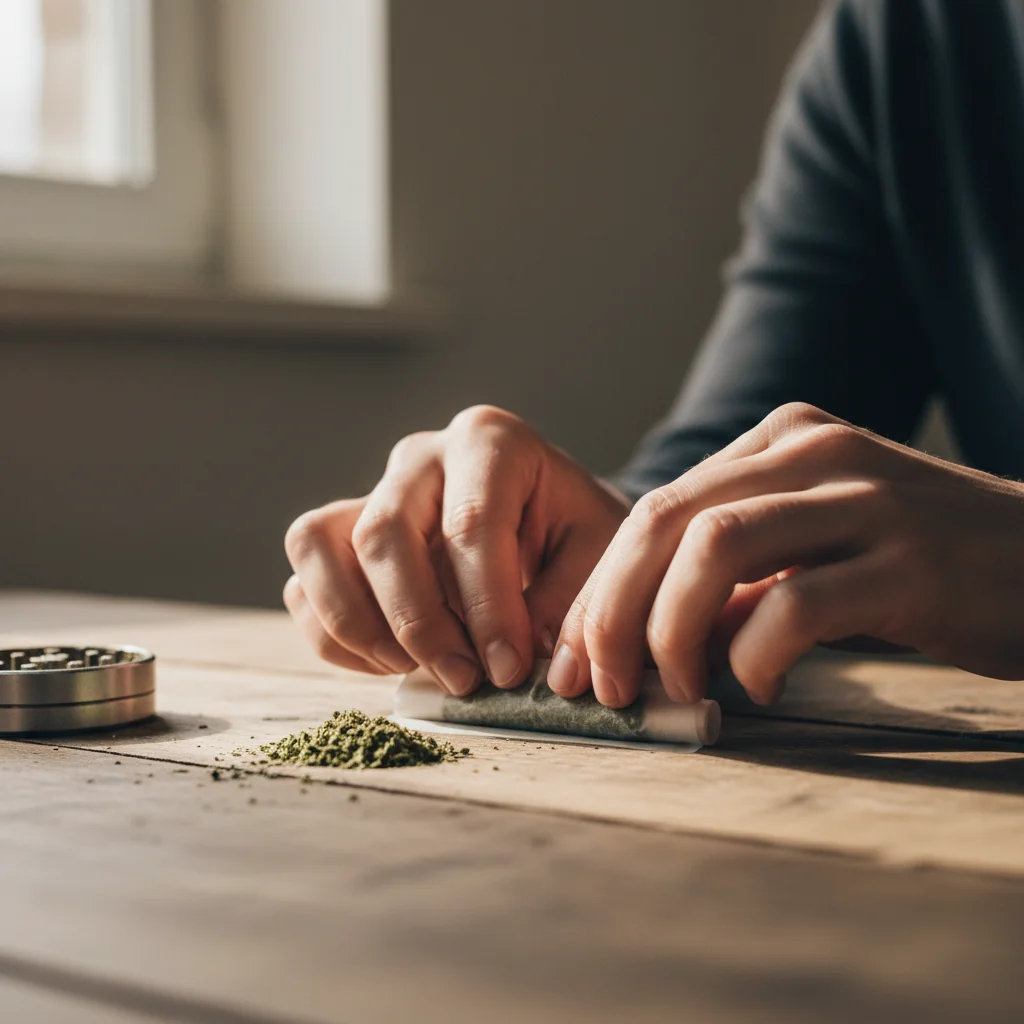
Rolling a joint without a filter or crutch is the original way to do it. No cardboard, no pre-made tips — just rolling papers and herb. Once you understand how to close the mouthpiece end properly, the process is straightforward and repeatable every time.
The main technique shift is the twisted tip. Without a crutch anchoring one end, you twist the excess paper shut to seal the mouthpiece, control airflow, and keep herb from escaping. Everything else follows the same roll-and-seal motion you'd use with a filter.
Quick Answer
To roll a joint without a filter, grind your herb to a medium consistency, spread it evenly along a rolling paper with the glue strip facing you, roll the paper back and forth between your fingers to form a cylinder, tuck the leading edge over the herb, then roll up and lick the glue strip to seal. Twist the mouthpiece end closed and light the twisted tip before drawing.
Table of Contents
- [What a Filterless Joint Actually Is](#what-is-a-filterless-joint) - [How to Roll a Joint Without a Filter, Step by Step](#step-by-step) - [The Twisted Tip Method](#twisted-tip-method) - [Common Mistakes](#common-mistakes) - [Tips for Rolling a Better Filterless Joint](#tips) - [Frequently Asked Questions](#faq) - [Conclusion](#conclusion)What a Filterless Joint Actually Is
A filterless joint is rolled without a crutch, tip, or filter at the mouthpiece end. Most modern rolling guides treat the crutch — a small folded piece of cardboard or a pre-made paper tip — as a required component. It gives the joint structure, keeps the mouthpiece open, and stops loose herb from pulling through into your mouth. But it has never been mandatory.
Filterless joints have existed as long as rolling papers have. Many experienced smokers prefer them because the method requires fewer components and, once the technique is solid, the process is just as fast. You carry papers and herb, and that's it.
There is a functional trade-off. Without a crutch, the paper at the mouthpiece softens as you smoke and can partially collapse. The fix is simple: don't smoke it all the way down. Leaving the last quarter inch unsmoked keeps the draw comfortable throughout and prevents the paper from going fully limp against your lips.
From a technique standpoint, rolling without a filter eliminates one fiddly step — positioning and anchoring the crutch before you start rolling — which is actually where many beginners make their first mistake. The challenge moves instead to forming a firm, even cylinder without anything at either end to hold its shape.
How to Roll a Joint Without a Filter, Step by Step
What you need:
Step 1 — Grind your herb. Aim for an even, medium-coarse consistency. Fine powder burns too fast and pulls through easily; large chunks cause hot spots and uneven burning. A two-piece or four-piece grinder both work.
Step 2 — Crease the paper. Hold the paper with the glue strip along the top edge facing you. Press your finger lengthwise along the center to create a channel. This groove keeps the herb from rolling around while you fill.
Step 3 — Fill the paper. Spread herb evenly along the crease, leaving roughly a quarter inch of empty paper at the lighting end and a half inch at the mouthpiece end. The mouthpiece gap is what you'll use for the twist. A slight cone shape — more herb near the lighting end, tapering toward the mouthpiece — makes the twist easier and improves draw.
Step 4 — Shape the cylinder. Pinch the paper between your thumbs and forefingers. Use a back-and-forth motion — not yet a rolling-up motion — to compress the herb into an even cylinder. This shaping pass determines how evenly the joint burns. Take an extra few seconds here if the herb feels loose or uneven.
Step 5 — Tuck and roll. Once the herb holds a cylinder shape, tuck the non-glue edge of the paper snugly over the herb with your thumbs and begin rolling upward toward the glue strip. Keep even pressure across the full length.
Step 6 — Seal. Lick the glue strip and press it down from one end to the other. Let it sit for 30 to 60 seconds before picking it up — the seal needs a moment to set.
Step 7 — Close the ends. Twist the mouthpiece end shut. You can leave the lighting end open or twist it closed too; either works.
The Twisted Tip Method
The twisted tip is the standard closure for a filterless joint and serves the same basic function as a crutch: it keeps the mouthpiece end sealed, creates mild draw resistance, and prevents herb from falling out during transport. After sealing the glue strip, pinch the excess paper at the mouthpiece end and rotate it between your fingers until it forms a tight, pointed spiral.
For a good twist, you need enough empty paper to work with — the half inch of clearance mentioned in the fill step is the minimum. A longer section twists more securely. Wet the twist very slightly with your fingertip if it keeps unraveling; a small amount of moisture helps the paper hold its shape.
When you're ready to smoke, you have two options. The first is to light the twisted tip directly and let it burn down to the herb before drawing. This is the traditional approach and gives you a moment to even out the cherry. The second is to trim the twist with small scissors and draw from the open paper end. Both work; lighting the twist tends to produce a cleaner, more even start.
As you smoke, the mouthpiece will soften and may partially close. Pinch it back into shape between draws if needed, or crimp it gently between your front teeth to re-open the channel.
Common Mistakes
Packing too loosely. An airy joint will run unevenly, burn faster on one side, and go out between hits. Compress the herb more than feels natural during the shaping step. There should be mild resistance when you draw.
Packing too tightly. Overly dense joints are hard to pull from and produce hotter, harsher smoke. If you can barely draw air after rolling, use a thin tool to gently loosen the center by poking from the lighting end.
Uneven herb distribution. Herb bunched in the middle with sparse ends causes the joint to burn lopsided — collapsing inward from the sides as the center smokes faster. Fill right up to the lighting end for an even burn.
Skipping the shaping step. Trying to tuck and roll immediately, without the back-and-forth shaping pass, usually results in lumps and bulges where the paper didn't wrap cleanly around the herb. Spend an extra 10 seconds on the cylinder before tucking.
Too much empty paper at the lighting end. More than a quarter inch of empty paper at the tip means you'll burn paper for a while before anything happens. Pack the herb close to that end or trim the excess.
Using ultra-thin papers before you're comfortable. Thin papers are excellent once the roll is automatic, but they tear easily during the tuck step and are unforgiving of uneven pressure. Start with standard or medium-weight papers.
Tips for Rolling a Better Filterless Joint
- Pre-crease your papers before filling. Fold the paper around your index finger to create a U-shaped channel before you add any herb. The pre-formed shape makes the tuck step significantly easier.
- Roll on a hard, flat surface. A rolling tray or the cover of a hardcover book gives you control that a soft or uneven surface takes away. It also catches any herb that falls during filling.
- Try a cone shape. Packing slightly more herb toward the lighting end and tapering toward the mouthpiece gives you a natural draw that improves as you smoke. Most people find cones easier to roll consistently than perfectly straight cylinders.
- Roll tighter than feels right. Paper loosens slightly as the moisture from sealing dries, and without a crutch the joint has no internal support structure. Firmer is almost always better than looser.
- Move slowly on the tuck. The tuck is the most common failure point. Use deliberate, even thumb pressure from end to end, and check that the paper is wrapping uniformly before you commit to rolling up.
- Store papers flat and away from humidity. Damp or curled papers tear easily during rolling and don't seal cleanly. A dedicated paper holder or sealed pouch extends their usable life considerably.
Frequently Asked Questions
Does rolling a joint without a filter make it harsher to smoke?
Not significantly. A filter in a joint doesn't cool the smoke or remove irritants in any meaningful way — its main function is structural. What affects harshness is how tightly the joint is packed, how evenly the herb is ground, and how far down you smoke it. Stopping before the last inch keeps the smoke quality consistent and prevents the paper from contributing bitterness at the very end.
What type of rolling papers work best for a filterless joint?
Standard or medium-weight papers in 1¼ size offer the best balance for most people. They hold their shape well during the tuck-and-roll and seal cleanly without extra moisture. Rice papers are a popular choice for more experienced rollers — they burn slowly and add almost no paper taste. Avoid ultra-thin papers until the motion is automatic, since they tear more easily without a crutch to stabilize the mouthpiece end.
How do you stop herb from falling out of a joint with no filter?
The twisted tip is your primary seal. Twist it as tightly as possible right after rolling. Beyond that, packing the herb firmly enough that it doesn't shift is the most reliable fix. If the twist keeps unraveling, you likely left too short a section of empty paper at the mouthpiece — a longer section creates a tighter, more stable twist. A light touch of moisture on the twisted paper helps it hold. Avoid overfilling near the mouthpiece end, since loose herb close to the opening is what escapes most easily.
Can a beginner roll a joint without a filter?
Yes. In some ways it's simpler than rolling with one, since you don't have to position or anchor a crutch before rolling. The main adjustment is the twisted tip technique, which takes a few attempts to feel natural. Start with 1¼ standard-weight papers, use a medium grind, and fill a little lighter than you think you need to. Spend extra time on the shaping step before tucking. Most beginners get a functional, smokable result within the first few tries.
What is the twisted tip method for a filterless joint?
The twisted tip closes the mouthpiece end of a filterless joint in place of a crutch. After rolling and sealing the glue strip, pinch the excess paper at the mouthpiece end and rotate it between your fingers until it forms a firm, pointed spiral. It seals the joint during transport, creates light draw resistance, and keeps herb contained. When you're ready to smoke, either light the twist directly and let it burn down to the herb, or trim it with scissors to open the paper end. Leaving roughly a half inch of empty paper at the mouthpiece gives you enough material to form a solid twist.
Conclusion
Rolling a filterless joint comes down to two things: forming a firm, even cylinder during the shaping step, and closing the mouthpiece end with a solid twist. Get those two right and the rest — grinding, filling, tucking, sealing — follows the same process as any standard roll. Standard-weight 1¼ papers give you the most control while you're learning, and a medium-coarse grind produces the most even burn. Practice the back-and-forth shaping motion a few times with empty papers before adding herb and you'll develop the feel for it quickly. A clean, tight filterless joint takes under a minute once the technique clicks.
Frequently Asked Questions
Rolling without a filter can make the draw slightly harsher since there is no crutch to cool the smoke or keep loose herb out. Using a twisted or pinched tip at the end helps reduce harshness and keeps material from pulling through.
Thin, slow-burning papers such as 1¼ or King Slim sizes work well for filterless joints. Rice or hemp papers tend to burn more evenly and hold their shape better without the structural support a crutch would normally provide.
Twist or pinch the open end closed after filling the paper. Packing the herb evenly and not overfilling also helps. Some rollers fold the tip into a small cone shape to act as a barrier without using a separate filter piece.
Yes, though it takes a little more practice to keep the shape tight and even. Starting with a flat surface, using quality papers, and learning to tuck the paper cleanly are the most important skills to develop early on.
The twisted tip method involves leaving a small amount of empty paper at the end of the rolled joint, then twisting it closed like a wrapper. This seals the end, prevents herb from spilling, and gives you a clean place to light the joint.
Related Guides
Rolling Paper Sizes Explained: 1 1/4, King Size, and More
Comprehensive guide about rolling paper sizes explained: 1 1/4, king size, and more. Learn everything you need to know with expert tips and detailed instructions.

Best Rolling Papers for Beginners: Complete Buying Guide 2026
Discover the best rolling papers for beginners including RAW, Zig-Zag, and OCB. Learn about sizes, materials (rice vs hemp vs wood pulp), and which papers are easiest to roll with.
Clear Rolling Papers: Are Cellulose Papers Worth It?
Comprehensive guide about clear rolling papers: are cellulose papers worth it?. Learn everything you need to know with expert tips and detailed instructions.