

How to Make and Fold Filter Tips: Multiple Techniques for Perfect Crutches

Mike Rodriguez
Rolling Expert
How to Make and Fold Filter Tips: Multiple Techniques
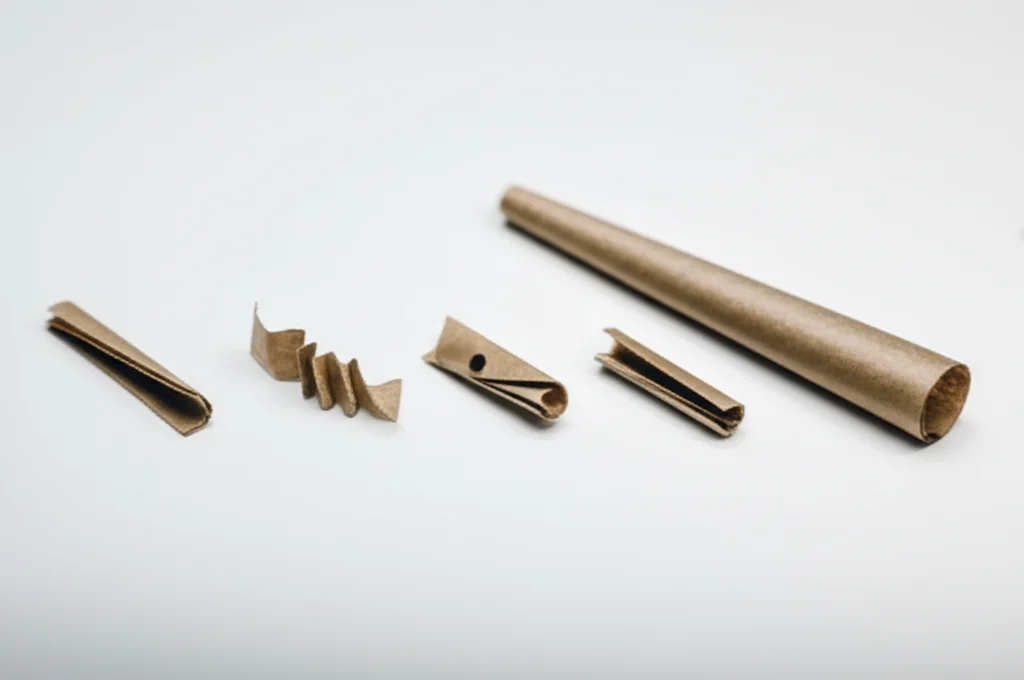
Filter tips (also called crutches) are essential for joint rolling, providing structure, preventing cannabis from entering your mouth, and giving you something to hold. This guide teaches multiple folding techniques and how to create perfect filters every time.
Quick Answer
To make a basic filter: Cut cardboard to 2"×0.5", fold one end back-and-forth 3-4 times (accordion), roll remaining paper around accordion. The accordion prevents collapse. Alternative techniques include spiral method, M-shape, and W-shape - all work well with slight airflow differences.
Why Use Filters?
Benefits: - Provides structure and shape - Prevents cannabis/ash in mouth - Cooler smoke (extra distance) - Something to hold without burning fingers - Can smoke joint completely - Keeps joint from getting soggy at mouth end
Without filter: - Joint can collapse - Roach waste (can't smoke last bit) - Harsh final hits - Difficult to hold when small
Find quality filter tips and rolling supplies at MunchMakers. For filter folding techniques, r/trees on Reddit has a supportive cannabis community.
Materials
Best: - Specialized filter tip paper (sold in booklets, perfect thickness) - Business cards (uncoated, white) - Index cards (cut to size)
Acceptable: - Thin cardboard from packaging - Playing cards (if desperate)
Avoid: - Glossy or coated paper (releases chemicals when heated) - Regular paper (too thin, collapses) - Magazine pages (ink and coating)
Technique #1: Accordion/Fan Fold (Most Common)
Why It Works:
The accordion prevents the filter from collapsing while providing good airflow through the folds.Step-by-Step:
1. **Cut material** to about 2 inches long, 1/2 inch wide 2. **Accordion fold** one end: fold forward, then back, then forward again (3-4 folds) 3. **Roll the rest** of the paper around the accordion 4. **Adjust tightness** to match your joint diameter 5. Should be **cylinder shape** with accordion visible at centerDiameter: About pencil eraser size for standard joints
Practice tip: Make 10 in a row to develop consistency
Technique #2: Spiral Method
Why Different:
Creates more concentrated airflow through spiral center. Some prefer the draw.How To:
1. Start at one end of filter material 2. Roll VERY tightly into spiral (like cinnamon roll) 3. Continue rolling the outer paper around spiral 4. Should create dense spiral at center with rolled paper outsideBest for: People who like tighter draw and more resistance
Technique #3: M-Shape/W-Shape
Why Different:
Creates structural channels along entire filter length. Very stable, won't collapse.How To:
1. Fold entire filter material into M or W shape (zigzag along full length) 2. Can leave as zigzag or roll around itself 3. Creates multiple airflow channelsBest for: Structural integrity, less about airflow
Technique #4: Simple Roll (Easiest)
For Absolute Beginners:
1. Just roll the filter material into tight cylinder 2. No accordion or folds 3. Works but can collapse while smokingPros: Fastest, easiest Cons: Can compress, less stable
Size Considerations
Standard Size:
- **Length**: 2 inches of material - **Final diameter**: 6-8mm (pencil eraser) - **For 1¼ papers**: Perfect fitLarger Filters:
- **For king size papers**: 8-10mm diameter - **For blunts**: 10-12mm - Use more material (2.5-3 inches)Smaller Filters:
- **For slim/European papers**: 5-6mm - Less material needed (1.5 inches)Rule: Filter should be slightly smaller than joint diameter for snug fit
Common Filter Problems
Problem: Filter Falls Out
Cause: Too small, not integrated into roll
Fix: Make filter larger diameter, ensure it's rolled INTO joint not just placed at end
Problem: Filter Collapses While Smoking
Cause: Using simple roll instead of accordion, or material too thin
Fix: Use accordion method, use thicker material
Problem: Too Tight to Draw
Cause: Rolled too densely, accordion too compressed
Fix: Roll slightly looser, use fewer accordion folds (2-3 instead of 4-5)
Problem: Uneven/Crooked
Cause: Inconsistent rolling pressure
Fix: Practice rolling evenly, rotate as you roll
Pre-Made vs Hand-Made Filters
Pre-Made Filter Tips (Booklets): - Consistent size - Perforated for easy tearing - Designed specifically for purpose - Various fun designs - $2-5 per booklet (50-100 filters)
Hand-Made (Business Cards, etc.): - Free - Always available - Can customize size - Requires cutting
Most people use both: Pre-made when available, improvise when needed
Advanced: Glass and Metal Filters
Glass Tips: - Reusable, cleanable - Very cool smoke - Won't get soggy - More expensive ($5-20) - Can break
Metal Filters: - Ultra-durable - Cleanable - Multiple designs - Cool smoke - Can get very hot
Cardboard still most popular due to disposability and perfect function.
This guide is for educational purposes. Cannabis laws vary by jurisdiction.
Step 1: Prepare filter material
Cut or tear filter tip paper to about 2 inches long, 1/2 inch wide. Business cards, index cards, or specialized filter tip booklets all work.
Step 2: Create accordion base
At one end, fold back and forth 3-4 times creating accordion/zigzag pattern. This prevents collapse and improves airflow.
Step 3: Roll around accordion
Roll the remaining paper around the accordion base to create cylinder. The accordion stays at center, rolled paper wraps around it.
Step 4: Size and adjust
Adjust tightness - should fit snugly in joint without falling out. Can be rolled tighter or looser depending on paper size and joint diameter.
Step 5: Alternative: Spiral method
Instead of accordion, create tight spiral at center (like cinnamon roll), then roll paper around it. Different airflow but also effective.
Step 6: Alternative: M-shape
Fold paper into M or W shape along entire length, then roll. Creates structured airflow channels throughout.
Frequently Asked Questions
Specialized filter tip paper is ideal (thin, food-grade cardboard). Business cards work well. Avoid glossy or coated paper which can release chemicals when heated.
Filters provide structure, prevent cannabis from entering mouth, give you something to hold, and allow you to smoke the joint completely without burning fingers.
Standard is about pencil-eraser diameter. Bigger filters waste less weed but make joint harder to roll. Smaller filters are easier to roll but leave more waste.
Related Guides
Rolling Paper Sizes Explained: 1 1/4, King Size, and More
Comprehensive guide about rolling paper sizes explained: 1 1/4, king size, and more. Learn everything you need to know with expert tips and detailed instructions.

Best Rolling Papers for Beginners: Complete Buying Guide 2026
Discover the best rolling papers for beginners including RAW, Zig-Zag, and OCB. Learn about sizes, materials (rice vs hemp vs wood pulp), and which papers are easiest to roll with.
Clear Rolling Papers: Are Cellulose Papers Worth It?
Comprehensive guide about clear rolling papers: are cellulose papers worth it?. Learn everything you need to know with expert tips and detailed instructions.