
How Much Is an Ounce of Weed? Prices, Grams, and What to Expect

Lisa Thompson
Storage & Preservation Specialist
How Much Is an Ounce of Weed? Prices, Grams, and What to Expect
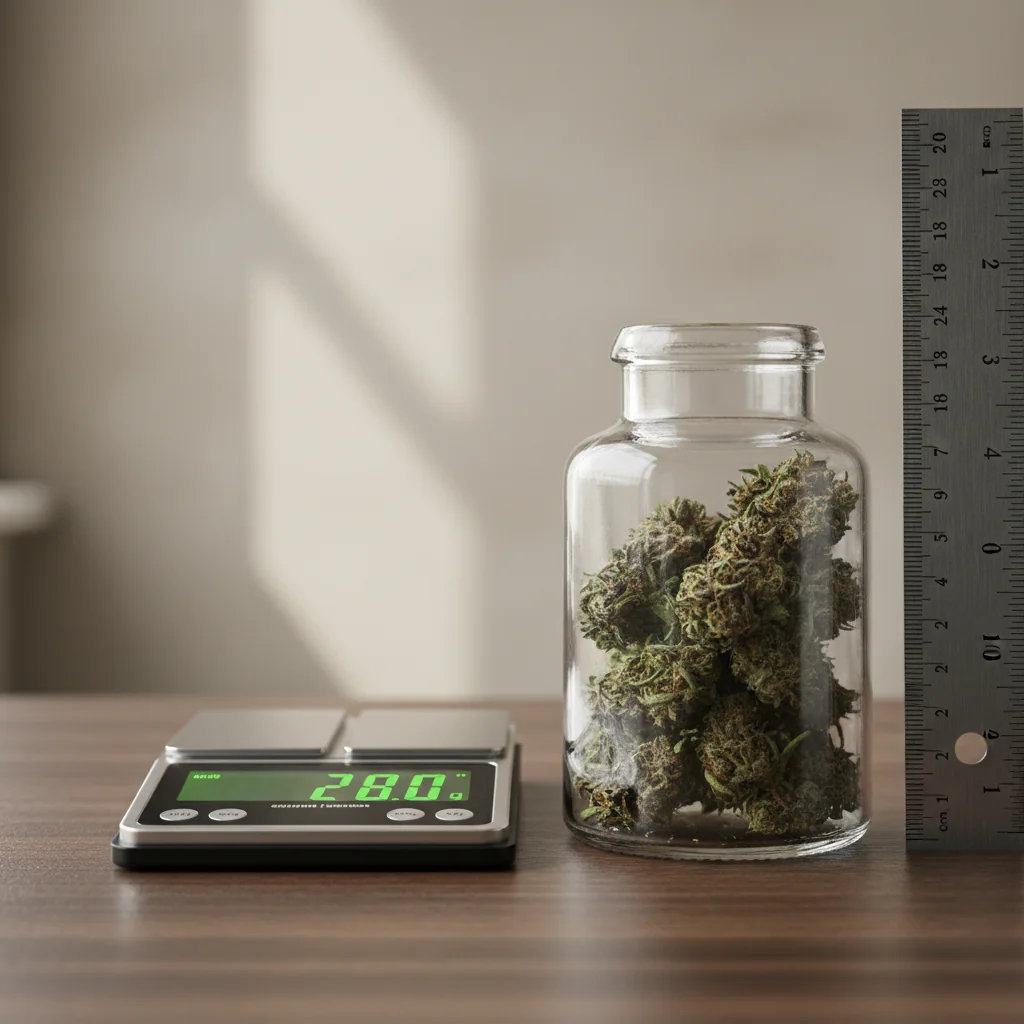
The price of an ounce of weed varies more than almost any other cannabis quantity because a full ounce is the threshold where bulk pricing kicks in. State legality, tax structure, quality tier, and dispensary type all push the cost up or down by a wide margin, which is why the same physical amount can cost $100 in one market and $400 in another.
Whether you're new to buying cannabis in bulk or comparing prices across dispensaries, understanding what you're paying for — and how much weed you're actually getting — is the first step to making a good purchase.
Quick Answer
An ounce of weed is 28 grams. In legal U.S. dispensaries, prices typically run $100 to $300 per ounce, depending on quality tier and state. Budget shelf flower averages $100–$160, mid-tier averages $180–$240, and top-shelf or exotic strains can reach $300 to $400+. Buying an ounce almost always saves money per gram compared to buying eighths or quarters.
Table of Contents
- How Many Grams in an Ounce of Weed
- What an Ounce of Weed Costs by Quality Tier
- Why Ounce Prices Vary So Much by State
- How Long an Ounce Lasts
- Common Mistakes
- Tips for Buying an Ounce
- Frequently Asked Questions
- Conclusion
How Many Grams in an Ounce of Weed
A full ounce of cannabis is 28 grams in standard dispensary measurements, even though a precise avoirdupois ounce is technically 28.3495 grams.
The cannabis industry has rounded down to 28 grams for decades because it makes math easier and packaging consistent. When you buy an ounce, you can break it down into smaller portions: an ounce equals 4 quarters (each 7 grams), 8 eighths (each 3.5 grams), or 28 single grams. This is why eighths are so common — they're literally one-eighth of an ounce.
If you've heard the slang term "zip" used for an ounce, that comes from the legacy market where an ounce of flower fit cleanly into a zip-lock sandwich bag. The term stuck around even though most legal dispensaries use mylar or glass containers now.
When you're handed a sealed dispensary jar, the label will list the net weight. A correctly portioned ounce should weigh exactly 28.0 grams of dry flower (not including stems removed by the budtender). If you're skeptical, you can verify the weight on a digital scale at home — though most legal operators are tightly regulated on weight accuracy.
What an Ounce of Weed Costs by Quality Tier
Cannabis pricing follows tiers, and the gap between a budget ounce and a top-shelf ounce can be larger than the gap between two different products entirely.
Most everyday consumers settle at mid-shelf because it's the best balance of potency, flavor, and price. Top-shelf is what you go to for special occasions or for people who care strongly about terpene profiles. Exotic flower is typically a small percentage of any dispensary's menu and sells out fastest.
Outside of dispensaries, traditional unregulated market prices vary even more widely and often skip the budget tier entirely — there's less incentive to sell low-margin flower in cash transactions.
Why Ounce Prices Vary So Much by State
The same ounce of cannabis can cost $120 in Oregon and $380 in New York. Three forces drive that gap.
Tax structure is the largest factor. States like Washington layer excise tax (37%) on top of standard sales tax, which inflates the shelf price compared to states with lower excise rates. California adds a cultivation tax plus excise plus state sales tax plus local sales tax, and the combined burden lands on the consumer.
Supply and licensing matters too. Mature markets like Oregon and Colorado have an oversupply of cannabis and aggressive competition, which pushes ounce prices below $150 routinely. Newer markets like New Jersey and New York have fewer licensed cultivators, slower license issuance, and consequently higher prices.
Vertical integration vs. independent retail shapes the markup. In states where one operator can grow, process, and sell the same product, the retail price tends to be lower because the operator captures the margin internally. In markets that prohibit or limit vertical integration, each handoff adds margin, and consumers pay more.
You can also see meaningful variance within a single state. Dispensaries near tourist areas or in cities with limited license counts charge more than rural shops or those in heavily competitive corridors.
How Long an Ounce Lasts
How long an ounce lasts depends almost entirely on how often you smoke and how much you use per session.
Light user (a few sessions per week, ~0.3 grams each): an ounce lasts roughly 4 to 6 months. At about 1 gram per week, 28 grams stretches comfortably across that window.
Moderate user (daily, ~0.5 grams): an ounce lasts about 8 weeks. This is a common pace for people who smoke a bowl in the evening or share a small joint with a partner.
Heavy user (multiple sessions daily, 1–2 grams): an ounce lasts 2 to 4 weeks. Daily smokers who use a bong or roll multiple joints will burn through 28 grams quickly.
Very heavy user (3+ grams daily): an ounce can disappear in under 10 days, especially when blunts or large bowls are the consumption method.
If you're new to cannabis or haven't bought in bulk before, start with an eighth or a quarter to gauge your pace before committing to an ounce. Cannabis stored properly in glass jars with humidity packs holds its potency for 6+ months, so an ounce isn't wasted on a slower consumer — it just changes the math on how often you need to restock.
Common Mistakes
The most common ounce-buying mistakes cost money or quality, sometimes both.
Buying an ounce of a strain you've never tried. An ounce locks you into one cultivar for weeks or months. If the effects, flavor, or potency don't match what you expected, you're stuck with 28 grams of something you don't love. Always sample with an eighth first.
Ignoring storage. Cannabis exposed to air, heat, and light degrades within weeks. Buying an ounce and leaving it in the original plastic baggie is a fast way to dry out and lose potency. A glass jar with a Boveda or Integra humidity pack preserves flower for 6+ months.
Confusing "shake" with mid-shelf. Some budget-priced ounces are actually shake — the small leaf and broken-up bud that collects at the bottom of jars. Shake is fine for joints if you grind it anyway, but it shouldn't be priced like whole-flower mid-shelf.
Not checking the test date. Dispensary jars have harvest and packaging dates. Flower that was harvested 6+ months ago can still be smokable but will have lost some potency and freshness. Check the label before committing to an ounce.
Tips for Buying an Ounce
A few habits make the difference between a great bulk purchase and a regrettable one.
Watch for sales cycles. Most legal dispensaries discount ounces hardest at the end of the month, on holidays (especially 4/20 and Green Wednesday), and when a new harvest comes in. Joining a dispensary loyalty program often gives you access to ounce-tier pricing before non-members.
Compare price-per-gram, not sticker price. A $200 ounce sounds expensive, but if it's $7.15 per gram and the eighths in the same case are $50 ($14.30 per gram), the ounce is a 50% discount.
Smell and visual check before buying. Top dispensaries let you ask for the jar to be opened so you can examine bud structure, color, and aroma. Dense, sticky, trichome-coated buds with a strong terpene profile are what you're paying for at top-shelf prices.
Budget for storage. Plan to spend $10–$20 on a proper glass jar with humidity packs at the same time as the ounce. The investment pays for itself within the first month by preserving flavor and potency.
Split with a partner. If you're not a daily smoker and you find a strain you love, splitting an ounce gets you the bulk price without the commitment of using all 28 grams yourself.
Frequently Asked Questions
How many grams are in an ounce of weed?
An ounce of weed is 28 grams in dispensary measurements. Technically a full avoirdupois ounce is 28.35 grams, but the cannabis industry rounds down to 28 to keep packaging and pricing consistent.
Is buying an ounce cheaper than buying eighths?
Yes, almost always. Most dispensaries discount the per-gram price by 30–50% when you buy in ounce quantities versus single eighths. The catch is you have to commit to using or storing 28 grams of one strain.
What's the difference between a "zip" and an ounce?
They're the same thing. "Zip" is slang dating back to when an ounce of cannabis fit into a standard zip-lock sandwich bag. The term is still common in retail and casual conversation but refers to exactly 28 grams.
How much is an ounce of weed in a legal state?
In legal states, ounce prices typically range from $100 (budget tier in oversupplied markets like Oregon) to $400+ (exotic strains in newer markets like New York). Mid-shelf flower averages $150–$220 in most legal states.
Can I legally buy an ounce of weed in one transaction?
In most U.S. recreational states the personal possession limit is 1 ounce of flower per transaction, so yes — an ounce is the maximum you can buy at once in many jurisdictions. Some states allow more (up to 2.5 ounces in Massachusetts, for example), and medical patients usually have higher limits.
Conclusion
An ounce of weed is 28 grams of cannabis flower, and it's the quantity where bulk pricing kicks in across most legal markets. Expect to pay anywhere from $100 for budget shake to $400+ for exotic top-shelf, with most everyday flower landing in the $150–$240 range. The best ounce purchase is one you've sampled in smaller quantities first, stored in a proper glass jar with humidity control, and bought during a sale cycle. Whether you're stocking up for personal use or splitting with a partner, understanding what 28 grams actually costs and how long it lasts makes the difference between a smart buy and an expensive one.
Frequently Asked Questions
An ounce of weed is 28 grams in dispensary measurements. Technically a full avoirdupois ounce is 28.35 grams, but the cannabis industry rounds down to 28 to keep packaging and pricing consistent.
Yes, almost always. Most dispensaries discount the per-gram price by 30-50% when you buy in ounce quantities versus single eighths. The catch is you have to commit to using or storing 28 grams of one strain.
They're the same thing. 'Zip' is slang dating back to when an ounce of cannabis fit into a standard zip-lock sandwich bag. The term still refers to exactly 28 grams.
In legal states, ounce prices typically range from $100 (budget tier in oversupplied markets like Oregon) to $400+ (exotic strains in newer markets like New York). Mid-shelf flower averages $150-$220 in most legal states.
In most U.S. recreational states the personal possession limit is 1 ounce of flower per transaction, so an ounce is the maximum you can buy at once. Some states allow more, and medical patients usually have higher limits.
Related Guides

Best Scales for Cannabis: Complete Buying Guide
Find the perfect scale for weighing cannabis. Compare pocket scales, milligram scales, and kitchen scales with recommendations for different needs and budgets.

How to Calibrate a Digital Scale: Step-by-Step Guide
Learn how to properly calibrate your digital scale for accurate cannabis measurements. Step-by-step instructions for calibration weights, DIY methods, and troubleshooting.

Understanding Cannabis Measurements: Grams to Ounces Explained
# Understanding Cannabis Measurements: Grams to Ounces Explained ## Introduction Navigating the world of cannabis can be a bit daunting, especially when it comes to understanding the various measurements used to quantify it. Whether you're a seasoned consumer or new to the scene, knowing the standa