
How Much Is a Gram of Weed? Prices, Joints, and What to Expect

Lisa Thompson
Storage & Preservation Specialist
How Much Is a Gram of Weed? Prices, Joints, and What to Expect
A gram is the smallest standard cannabis purchase at most legal dispensaries — the entry-level quantity for someone trying a new strain or a beginner buying weed for the first time. Even though the gram is the simplest unit, the price can vary by 4x or more depending on quality tier, state, and dispensary type. If you're trying to budget a session or compare prices, knowing what a gram actually gets you is the starting point.
Quick Answer
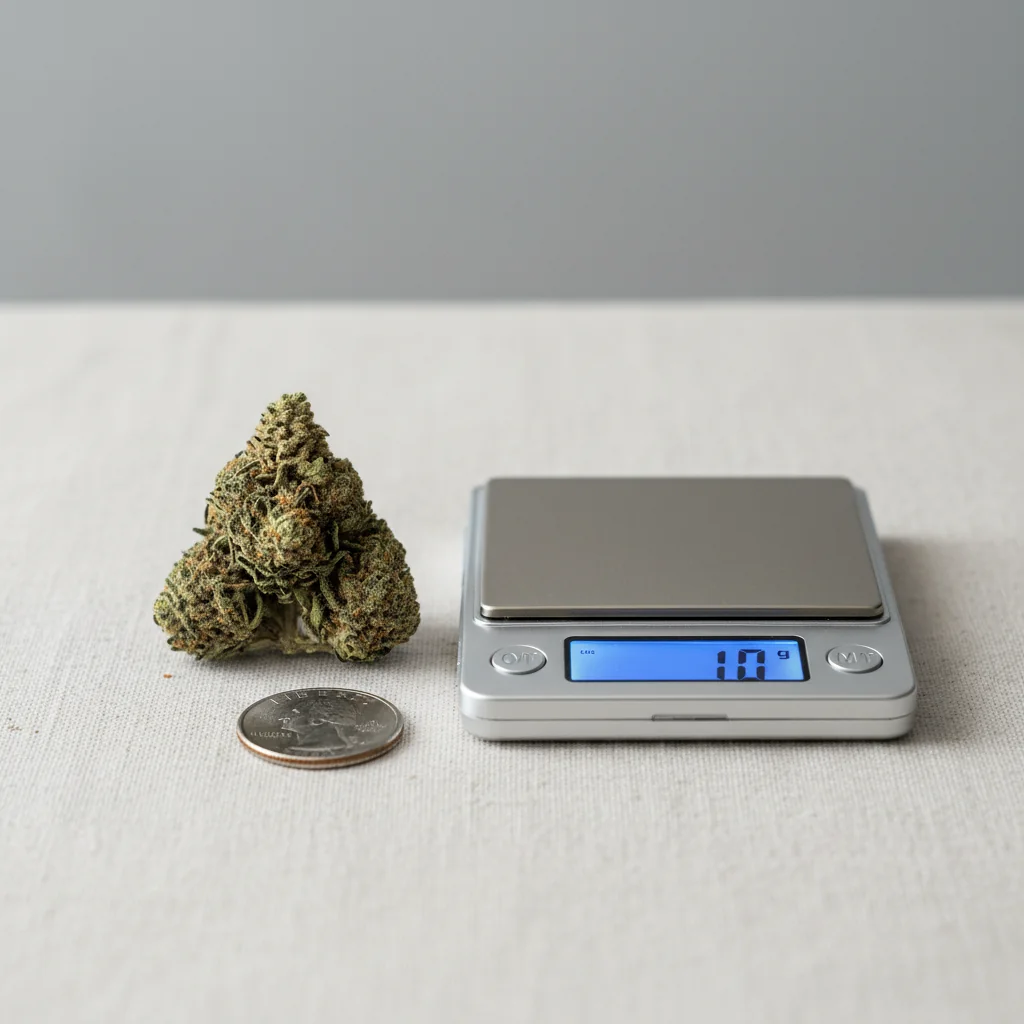
A gram of weed costs $8 to $25 at most U.S. legal dispensaries depending on quality tier and state. Budget flower runs $8-$12, mid-shelf $12-$18, and top-shelf $18-$25+. A gram is enough cannabis for 2-3 average joints, 4-5 small pipe bowls, or 1-2 large bong sessions. By weight, a gram is small enough to fit on a quarter coin and produces visible volume about the size of a thumb tip when ground.
Table of Contents
- What a Gram of Weed Looks Like
- Gram Prices by Quality Tier and State
- How Many Joints, Bowls, or Hits a Gram Makes
- Why Per-Gram Prices Drop in Bulk
- Common Mistakes
- Tips for Buying by the Gram
- Frequently Asked Questions
- Conclusion
What a Gram of Weed Looks Like
The visual size of a gram depends on flower density. A gram of dense, top-shelf cannabis is smaller than a gram of fluffy budget flower because density varies by strain and cure quality.
A typical gram of mid-density cannabis fits comfortably on top of a U.S. quarter, with a small amount overhanging. The bud size varies — a gram is often a single small nug or two medium-sized pieces. When ground in a grinder, a gram produces a visible volume roughly the size of a thumb tip or a small pile that fills about a teaspoon (loosely packed).
Density correlation matters because dispensary jars sometimes look mostly empty even when they contain a full gram. A dense indica nug appears smaller in the jar than a fluffy sativa nug at the same weight. The scale is what matters, not the visual fill of the container.
If you're checking the weight at home with a digital scale, a properly portioned gram should weigh exactly 1.00 grams (excluding the container weight). Most legal-state dispensaries err slightly over (1.01-1.05g) to avoid weight-discrepancy complaints, but exact 1.00g is the standard.
Gram Prices by Quality Tier and State
Cannabis pricing follows tiers, and the gap between budget and exotic tiers is significant.
State pricing variance is substantial. Mature legal markets like Oregon, Colorado, and Michigan have aggressive competition that pushes top-shelf grams below $15 routinely. Newer markets like New York, New Jersey, and Connecticut have higher tax burdens and tighter supply, which pushes top-shelf grams above $20. Tourist-heavy markets (Las Vegas, parts of California) see inflated retail prices on premium strains.
Outside of legal dispensaries, traditional unregulated market gram prices are typically $10-$20 across all tiers, but quality and consistency are unverifiable. A "gram" sold on the unregulated market is also less likely to be exactly 1.0 gram, with reports of grams running 0.7-0.9g being common.
A gram's per-unit price is always the highest in any dispensary's pricing structure. Buying a gram costs significantly more per gram than buying an eighth (3.5g) or quarter (7g), which is the main reason regular smokers buy in larger quantities once they know what strain they like.
How Many Joints, Bowls, or Hits a Gram Makes
A single gram delivers different session counts depending on the consumption method.
Joints: a typical joint contains 0.3 to 0.5 grams. A gram makes 2 to 3 average joints. If you roll thinner pinners, you can stretch a gram to 4 joints. King-sized rolling papers produce larger joints that consume 0.5-0.8g each, so a gram makes only 1-2 of those.
Pipe bowls: a small bowl on a glass spoon pipe holds about 0.2-0.3 grams. A gram makes 4-5 small bowls or 2-3 large bowls. Bowls last roughly 2-3 hits each, so a gram delivers 8-15 inhales when smoked through a pipe.
Bongs: a bong bowl holds 0.2-0.4g depending on the size. A gram fills 3-5 bong bowls. Bongs deliver larger hits per session, so most users get 2-3 bowls' worth of effect from a single gram.
Vaporizers (dry herb): dry herb vapes use cannabis efficiently because they don't combust the material. A gram lasts 5-10 vaporizer sessions of 0.1-0.2g each, which is the most session-count-per-gram of any method.
Edibles: a gram of decarboxylated flower contains roughly 100-200mg of THC depending on strain potency. Infused into butter or oil, a gram produces 5-20 standard 10mg edibles.
The math means a gram is enough cannabis for one heavy session for 2-3 people, or several days of light personal use for one person.
Why Per-Gram Prices Drop in Bulk
Buying in larger quantities reduces the per-gram cost meaningfully — typically 30-50% off when you scale from a gram to an ounce.
The per-gram cost on an ounce is roughly half the per-gram cost on a single gram. The reason is dispensaries' overhead — packaging, labeling, register transactions, compliance reporting — is roughly the same whether they sell you 1g or 28g. The marginal cost of selling more weight per transaction is mostly just the flower itself.
This pricing structure is why regular smokers buy at least eighth-tier quantities once they know which strain they want to commit to. A gram is best used as a sample purchase to test a new strain before buying in volume.
Common Mistakes
A few common mistakes around gram purchases waste money or cause confusion.
Buying multiple grams of the same strain instead of an eighth. If you know you want 3+ grams of one strain, buying an eighth saves $5-$10 versus buying three single grams. Always check the eighth price before committing to multiple grams.
Assuming a "gram" is always 1.0 gram. In legal dispensaries, weights are tightly regulated. In unregulated markets, "grams" often weigh 0.7-0.9g and the buyer has no recourse. If you're buying outside of a dispensary, weigh the cannabis on a digital scale.
Comparing gram prices across different quality tiers. A $10 gram of shake is not the same product as a $20 gram of top-shelf flower. The cheaper price isn't a better deal if the THC content and terpene profile are dramatically lower.
Underestimating how much a gram makes. New smokers often buy a gram thinking it's a small starter amount and then have leftovers for weeks. A gram can stretch surprisingly far for occasional users.
Ignoring tax inclusivity. Some dispensaries display pre-tax prices on shelves, others display post-tax. A "$10 gram" sticker price can become $13-15 at checkout in high-tax states.
Tips for Buying by the Gram
A few habits get you better value when buying single grams.
Use single grams as samples for new strains. When you want to try a strain you haven't smoked before, buying a gram is the cheap way to test it. If you love it, scale up to an eighth or larger on a future visit.
Look for daily deals on grams. Many dispensaries discount specific strains as their "gram of the day" or have happy hour specials. Joining the dispensary's loyalty program or text alerts surfaces these.
Compare price-per-gram across tiers. A $14 gram of mid-shelf often delivers the same satisfaction as a $20 gram of top-shelf for casual smoking. The $20 gram is worth it for special occasions or terpene-focused enjoyment.
Avoid "gram packs" of unknown strain mixes. Pre-rolled multipacks sometimes mix strains in ways that aren't disclosed. If you're paying for a single gram, get a known strain.
Keep grams airtight. A single gram exposed to air dries out within a few days. Store grams in a small glass jar or the original dispensary container with a humidity pack.
Frequently Asked Questions
How much does a gram of weed cost?
In U.S. legal dispensaries, a gram costs $8-$25 depending on quality tier and state. Budget flower is $8-$12, mid-shelf is $12-$18, top-shelf is $18-$25+. State variance is significant — mature markets like Oregon are cheaper, newer markets like New York are more expensive.
How many joints does a gram make?
A gram makes 2-3 average-sized joints (each 0.3-0.5g). Thinner pinners stretch to 4 per gram; king-sized joints produce only 1-2 per gram. The exact count depends on rolling style and paper size.
How long does a gram of weed last?
For an occasional smoker (1-2 sessions per week), a gram lasts 1-2 weeks. For a daily smoker, a gram lasts 2-4 days. Heavy users can finish a gram in a single day. The lifespan depends entirely on consumption frequency and method.
Is a gram cheaper than buying an eighth?
No. A gram is the most expensive per-gram quantity at any dispensary. An eighth (3.5g) typically costs 20-30% less per gram than buying three individual grams.
How big is a gram of weed visually?
A gram is small enough to fit on a U.S. quarter coin with a small overhang. The exact visual size varies by flower density — denser indica buds are smaller; fluffier sativas appear larger at the same weight. When ground, a gram fills roughly a teaspoon.
Conclusion
A gram of weed costs $8-$25 at U.S. legal dispensaries depending on quality and state. It's the smallest standard purchase quantity and the best way to sample a new strain before committing to larger amounts. A gram makes 2-3 joints, 4-5 small bowls, or several days of light personal use. The per-gram price drops 30-50% when you scale up to an eighth or larger, so once you know what strain you like, the math favors bulk purchases. Use single grams as test purchases, store them airtight, and watch for daily deals to get the best value.
Frequently Asked Questions
In U.S. legal dispensaries, $8-$25 depending on quality tier and state. Budget flower is $8-$12, mid-shelf is $12-$18, top-shelf is $18-$25+. State variance is significant.
A gram makes 2-3 average joints (each 0.3-0.5g). Thinner pinners stretch to 4 per gram; king-sized joints produce only 1-2 per gram.
For occasional smokers (1-2 sessions/week), a gram lasts 1-2 weeks. For daily smokers, 2-4 days. Heavy users can finish a gram in a single day.
No. A gram is the most expensive per-gram quantity at any dispensary. An eighth (3.5g) typically costs 20-30% less per gram than three individual grams.
Small enough to fit on a U.S. quarter coin with slight overhang. Visual size varies by flower density — denser buds appear smaller. Ground, a gram fills roughly a teaspoon.
Related Guides

Best Scales for Cannabis: Complete Buying Guide
Find the perfect scale for weighing cannabis. Compare pocket scales, milligram scales, and kitchen scales with recommendations for different needs and budgets.

How to Calibrate a Digital Scale: Step-by-Step Guide
Learn how to properly calibrate your digital scale for accurate cannabis measurements. Step-by-step instructions for calibration weights, DIY methods, and troubleshooting.

Understanding Cannabis Measurements: Grams to Ounces Explained
# Understanding Cannabis Measurements: Grams to Ounces Explained ## Introduction Navigating the world of cannabis can be a bit daunting, especially when it comes to understanding the various measurements used to quantify it. Whether you're a seasoned consumer or new to the scene, knowing the standa