
How Long Does Weed Stay in Your System After a Couple of Puffs?
How Long Does Weed Stay in Your System After a Couple of Puffs?
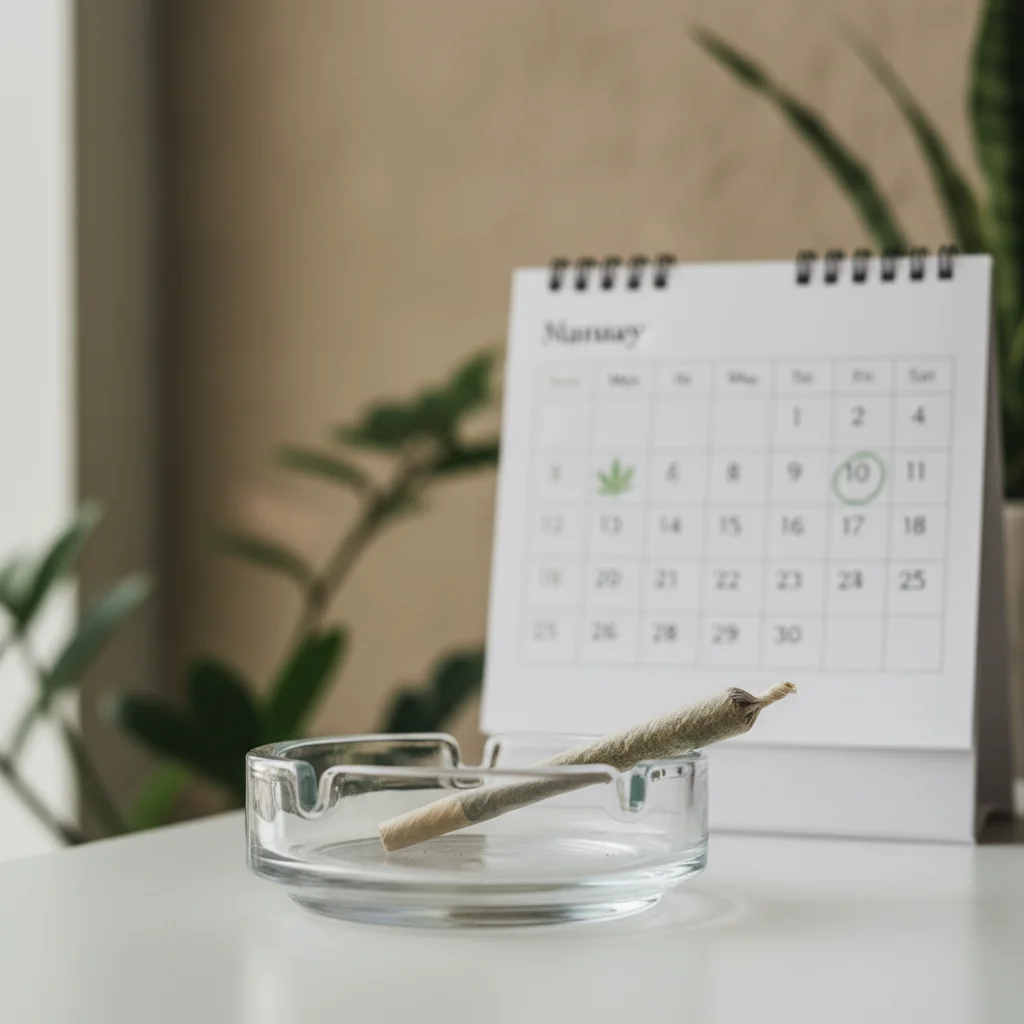
The detection window for a couple of puffs of cannabis is much shorter than the headline numbers people usually see online. Most articles about weed-and-drug-tests cover the heavy-user scenario, where THC has built up in fat tissue over months of daily smoking. A one-time couple of puffs is a fundamentally different metabolic situation, and the detection timelines that apply to daily users don't apply here.
Quick Answer
For a person with no recent cannabis history, a couple of puffs (one or two inhales of a joint or pipe) typically clears from urine in 1-3 days, from blood in 4-12 hours, from saliva in 1-2 days, and from hair within 7-14 days of the exposure if testing is delayed. Most light users with no other recent use pass standard urine drug tests within 72 hours. Hair follicle tests are an exception — hair retains evidence longer regardless of dose.
Table of Contents
- What Counts as "A Couple of Puffs"
- Detection Windows for Light Exposure
- Why Light Use Clears So Fast
- What Could Extend Detection Time
- Common Mistakes
- Tips for One-Off Cannabis Exposure
- Frequently Asked Questions
- Conclusion
What Counts as "A Couple of Puffs"
The number of inhales matters less than the cumulative THC exposure and your prior usage history.
A "couple of puffs" in this guide means: 1-3 inhales of cannabis flower or vapor, on a single occasion, with no other cannabis use in the prior 30+ days. This is the scenario most relevant to social-setting users — someone who tries a friend's joint at a party, takes a small hit at a concert, or experiments once after years of abstinence.
In rough terms, 1-3 puffs delivers approximately 5-15 milligrams of THC into the bloodstream depending on the strain potency and inhalation depth. For comparison, a full joint contains 100-200mg of THC at typical flower potency, and a full bowl of a bong contains 50-100mg. A couple of puffs is a small fraction of a single normal session.
This guide does NOT apply to: people who used cannabis daily and recently quit, people who took dabs or concentrate vape hits (those deliver significantly more THC per inhale), or people who consumed edibles. Each of those scenarios produces a longer detection window than light flower puffs.
The math also assumes you actually inhaled. If you held smoke in your mouth without drawing it into your lungs, virtually no THC reaches your bloodstream and the detection window is essentially zero.
Detection Windows for Light Exposure
The detection windows for a couple of puffs differ substantially from the windows for daily users.
Urine tests typically detect THC-COOH (the primary metabolite) for 1-3 days after a couple of puffs in someone with no recent cannabis history. The standard immunoassay cutoff for urine is 50 ng/mL — and a single light exposure often doesn't push metabolite concentration above that threshold for long. Many one-time users test below the cutoff within 24-48 hours.
Blood tests look for active THC, not metabolites. Active THC clears the bloodstream rapidly — often within 4-12 hours after light exposure. Blood tests are mostly used in DUI investigations and post-accident screening, not pre-employment.
Saliva tests detect THC contamination of the oral cavity and active THC in saliva. After a couple of puffs, saliva typically tests positive for 12-48 hours. Mouthwash and rinsing the mouth can shorten the window slightly.
Hair follicle tests are different. THC metabolites enter hair as it grows, and the detection window is theoretically up to 90 days. However, a single light exposure often doesn't deposit enough metabolites in hair to exceed the typical cutoff (1 picogram per milligram for the standard test). Light, one-time use is sometimes invisible to hair testing entirely.
Why Light Use Clears So Fast
The detection-window difference between light users and heavy users comes down to where THC is stored in the body.
For a daily smoker, THC accumulates in fat tissue over time. Cannabis is fat-soluble, so the more you use, the more THC and metabolites get stored in fat cells throughout your body. Long after the last use, those fat stores release THC back into the bloodstream gradually, where it gets metabolized and excreted in urine. This is why daily users can test positive for 30-45+ days after quitting.
A light user has no such fat reservoir. The 5-15mg of THC from a couple of puffs enters the bloodstream, gets metabolized by the liver into THC-COOH, and gets excreted through urine over the following 24-72 hours. Once that exposure clears, there's no ongoing release from fat tissue because there's nothing stored there.
This is why the difference between "first-time use" and "daily for a year" is so dramatic — they're fundamentally different metabolic situations even though they're testing for the same compound.
The half-life of THC-COOH in occasional users is around 20 hours. After 3-4 half-lives (60-80 hours), urine metabolite concentration drops below standard test cutoffs in most people. After 5 half-lives (~4 days), it's nearly undetectable.
What Could Extend Detection Time
A few scenarios stretch the standard light-use detection window.
Higher-than-expected dose per puff. If the "couple of puffs" were from a strong concentrate vape pen (70-90% THC) rather than flower (15-25% THC), the THC delivery is 4-5x higher than assumed. A couple of dab pen puffs is closer to a small flower session in terms of THC absorbed.
Body composition. People with higher body fat percentages may retain trace metabolites slightly longer because even small amounts of THC bind to fat and release slowly. The effect is modest for one-time exposure but real.
Slower metabolism. Age, thyroid function, hydration, and genetics all influence how quickly the liver processes THC. Slower metabolizers clear THC slightly more slowly than faster metabolizers.
Lower test cutoff. Standard workplace urine tests use a 50 ng/mL cutoff, but some specialized tests use 20 ng/mL or 15 ng/mL cutoffs. Lower cutoffs detect smaller exposures and extend the apparent detection window.
Recent prior exposure. "A couple of puffs" within a week or two of any other use isn't really one-time exposure — there's residual THC from the earlier session that hasn't fully cleared. The combined exposure produces longer detection.
Hair follicle testing specifically. Hair tests can occasionally pick up light exposure for several weeks even when urine tests have long cleared. If you face a hair test, the timeline is measured in months from exposure, not days.
Common Mistakes
The most common errors here are about overestimating versus underestimating clearance time.
Assuming the daily-user numbers apply to light use. Most search results return "30 days" or similar numbers because they cover the worst case. For a couple of puffs in someone with no recent cannabis history, the numbers are much shorter. Don't panic about a 30-day window if your situation is different.
Trying to detox faster with home remedies. Detox drinks, niacin flushes, exercise, and excessive water consumption don't meaningfully shorten the THC detection window. Your body clears THC at a fixed metabolic rate. Some products may cause urine to test "diluted" (which itself is a failed test), and some niacin protocols are dangerous.
Smoking again because you "felt fine." If you have a drug test in the next week and you've already had a couple of puffs, additional exposure resets the clock. Each new puff adds more THC to be cleared.
Trusting at-home test strips with low specificity. At-home urine THC test strips can give inaccurate readings, especially near the cutoff threshold. A negative on an at-home test doesn't guarantee a negative on a confirmed laboratory test.
Underestimating concentrate puffs. A couple of puffs from a dab pen or strong cart isn't equivalent to a couple of puffs from flower. Concentrate vapes deliver 3-5x the THC per inhale. The detection window is correspondingly longer.
Tips for One-Off Cannabis Exposure
If you've had a couple of puffs and need to think through the timing, a few practical guidelines help.
Add a buffer to the standard window. Most light users clear in 1-3 days, but individual variation means some take longer. If you have a test coming up, allow 5-7 days from exposure to give a comfortable margin.
Hydrate normally, don't over-hydrate. Drinking normal amounts of water supports metabolism. Drinking gallons in the hours before a test produces a "diluted" sample that often gets flagged as a failed test on its own. Stay normally hydrated.
Light exercise the day before is fine; intense exercise hours before is not. Exercise can release THC stored in fat tissue back into the bloodstream temporarily. For light users without much fat-stored THC, this is minor. For users with any prior history, intense exercise within 24 hours of a urine test can briefly raise metabolite levels.
Avoid edibles entirely if a test is coming. Edible THC produces a longer detection window than smoked THC because the metabolic pathway is slower and produces more 11-hydroxy-THC, which is itself detectable.
Know which test you'll face. Urine tests dominate workplace screening. Blood tests are rare except in DUI/accident investigations. Saliva tests are increasingly used for safety-sensitive jobs. Hair tests are used for pre-employment in specific industries (transportation, federal contracting). The detection window depends entirely on which test.
Record the date of exposure. Write down when the couple of puffs happened. If a test result is contested, having a clear record of exposure date helps interpret the result.
Frequently Asked Questions
Will a couple of puffs of weed show up on a drug test?
For someone with no prior recent cannabis use, a couple of puffs typically clears urine drug tests within 1-3 days, blood tests within 4-12 hours, and saliva within 1-2 days. Hair follicle tests can detect even small exposures for up to 90 days, though light exposure often falls below the standard cutoff.
How fast does THC leave your system after light use?
For light users, THC and its metabolites have a half-life of around 20 hours. Most metabolite concentration drops below standard urine test cutoffs (50 ng/mL) within 60-80 hours of a single small exposure.
Does smoking just one hit count as use?
Any THC absorbed into the bloodstream technically counts as use and is detectable. However, "one hit" of low-potency flower delivers a small amount of THC that often clears below detection cutoffs within 24-48 hours.
Can I pass a urine test 3 days after one hit?
Most light users with no recent cannabis history pass standard urine tests within 3 days of a single small exposure. Variability exists based on hydration, body composition, and the specific test cutoff. A 5-7 day buffer is safer than 3 days.
Will a couple of puffs of a dab pen clear faster than a couple of puffs of a joint?
No, the opposite. Dab pens deliver significantly more THC per inhale (concentrates are 70-90% THC versus 15-25% for flower). A couple of dab pen puffs is closer to a normal flower session in terms of total THC, and the detection window is correspondingly longer.
Conclusion
A couple of puffs of cannabis flower in someone with no recent cannabis history typically clears urine drug tests within 1-3 days, blood within 4-12 hours, and saliva within 1-2 days. The standard "30-day" detection windows you see online apply to daily heavy users, not to light one-off exposure. The difference comes down to fat-stored THC: heavy users have months of accumulated metabolites releasing back into circulation, while light users metabolize and excrete the small amount they took within days. If you face a drug test after light cannabis use, allow a 5-7 day buffer for safety, hydrate normally, and avoid additional exposure until the test is complete.
Frequently Asked Questions
For someone with no prior recent use, a couple of puffs typically clears urine tests in 1-3 days, blood in 4-12 hours, saliva in 1-2 days. Hair tests can detect light exposure for up to 90 days but often fall below the cutoff.
For light users, THC metabolites have a half-life of around 20 hours. Most metabolite concentration drops below standard urine cutoffs (50 ng/mL) within 60-80 hours of a single small exposure.
Yes, any THC absorbed into the bloodstream technically counts as use and is detectable. One hit of low-potency flower delivers a small amount of THC that usually clears below detection cutoffs within 24-48 hours.
Most light users with no recent cannabis history pass standard urine tests within 3 days of a single small exposure. A 5-7 day buffer is safer than 3 days for accounting for individual variation.
No, the opposite. Dab pens deliver more THC per inhale (concentrates are 70-90% THC versus 15-25% for flower). A couple of dab pen puffs delivers similar THC to a normal flower session.
Related Guides
Best Cannabis Strains for Anxiety: Complete Guide
Find the best cannabis strains for anxiety relief. Guide to CBD strains, low-THC options, calming terpenes, dosing tips, and our top 10 strain recommendations.
Best Cannabis Strains for Creativity: Unlock Your Creative Flow
Discover the best cannabis strains for creativity. Learn which sativa and hybrid strains boost creative thinking, artistic flow, and how to use cannabis for creative projects.
Best Cannabis Strains for Focus and Productivity
Discover the best cannabis strains for focus and productivity. Learn which sativas and terpenes enhance concentration, optimal dosing, and how to use cannabis for productive work.