
Dry Herb Vaporizer Guide: Everything You Need to Know

David Martinez
Concentrate Expert
Dry Herb Vaporizer Guide: Everything You Need to Know
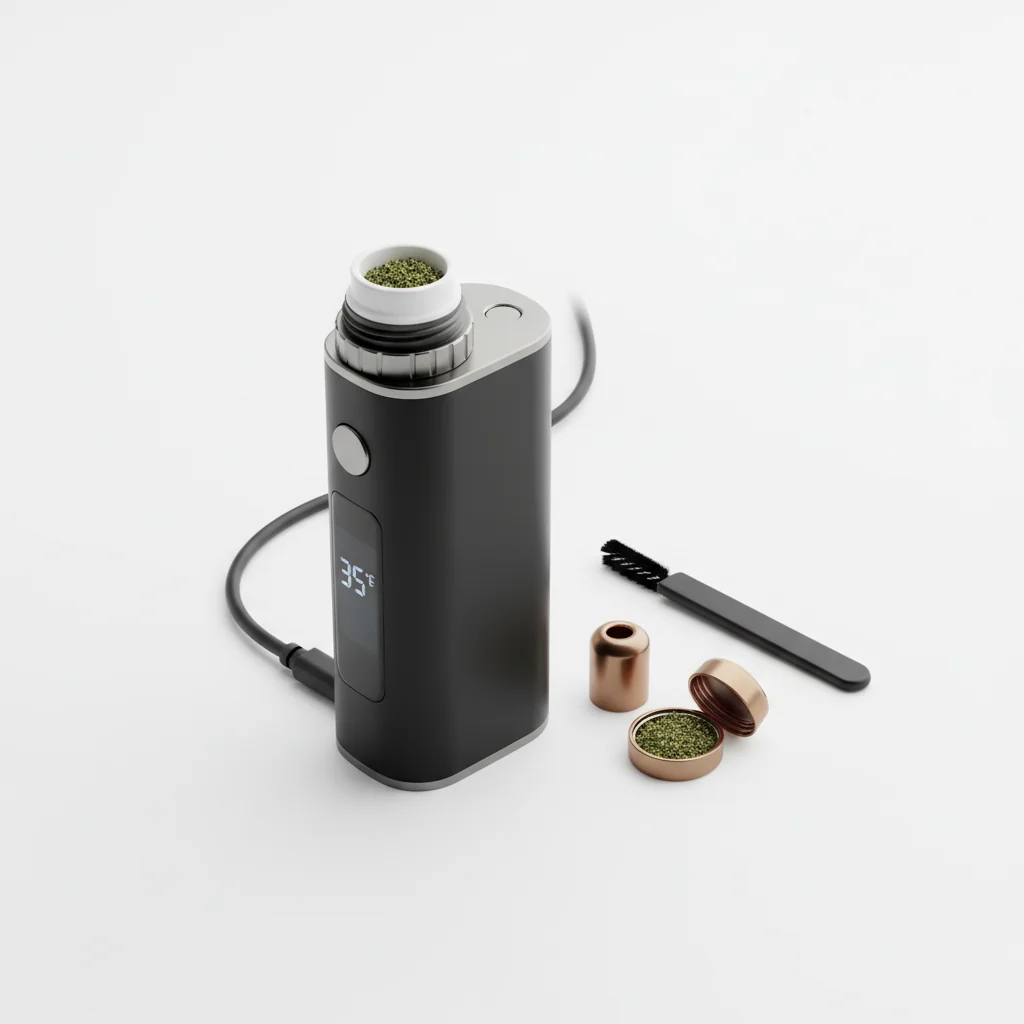
Dry herb vaporizers have revolutionized cannabis consumption. Instead of burning your flower and inhaling smoke, vaporizers heat cannabis just enough to release cannabinoids and terpenes as vapor—delivering effects while minimizing the harmful byproducts of combustion.
Quick Answer
Dry herb vaporizers heat cannabis to 350-430°F, releasing cannabinoids as vapor without combustion. They're healthier than smoking, more efficient with material, and offer better flavor. Choose portable for convenience or desktop for power. Grind medium-fine, pack lightly, start at lower temperatures, and clean regularly for best results.
Table of Contents
- How Dry Herb Vaporizers Work
- Benefits of Vaporizing
- Portable vs Desktop Vaporizers
- Conduction vs Convection Heating
- Temperature Guide
- How to Use a Dry Herb Vaporizer
- Maintenance and Cleaning
- Already Vaped Bud (AVB)
- Choosing Your First Vaporizer
- FAQ
How Dry Herb Vaporizers Work
The Basic Principle
Vaporizers heat cannabis to temperatures between 350-430°F (175-220°C). At these temperatures:
- Cannabinoids (THC, CBD) vaporize
- Terpenes release as aromatic vapor
- Plant material doesn't combust
For comparison, cannabis combusts (burns) at approximately 450°F and above. By staying below this threshold, you get the active compounds without the smoke.
What You're Inhaling
Vapor contains:
- Cannabinoids (THC, CBD, etc.)
- Terpenes
- Minimal plant material
- Water vapor
Smoke contains (what vaporizers avoid):
- Tar
- Carbon monoxide
- Carcinogens from combustion
- Ash particles
Benefits of Vaporizing
Health Benefits
- Reduced respiratory irritation: No combustion means no smoke
- Fewer harmful compounds: Studies show significantly fewer toxins
- Gentler on lungs: Many users report easier breathing
- No carbon monoxide: Combustion's most harmful byproduct eliminated
Efficiency Benefits
- Better extraction: More cannabinoids released at optimal temperatures
- Less material needed: Most users report using 30-40% less flower
- AVB reuse: Already vaped bud can be used for edibles
Experience Benefits
- Better flavor: Terpenes shine without combustion taste
- Controlled effects: Temperature selection lets you customize
- Discrete: Less smell, vapor dissipates quickly
- No lighter needed: Battery or plug-in power
Portable vs Desktop Vaporizers
Portable Vaporizers
Pros:
- Take anywhere
- Discrete
- Individual sessions
- Battery powered
- Wide price range
Cons:
- Smaller bowls
- Battery life limits sessions
- Less powerful heating
- May need charging before use
Best for: On-the-go use, personal sessions, discretion
Popular examples: Pax, DaVinci, Arizer Solo, Mighty+
Desktop Vaporizers
Pros:
- Powerful heating
- Large bowl capacity
- Consistent temperature
- No battery concerns
- Often better vapor quality
Cons:
- Not portable
- Requires power outlet
- Higher initial cost
- Takes more space
Best for: Home use, group sessions, connoisseurs, medical users
Popular examples: Volcano, Arizer Extreme Q, Plenty
Which to Choose?
Conduction vs Convection Heating
Conduction Heating
How it works: Cannabis directly contacts a heated surface
Pros:
- Faster heat-up
- Simpler design
- Usually less expensive
- Quick sessions
Cons:
- Uneven heating
- Requires stirring mid-session
- Can combust if too hot
- Material touching walls heats more
Best for: Quick sessions, budget-conscious users
Convection Heating
How it works: Hot air passes through cannabis
Pros:
- Even heating
- Better flavor
- No stirring needed
- More efficient extraction
Cons:
- Longer heat-up time
- More expensive
- More complex design
- Longer draw technique
Best for: Flavor chasers, efficiency seekers, home use
Hybrid Heating
Many modern vaporizers combine both methods:
- Conduction for quick startup
- Convection for even extraction
- Best of both worlds
- Found in premium portables
Temperature Guide
Temperature Effects
Different temperatures release different compounds:
Compound Release Temperatures
- THC: 315°F (157°C)
- CBD: 356°F (180°C)
- CBN: 365°F (185°C)
- Limonene: 349°F (176°C)
- Myrcene: 334°F (168°C)
- Linalool: 388°F (198°C)
Temperature Strategy
Flavor chasers: Start at 350°F, enjoy terpenes first
Efficiency seekers: Start at 370°F, work up to 410°F
Maximum extraction: Single session at 390-400°F
Session users: Start low (360°F), gradually increase each draw
How to Use a Dry Herb Vaporizer
Step 1: Grind Your Flower
Proper grind is crucial:
- Medium-fine grind works for most vaporizers
- Too fine clogs airflow
- Too coarse heats unevenly
- Use a quality grinder
Step 2: Pack the Chamber
- Don't overpack: Material needs airflow
- Pack firmly but not tight
- Fill to rim, don't mound
- Conduction vapes: pack slightly tighter
- Convection vapes: pack looser
Step 3: Set Temperature
For first session with new material:
1. Start at 365-375°F
2. Assess effects and flavor
3. Adjust up or down next session
Step 4: Heat and Wait
- Most portables: 20-60 seconds
- Desktop: 1-5 minutes
- Wait for indicator light/vibration
- Some benefit from extra 10-20 seconds
Step 5: Draw Technique
Slow and steady wins:
- Long, slow draws (8-15 seconds)
- Don't pull too hard
- Harder draw = cooler vapor
- Let vaporizer recover between hits
Step 6: Know When It's Done
Your bowl is finished when:
- Vapor production stops
- Material is dark brown
- Flavor turns flat or popcorn-like
- No more effects from draws
Maintenance and Cleaning
Why Cleaning Matters
- Maintains airflow
- Preserves flavor
- Extends device life
- Ensures consistent heating
Regular Cleaning (After Each Session)
1. Empty chamber while warm
2. Brush out residue
3. Wipe mouthpiece
4. Quick clean vapor path
Deep Cleaning (Weekly for Regular Users)
You'll need:
- Isopropyl alcohol (90%+)
- Cotton swabs
- Pipe cleaners
- Small brush
Process:
1. Remove all parts that can be removed
2. Soak glass/metal in isopropyl (not electronics)
3. Scrub screens and chambers
4. Clean vapor path with alcohol-dipped swab
5. Let everything dry completely
6. Reassemble
What Not to Do
- Never submerge electronic parts
- Don't use water on heating elements
- Avoid harsh chemicals
- Don't scrape with metal tools on coatings
Already Vaped Bud (AVB)
What is AVB?
Already vaped bud (also called ABV—already been vaped) is the brown material left after vaporizing. It's already decarboxylated and still contains cannabinoids.
AVB Potency
- Light brown AVB: 20-30% original potency
- Medium brown AVB: 10-20% original potency
- Dark brown AVB: 5-10% original potency
Using AVB
Direct consumption:
- Put in capsules
- Sprinkle on food
- Mix into peanut butter
Edibles:
- Already decarbed—add to any recipe
- Water cure first to improve taste
- See our edibles dosing guide
Coconut oil infusion:
- Combine with coconut oil
- Low heat for 2-4 hours
- Strain and use
AVB Dosing
Start with 1-2 teaspoons if new to AVB. Effects are unpredictable—potency varies by vaping temperature and material.
Choosing Your First Vaporizer
Budget Considerations
Features to Consider
Must-haves:
- Precise temperature control
- Quality build materials (no plastic in vapor path)
- Replaceable screens
- Easy to clean
Nice-to-haves:
- App connectivity
- Fast charging
- Session timer
- Removable battery
- Dosing capsules
Red Flags
Avoid vaporizers with:
- Plastic near heating element
- Poor temperature control
- No airflow adjustment
- Cheap construction
- No warranty
Recommended First Vaporizers
Budget portable: POTV One, Xmax V3 Pro
Mid-range portable: Arizer Solo 2, DaVinci IQ2
Premium portable: Mighty+, Crafty+
Budget desktop: Arizer Extreme Q
Premium desktop: Volcano Hybrid, Plenty
Tips for Best Results
1. Use fresh, quality flower: Dry flower produces harsh vapor
2. Grind right before use: Preserves terpenes
3. Don't rush draws: Slow and steady
4. Stir conduction bowls: Halfway through session
5. Keep it clean: Residue affects flavor and function
6. Save your AVB: Free edibles material
7. Experiment with temps: Find your sweet spot
8. Let it heat fully: Patience pays off
FAQ
Is vaporizing healthier than smoking?
Generally yes. Vaporizing heats cannabis below combustion temperature, producing vapor instead of smoke. This eliminates many harmful combustion byproducts (tar, carbon monoxide, carcinogens) while still delivering cannabinoids and terpenes.
What temperature should I vape weed at?
It depends on your goals. 350-380°F for flavor and lighter effects, 380-410°F for balanced effects, 410-430°F for maximum extraction. Start lower and increase to find your preference.
How long does a vaporizer bowl last?
Typically 5-15 draws depending on temperature, material quality, and packing. The material is done when it turns dark brown and produces little visible vapor.
Can I use already vaped bud (AVB)?
Yes! AVB is already decarboxylated and can be eaten directly, put in capsules, or used for edibles. It's less potent than fresh flower but still contains active cannabinoids.
Why does my vaporizer taste burnt?
Common causes: temperature too high, material too dry, or needs cleaning. Lower your temperature setting, add a humidity pack to your stash (58-62% RH), and clean the vapor path and chamber regularly.
How do I know when the bowl is done?
Signs include: minimal vapor production, material turned dark brown, flavor becomes flat or popcorn-like, and you stop feeling effects from draws.
Portable or desktop for a beginner?
For most beginners, a quality portable offers the best starting point—more versatile and lower commitment. If you know you'll only use at home and want the best experience, consider a desktop.
Conclusion
Dry herb vaporizers offer a cleaner, more efficient, and more flavorful way to consume cannabis. Whether you choose a portable for flexibility or a desktop for power, proper technique and maintenance ensure the best experience.
Start with a quality device in your budget, learn proper grinding and packing, experiment with temperatures, and keep it clean. Your lungs—and your flower—will thank you.
For more on optimizing your vaping experience, check our temperature guide or learn about grinding for vaporizers.
Frequently Asked Questions
Generally yes. Vaporizing heats cannabis below combustion, producing vapor instead of smoke. This eliminates many harmful combustion byproducts while still delivering cannabinoids.
Related Guides

510 Thread Batteries: Complete Guide to Vape Pen Batteries
Everything you need to know about 510 thread batteries for vape cartridges. Learn about voltage settings, battery types, features to look for, and how to choose the right battery for your cartridges.
Best Vaporizer Temperature Settings: Effects at Each Level
Comprehensive guide about best vaporizer temperature settings: effects at each level. Learn everything you need to know with expert tips and detailed instructions.

Conduction vs Convection Vaporizers: Heating Methods Explained
Understand the difference between conduction and convection heating in vaporizers. Learn how each method affects flavor, vapor quality, efficiency, and which is best for your vaping style.