
Dab Pen vs Vape Pen: What's the Difference?

David Martinez
Concentrate Expert
Dab Pen vs Vape Pen: What's the Difference?
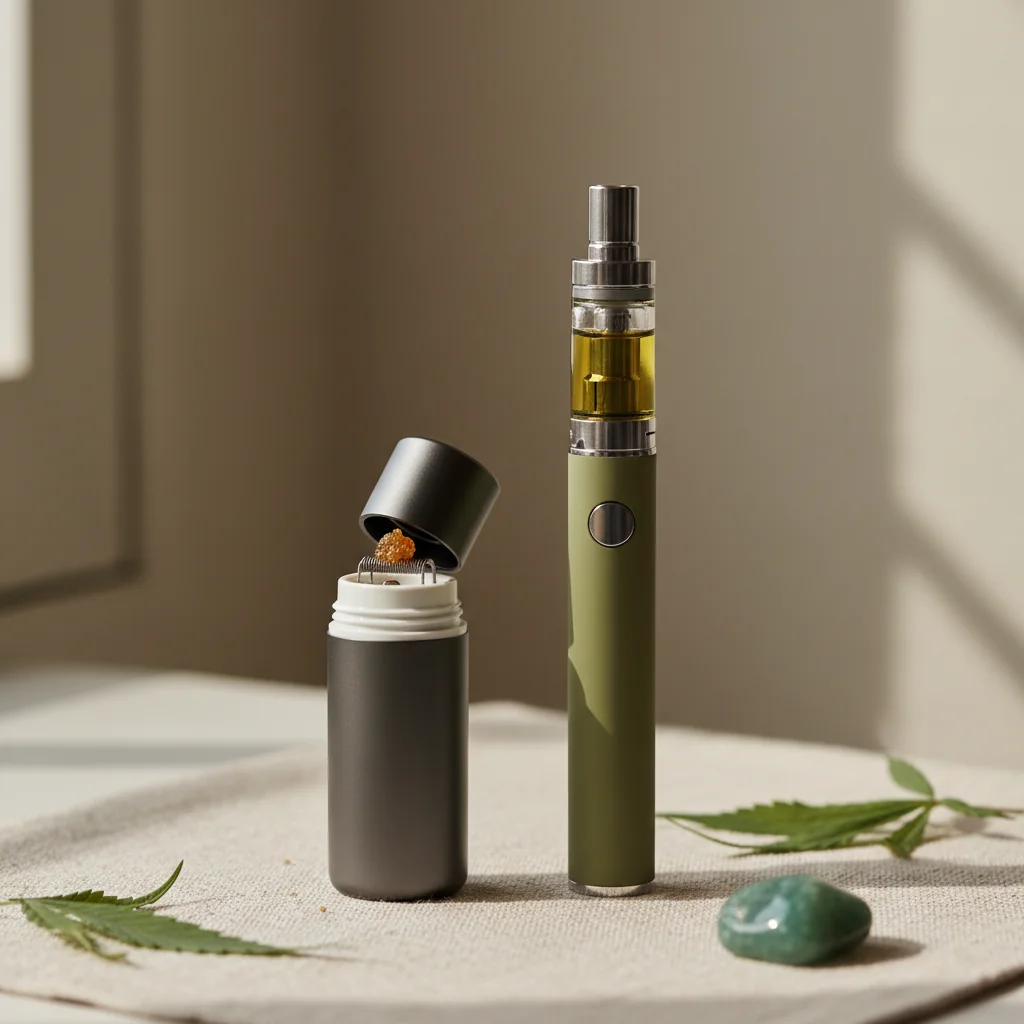
The terms "dab pen" and "vape pen" get used loosely, sometimes interchangeably, but they refer to two different products designed for two different cannabis formats. The confusion is understandable — both are pen-shaped, battery-powered, and produce vapor — but they're not the same thing, and using one when you needed the other usually doesn't work.
Quick Answer
A dab pen is a vaporizer for raw cannabis concentrates (wax, shatter, rosin) that you load yourself into an open atomizer. A vape pen typically refers to a 510-thread battery that pairs with sealed pre-filled cartridges of cannabis distillate. Some people also use "vape pen" to mean dry herb vaporizers, which heat ground flower instead. The three are not interchangeable — each product is designed for a specific cannabis format.
Table of Contents
- Defining the Three Vape Categories
- How Each One Works
- Side-by-Side Comparison
- Which One Should You Get
- Common Mistakes
- Tips for Choosing the Right Type
- Frequently Asked Questions
- Conclusion
Defining the Three Vape Categories
The cannabis vaporizer category splits into three distinct product types, and the naming overlap is what creates confusion.
Dab pens vaporize raw concentrates. You load wax, shatter, rosin, or badder onto an exposed atomizer (a heating element inside a small chamber), screw the mouthpiece back on, press a button, and inhale. The atomizer is replaceable, the chamber is open, and you choose what concentrate to use. Dab pens are sometimes called wax pens.
510-thread vape pen batteries are the slim, often pen-shaped batteries that pair with sealed pre-filled cartridges. The cartridge contains cannabis distillate or live resin in a contained chamber that screws onto the battery. You inhale through the cart's mouthpiece and the battery heats the cart's internal coil. People often shorten this to just "vape pen" — and that's where the confusion with dab pens starts.
Dry herb vaporizers vaporize ground cannabis flower instead of concentrate. They have a different heating profile (350-410°F) suited to flower's lower vaporization temperature. Dry herb vapes come in pen-shaped portable models (PAX, Davinci, Pulsar) and desktop units (Volcano, Mighty). When someone says "I vape weed," they often mean a dry herb vaporizer.
The "pen" naming applies to all three because they're often pen-sized. But what's inside, how you load it, and what cannabis format it accepts are all different.
How Each One Works
Each device has a different heating mechanism matched to its cannabis format.
Dab pens use a high-temperature atomizer (typically 350-450°F) to vaporize concentrates. The atomizer is exposed in an open chamber. You load 0.05-0.1 grams of concentrate at a time using a small dab tool, reattach the mouthpiece, and inhale while pressing the button. The atomizer wears out after 4-12 weeks and gets replaced. Voltage is usually adjustable (3-5 settings).
510-thread vape pen batteries simply provide power to whatever cartridge is screwed onto them. The cart contains its own heating coil, atomizer, and reservoir. You charge the battery, screw on a cart, press the button (or use auto-draw on draw-activated batteries), and inhale. When the cart is empty, you discard it and screw on a new one. The battery itself can last 1-2 years across hundreds of cartridges.
Dry herb vaporizers use a heating chamber matched to flower's vaporization temperature (350-410°F at most settings). You grind flower medium-fine, pack it into the chamber (typically 0.1-0.3g per session), preheat the chamber for 20-60 seconds depending on the device, and inhale slowly. Some models use conduction heating (chamber walls heat the flower); others use convection (hot air passes through the flower). Dry herb sessions last 5-10 minutes and produce 5-15 inhales from one chamber load.
Side-by-Side Comparison
Strength and dose: dab pens and 510 carts deliver concentrate-level potency, which is roughly 4-5x stronger per inhale than dry herb. Dry herb vapes are closer to smoking flower in intensity.
Cost over time: dry herb is cheapest if you already buy flower. Dab pens are next cheapest because raw concentrate runs $30-$60/gram and stretches across 30+ sessions per gram. Cart batteries appear cheapest upfront but the recurring cart cost adds up.
Discretion: 510 cart vape pens produce the least odor and are easiest to use unobtrusively. Dab pens produce a stronger vapor smell and require more obvious loading. Dry herb vapes produce a noticeable cannabis aroma that lingers.
Learning curve: cart vape pens are the simplest. Dab pens require learning to load and dose. Dry herb vapes have the steepest curve because grind size, packing density, draw speed, and temperature all affect the experience.
Which One Should You Get
The right choice depends on what cannabis format you already use or want to start with.
If you smoke flower regularly and want a smoother alternative without buying concentrates, get a dry herb vaporizer. The PAX 3, Davinci IQ2, and Pulsar APX V3 are common entry points. You're vaping the same flower you'd smoke — just at lower temperature and without combustion.
If you want concentrate-level potency with portability, get a dab pen. They give you access to wax, rosin, and live resin without the complexity of a full dab rig. Look for a ceramic atomizer and 1000+ mAh battery in the $40-$80 range.
If you want maximum convenience and don't want to maintain a device, get a 510-thread vape pen battery and pair it with carts from a licensed dispensary. The PAX Era, Yocan Magneto, and similar mainstream batteries work with most carts.
If you're new to cannabis entirely, start with a low-potency dry herb vape or a low-THC cart. The concentrate-based options (dab pens and most carts) deliver too much THC per inhale for first-time users.
Many regular users end up with two devices over time — typically a dry herb vape for daytime/social use and a dab pen for evening sessions when they want stronger effects.
Common Mistakes
The mistakes here are mostly about buying the wrong product for what you actually want to do.
Buying a dab pen when you wanted a cart. If you don't want to load concentrate manually, a dab pen will frustrate you. A 510-thread battery + carts is the right format.
Buying a 510-thread battery thinking it'll vape flower. It won't. 510 batteries only work with sealed cartridges of distillate. To vape flower, you need a dry herb vaporizer.
Using a cheap battery with quality carts. A $15 battery typically can't deliver the right voltage or airflow for a $50 cart. The cart underperforms or burns out. Spend at least $30-40 on the battery if you're buying premium carts.
Using a dab pen at maximum voltage all the time. High voltage burns concentrates fast and kills terpenes. Most users get the best balance of flavor and effect at the middle voltage setting.
Not understanding cart compatibility. Most carts use 510-thread (5mm length, 10 threads), but some proprietary cart systems (like older PAX Pods or PCKT Pods) use different threads. Verify thread compatibility before buying.
Tips for Choosing the Right Type
A few quick filters help narrow the decision.
Match the device to your cannabis source. If your dispensary's strongest products are flower-based, get a dry herb vape. If they emphasize concentrates and you want to use them, get a dab pen. If you mostly buy carts, get a cart battery.
Consider session length. Cart hits are typically 1-3 second pulls done in seconds. Dab pen hits are similar. Dry herb vape sessions take 5-10 minutes per chamber. Match the device to how you actually want to spend your time.
Plan for replacements and accessories. Dab pens need replacement atomizers ($10-25 every 4-12 weeks). Dry herb vapes need cleaning supplies and occasional screen replacements. Cart batteries are basically maintenance-free.
Check legality where you live. In states without legal cannabis sales, getting carts from regulated sources is impossible. Dab pens and dry herb vapes can be used with whatever flower or concentrate is legal where you are.
Read recent reviews, not historical ones. The vape category evolves fast. A device that was top-tier 2 years ago may be outdated now. Look for reviews from the last 6 months.
Frequently Asked Questions
Is a dab pen the same as a vape pen?
No. A dab pen vaporizes raw concentrates that you load yourself. A vape pen usually refers to a 510-thread battery that pairs with sealed pre-filled cartridges of distillate. Some people also use "vape pen" to mean dry herb vaporizers, which heat flower instead.
Can you use wax in a regular vape pen?
No. A 510-thread vape pen battery is designed to power sealed cartridges, not raw concentrates. Wax needs an open atomizer chamber, which is what a dab pen has. Putting wax onto a 510 battery's connector won't vaporize it correctly and can damage the battery.
Which is stronger, a dab pen or a vape pen with a cart?
The peak strength is similar — both deliver concentrate-level THC (70-90%). Dab pens give you more variety because you can load different concentrate types (live rosin, live resin, etc.), some of which are more potent or more flavor-rich than typical distillate carts.
Are dry herb vapes considered dab pens?
No. Dry herb vapes vaporize ground flower at lower temperatures (350-410°F). Dab pens vaporize concentrates at higher temperatures (400-500°F). The two are designed for different cannabis formats and use different atomizer architectures.
What's the cheapest cannabis vaporizer to start with?
A 510-thread vape pen battery is the cheapest entry point ($20-30) — but you also need carts ($25-50 each), so the long-term cost adds up. A used or budget dry herb vape ($40-60) is the cheapest if you already buy flower regularly.
Conclusion
A dab pen, a vape pen (cart battery), and a dry herb vaporizer are three different products that get lumped together because they all produce cannabis vapor in pen-sized form factors. Dab pens are for raw concentrates you load yourself; cart batteries pair with sealed pre-filled cartridges; dry herb vapes heat ground flower. Choosing between them depends on what cannabis format you use most, how much maintenance you're willing to do, and how much flexibility versus convenience you prioritize. Knowing the difference saves you from buying the wrong device for what you actually want to consume.
Frequently Asked Questions
No. A dab pen vaporizes raw concentrates that you load yourself. A vape pen usually means a 510-thread battery that pairs with pre-filled distillate cartridges. The terms are often confused but refer to different products.
No. A 510-thread vape pen battery is designed to power sealed cartridges, not raw concentrates. Wax needs an open atomizer chamber like a dab pen has. Loading wax onto a 510 battery doesn't work.
Peak strength is similar — both deliver 70-90% THC concentrates. Dab pens give more variety because you can load different concentrate types like live rosin, which are sometimes more potent or flavor-rich than distillate.
No. Dry herb vapes vaporize ground flower at lower temperatures (350-410°F). Dab pens vaporize concentrates at higher temperatures (400-500°F). The two use different atomizer architectures.
A 510-thread vape pen battery is cheapest upfront ($20-30) but you also need carts ($25-50 each). A budget dry herb vape ($40-60) is cheapest long-term if you already buy flower.
Related Guides

510 Thread Batteries: Complete Guide to Vape Pen Batteries
Everything you need to know about 510 thread batteries for vape cartridges. Learn about voltage settings, battery types, features to look for, and how to choose the right battery for your cartridges.
Best Vaporizer Temperature Settings: Effects at Each Level
Comprehensive guide about best vaporizer temperature settings: effects at each level. Learn everything you need to know with expert tips and detailed instructions.

Conduction vs Convection Vaporizers: Heating Methods Explained
Understand the difference between conduction and convection heating in vaporizers. Learn how each method affects flavor, vapor quality, efficiency, and which is best for your vaping style.