

Anatomy of a Bong: Every Part Explained

Emma Chen
Glass Specialist
Anatomy of a Bong: Every Part Explained
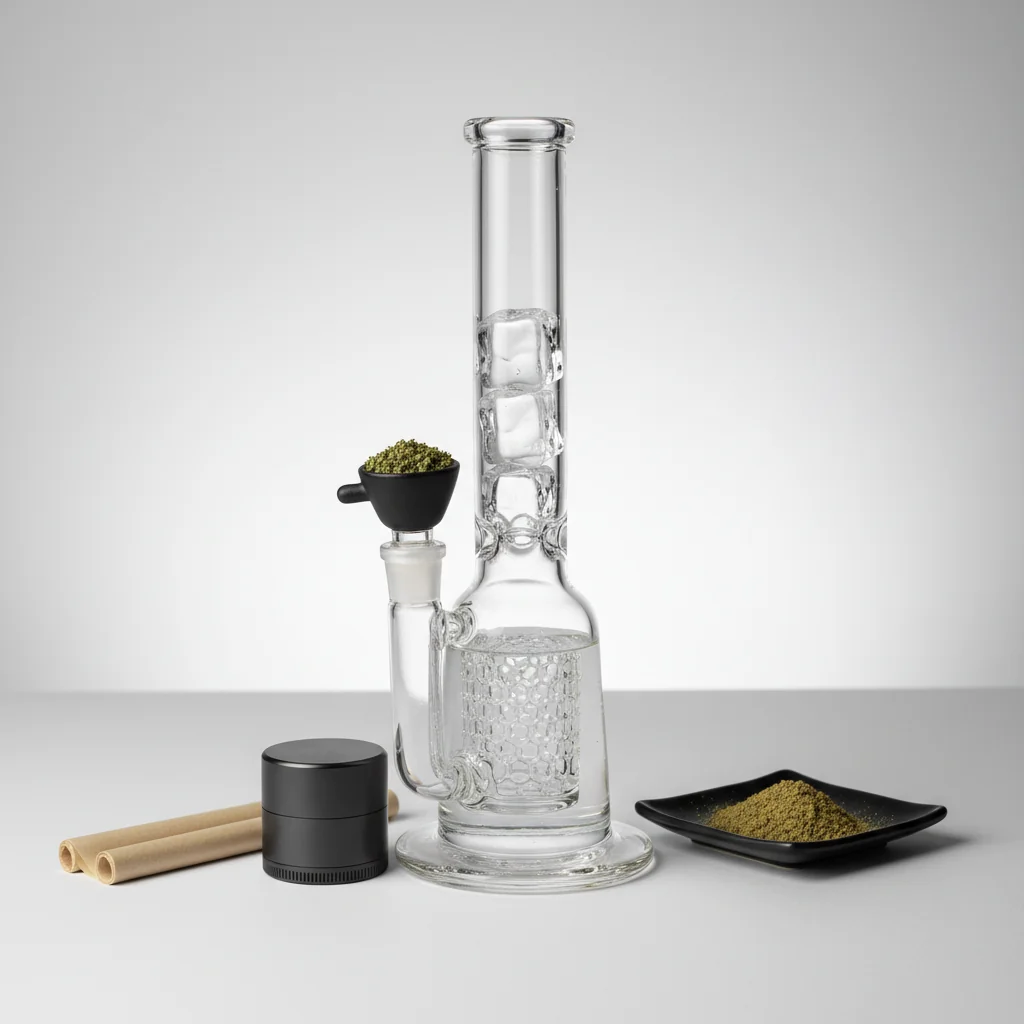
Understanding your bong's anatomy helps you use it properly, troubleshoot problems, and make informed purchasing decisions. Pair your bong with a quality [herb grinder](https://munchmakers.com/product-category/4-piece-grinders/) for optimal results. Whether you're buying your first bong or upgrading components, knowing what each part does is essential.
Quick Answer
A basic bong has these essential parts: tube (main chamber), base (water reservoir), mouthpiece (top opening), downstem (tube extending into water), and bowl (where you pack cannabis). Optional components include percolators (extra filtration), ice catchers (smoke cooling), splash guards, and ash catchers.
Essential Parts (Every Bong Has These)
The Tube / Chamber
The main vertical body of the bong where smoke collects before you inhale.
Function:
- Holds smoke before clearing
- Allows you to see smoke density
- Contains optional features like percolators and ice catchers
Materials:
- Glass: Most common, clean taste, fragile - ASTM standards define borosilicate quality
- Silicone: Durable, portable, flexible
- Acrylic: Budget-friendly, durable, not ideal for taste
- Ceramic: Artistic, heavy, fragile
Size Matters:
- Small tubes (8-10"): Less smoke, easier to clear, portable
- Medium tubes (12-16"): Balance of smoothness and practicality
- Large tubes (18"+): Maximum smoke capacity, home use only
The Base
The bottom section that holds water and provides stability.
Common Shapes:
Beaker Base:
- Wide, triangular (like lab beaker)
- Most stable design
- Holds more water = more filtration
- Harder to clean corners
Straight Tube:
- Uniform cylinder from top to bottom
- Less stable (needs flat surface)
- Easier to clean
- Less water capacity
Round Base:
- Bubble or sphere shape
- Moderate stability
- Artistic appearance
- Moderate water capacity
Function:
- Holds water for filtration
- Provides stability
- Larger base = more water = cooler, smoother hits
The Mouthpiece
The opening at the top where you place your lips.
Design Types:
Flared Mouthpiece:
- Edges curve outward
- Comfortable seal
- Most common design
Straight Edge:
- Tube ends without flare
- Some find less comfortable
- Can add mouthpiece attachment
Bent Neck:
- Tube bends before mouthpiece
- Angled for comfort
- Keeps water farther from face
- Reduces splash risk
Proper Use:
- Lips go slightly INSIDE the opening
- Create airtight seal
- Don't wrap lips around outside (loses seal)
The Downstem
A tube that extends from the bowl joint down into the water. This is where the magic happens.
Function:
- Carries smoke from bowl into water
- Creates bubbles that filter smoke
- The holes/slits at bottom determine bubble size
Types:
Standard Downstem:
- Simple tube with one opening or few slits
- Basic filtration
- Easy to clean
- Most affordable
Diffused Downstem:
- Multiple slits or holes at bottom
- Creates smaller bubbles = more filtration
- Smoother hits
- More expensive
Fixed Downstem:
- Built into bong (not removable)
- Some scientific bongs use this
- Can't be upgraded or easily cleaned
Sizing:
- Joint size: 14mm or 18mm (must match your bong)
- Length: Measured in inches, varies by bong
- Should extend about 1" into water when bong is filled
Replacement Note:
Downstems are consumable - they break or get clogged. Having a spare is smart.
The Bowl / Slide
The removable piece where you pack your cannabis. Also called a "slide" because you slide it in and out.
Function:
- Holds cannabis
- Removable for clearing smoke (most bongs)
- Can upgrade for different experiences
Types:
Standard Bowl:
- Simple cone or cup shape
- Various sizes (personal to party)
- Most common
Screen Bowl:
- Built-in screen prevents debris
- More expensive
- Lasts longer without replacement screens
Push Bowl:
- Slides in rather than lifting out
- Less common
Joint Sizes:
- 14mm: Most common, medium bongs
- 18mm: Large bongs, bigger bowls
- 10mm: Small/mini bongs (rare)
Bowl must match bong's joint size (or use adapter).
Optional Components (Enhanced Bongs)
Percolators (Percs)
Additional filtration devices inside the tube that further cool and filter smoke.
How They Work:
Force smoke through water or small holes multiple times, creating more bubbles and filtration.
Common Types:
Tree Perc:
- Multiple arms hanging down
- Each arm has slits
- Good filtration, iconic look
- Can be fragile
Honeycomb Perc:
- Flat disc with many holes
- Creates tiny bubbles
- Great filtration
- Relatively durable
Showerhead Perc:
- Tube with slits pointing down
- Like a showerhead (hence name)
- Good filtration
- Easy to clean
Turbine/Cyclone Perc:
- Creates spinning water effect
- Visual appeal + filtration
- Moderate drag
Inline Perc:
- Horizontal tube with slits
- Often in base of scientific bongs
- Excellent diffusion
Matrix Perc:
- Combines multiple perc styles
- Maximum filtration
- Higher drag
Tradeoff:
More percs = smoother hits BUT more drag (harder to pull) and harder to clean.
Ice Catcher / Ice Pinch
Notches or pinches in the tube that hold ice cubes above the water.
Function:
- Ice cools smoke as it passes
- Results in cooler, smoother hits
- Especially helpful for large hits
Design:
- Usually 3 small glass notches
- Positioned above water line
- Some bongs have ice-catcher chambers instead
Using Ice:
- Add ice cubes after filling water
- Drop through mouthpiece
- They'll catch on the notches
- Replace as they melt
Note:
Not all bongs have ice catchers. It's an optional feature to look for when buying.
Splash Guard
A dome or barrier above the water that prevents water from reaching your mouth.
Function:
- Blocks water splash during hard inhales
- Allows higher water levels
- Common in bongs with multiple percs
Design:
- Small dome with openings for smoke
- Positioned above water/perc
- Smoke passes through, water can't
Ash Catcher
External attachment that catches ash and debris before it enters the main bong.
Function:
- Pre-filters smoke
- Keeps main bong cleaner longer
- Often adds another percolator
Attachment:
- Goes between bowl and downstem
- Has its own water chamber
- Matches bong's joint size
Tradeoff:
Adds complexity and height but significantly reduces main bong cleaning frequency.
Carb Hole
A hole on the side of the tube (instead of removable bowl).
Function:
- Cover while inhaling
- Release to clear chamber
- Alternative to removable bowl
More common on:
- Simpler/cheaper bongs
- Pipes (standard feature)
- Older designs
Most modern glass bongs use removable bowls instead.
How Parts Work Together
The Process:
1. Water fills base and covers downstem slits
2. Bowl holds cannabis, seated in joint above downstem
3. You light bowl and inhale through mouthpiece
4. Downstem carries smoke underwater, creating bubbles
5. Percolators (if present) add more filtration
6. Smoke rises through tube
7. Ice catcher (if present) cools smoke further
8. You remove bowl (or release carb) to clear
9. Splash guard (if present) prevents water entering mouth
10. Smoke enters lungs through mouthpiece
Upgrading Your Bong
Many components are interchangeable:
Easy Upgrades:
- Better bowl (different size, screen included)
- Diffused downstem (replaces standard)
- Ash catcher (adds on)
Matching Joints:
Everything must match your bong's joint size (14mm or 18mm typically).
Adapters:
Allow mixing sizes:
- 18mm bong with 14mm bowl? Use 18mm-to-14mm adapter
- Opens up accessory options
Choosing Based on Parts
For Beginners:
- Simple tube or beaker
- Standard downstem (maybe diffused)
- No percs or single perc
- Easy to use and clean
For Smooth Hits:
- Multiple percolators
- Ice catcher
- Diffused downstem
- More complex but smoother
For Easy Cleaning:
- Straight tube design
- Minimal percs (or easy-clean designs like honeycomb)
- Removable downstem
- Avoid intricate tree percs
For Durability:
- Thick glass (5mm+)
- Silicone (if not glass)
- Simple design (fewer fragile parts)
- Beaker base (most stable)
This guide is for educational purposes. Cannabis laws vary by jurisdiction.
Frequently Asked Questions
The downstem is arguably most important - it connects the bowl to the water and creates the filtration. Without a proper downstem, smoke wouldn't be filtered. The water level (covering the downstem) determines filtration quality.
Related Guides
Ash Catcher Guide: Keep Your Bong Clean Longer
Complete guide to ash catchers for bongs: what they do, types including dry and percolator ash catchers, joint sizes and angles, how to use and clean them, and how to choose the right one.

Ash Catchers: What They Do and Why Use One
Learn what ash catchers do, how they keep your bong clean, and whether you need one. Understand different types, how to choose the right size, and maintenance tips.
Beaker vs Straight Tube Bongs: Which Style is Better?
Comprehensive guide about beaker vs straight tube bongs: which style is better?. Learn everything you need to know with expert tips and detailed instructions.