
Best Rolling Papers: Materials, Sizes, and What Actually Matters

James Wilson
Cannabis Culture Writer
Best [Rolling Papers](https://munchmakers.com/product-category/custom-rolling-papers/): Materials, Sizes, and What Actually Matters
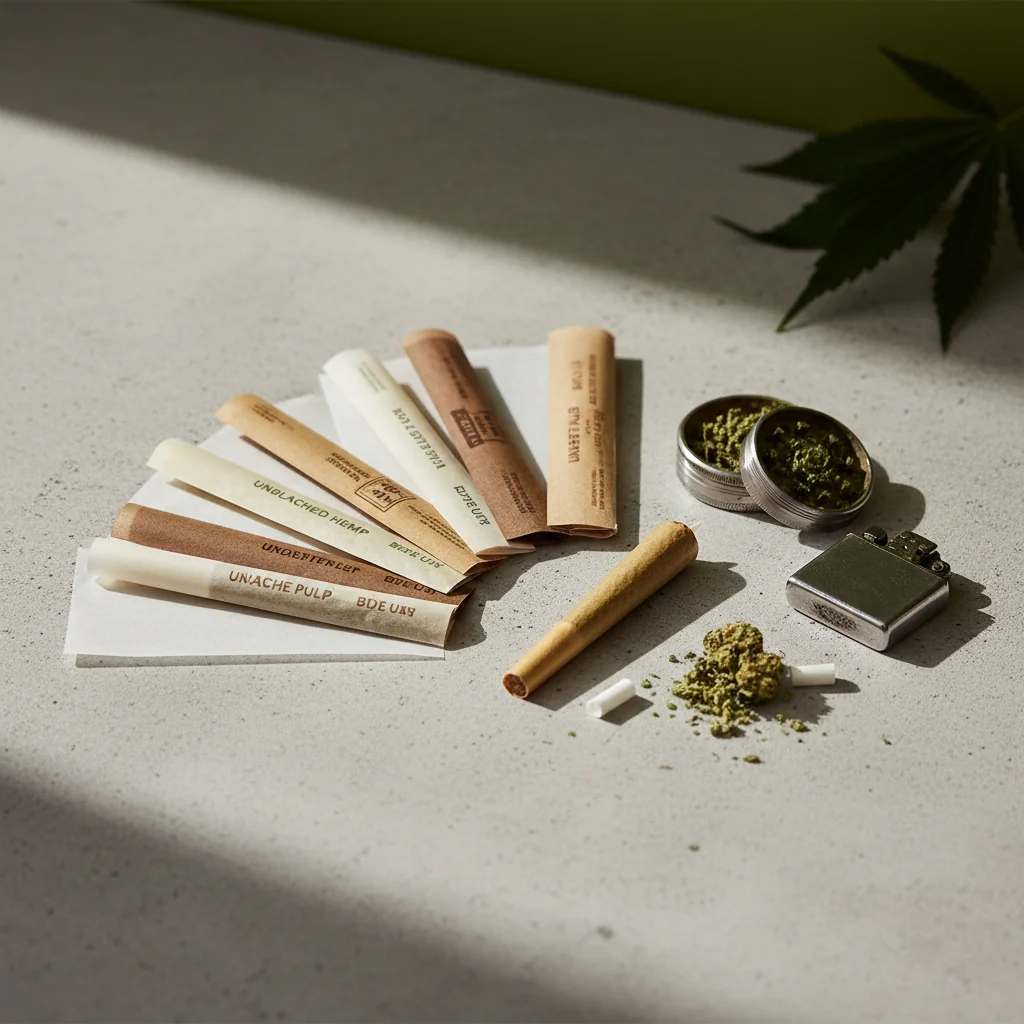
Rolling papers are one of those small purchases that affect every joint you smoke for years, and most smokers settle into a brand mostly by accident — whatever was at the gas station, what a friend handed them, what came with their first grinder. This guide takes a more deliberate look: which materials matter, what the size labels actually mean, and which brands consistently produce quality papers across hemp, rice, and traditional wood-pulp categories.
Quick Answer
The best rolling papers depend on what you prioritize. For a clean, slow burn with minimal flavor, choose ultra-thin rice papers like RAW Black or Elements. For the strongest, easiest-to-roll papers, choose hemp papers like RAW Organic or OCB Organic. For the smoothest medium-burn papers that are forgiving for new rollers, choose unbleached wood pulp papers like RAW Classic or Zig-Zag French. Avoid bleached white papers and flavored papers — both compromise taste and burn quality.
Table of Contents
- What Rolling Papers Are Made Of
- Paper Size Standards Explained
- Top Brands by Category
- Burn Quality and What Affects It
- Common Mistakes
- Tips for Buying and Using Rolling Papers
- Frequently Asked Questions
- Conclusion
What Rolling Papers Are Made Of
Three materials dominate the rolling paper market, and each behaves differently when burned.
Hemp papers are made from industrial hemp fiber. They're durable, easy to roll for beginners, and burn at a moderate speed. The hemp fiber gives the paper a slight earthiness that some smokers like and others find too pronounced. Hemp papers are typically slightly thicker than rice papers, which makes them more forgiving when you're learning to roll. RAW Organic Hemp, OCB Organic Hemp, and Pure Hemp are the recognized leaders.
Rice papers are made from compressed rice straw fiber. They're the thinnest papers on the market, burn slowly and evenly, and produce the cleanest flavor of any material because rice imparts almost no taste of its own. Rice papers are also the trickiest to roll because they're delicate and tear easily under tension. RAW Black, Elements, and Pure Hemp Rice are the recognized leaders.
Wood pulp papers are the traditional material — what most "regular" rolling papers were made of for decades. Modern wood pulp papers like Zig-Zag French Orange and Job Original are unbleached and produce a smooth, fast burn. They're more flavorful than rice or hemp, with a slight woody note. Wood pulp papers are forgiving for new rollers because they're the strongest and most stretchy.
Avoid bleached papers entirely. White, ultra-bright rolling papers are bleached with chlorine or peroxide. The bleach chemicals can leave residual taste and produce harsher smoke than unbleached alternatives. If a paper is pure white, it's bleached.
Flavored papers (chocolate, strawberry, blueberry, etc.) use chemical flavor agents that affect both taste and burn behavior. Most experienced smokers avoid flavored papers because the chemical aftertaste competes with the cannabis flavor.
Paper Size Standards Explained
Rolling paper sizes are inconsistently labeled across brands. Knowing the actual measurements helps you compare.
1¼ size (78×44mm) is the most popular size for cannabis rolling. It produces a joint that holds 0.3-0.5g of flower and is comfortable to share or finish solo. Most rolling tutorials use 1¼ as the default.
King size and king size slim are the standard for "premium" joints — long enough to require less flower per inch but elegant in shape. King slim (110×44mm) is what most dispensary pre-rolls use. King regular (100×55mm) is wider and holds more.
Single wide is the original size, commonly used for tobacco rolling. It's small for cannabis joints, producing about 0.2-0.3g per joint.
Double wide and 1½ are wider versions of standard sizes, used when you want a fatter joint. They're harder to roll well because the larger paper area means more chance of unevenness.
The size label "1¼" refers to the relative width compared to single-wide papers — it's roughly 1.25 times the width of a single wide.
Top Brands by Category
Specific brands have built reputations within each material category.
Hemp papers: - RAW Organic Hemp: Unbleached, additive-free hemp papers with a slight cream tint. The most popular hemp paper brand globally. Comes in 1¼, king size slim, and rolls. - OCB Organic Hemp: A French brand that's produced rolling papers since 1918. Slightly thinner than RAW Organic. Highly consistent quality. - Pure Hemp: Slightly cheaper than RAW or OCB but comparable quality. Distinctive watermark for an even burn.
Rice papers: - RAW Black: The thinnest rolling paper RAW makes, pressed from rice straw. Burns extremely slowly and produces almost no paper taste. Ideal for connoisseurs who want cannabis flavor undiluted. - Elements: A Spanish brand made from rice paper with a sugar-gum strip (instead of acacia gum). Burns very clean. Slightly easier to roll than RAW Black because the paper is slightly textured. - Smoking Deluxe (King Slim): Spanish rice paper brand, very thin, with high quality control. Less common in U.S. shops but excellent.
Wood pulp papers: - Zig-Zag French Orange: The classic wood pulp paper, in production since 1879. Unbleached, smooth burn, slightly flavorful. - Job Original 1¼: French brand, smooth wood pulp papers with a clean finish. - Bambú Pure Hemp: Spanish brand offering both wood pulp and hemp lines.
Premium / specialty: - RAW Classic Connoisseur: Includes a small pack of pre-rolled tips. Unbleached. The "all-in-one" pack. - OCB Premium: Slim wood pulp papers with a glassine wrap that keeps them flatter than standard packaging. - Vibes: Newer brand, well-respected in the industry, offers unbleached and rice options.
Burn Quality and What Affects It
The right paper burns evenly, slowly, and without affecting cannabis flavor.
Even burn is what separates a quality paper from a cheap one. Quality papers produce a circular, even burn that doesn't tilt or "canoe" (where one side burns faster than the other). Cheap papers often canoe because the paper is uneven thickness or the gum strip isn't applied straight.
Burn speed depends on paper thickness and material. Rice papers burn slowest, hemp papers moderate, wood pulp papers fastest. A typical 1¼ joint of 0.4g flower in: - RAW Black (rice): 8-12 minutes - RAW Organic Hemp: 6-9 minutes - Zig-Zag French (wood pulp): 5-8 minutes
Flavor neutrality matters most when smoking high-quality flower. Rice papers add almost no flavor of their own. Hemp papers add a subtle earthiness. Wood pulp papers add a faint woody note. Flavored papers add strong chemical flavors that compete with the cannabis.
Roll quality affects burn more than paper choice. A loosely rolled joint with quality paper still burns unevenly; a tightly rolled joint with cheap paper still burns relatively well. Practice rolling technique alongside experimenting with papers.
Common Mistakes
Three mistakes show up consistently when buying and using rolling papers.
Buying flavored papers thinking they enhance the experience. Flavored papers contain chemical flavor compounds that taste artificial when burned. Most experienced smokers find them unpleasant. Stick to unflavored papers if you care about cannabis taste.
Buying ultra-bright white "premium" papers. Bright white means bleached. Bleached papers leave a residual chemical taste and aren't as clean as the marketing suggests. Look for unbleached or "natural" labels — these papers will be cream-colored or tan, not stark white.
Using the wrong size for the amount of flower. Trying to roll 0.5g into a single-wide paper produces a fat, hard-to-light joint. Trying to roll 0.2g into a king-size paper produces a thin, fast-burning joint with too much paper. Match paper size to flower amount.
Not storing papers properly. Rolling papers absorb humidity from the air, which makes them sticky and harder to roll. Store unused papers in their original packaging, sealed inside a small container or pouch. Avoid storing in humid environments like bathrooms.
Reusing the same paper booklet for too long. Older papers (12+ months) lose their gum strip stickiness and become harder to seal. Buy fresh booklets when the gum starts failing.
Tips for Buying and Using Rolling Papers
A few habits make the rolling experience consistently better.
Buy in packs of 5-10 booklets. A 10-booklet pack costs significantly less per booklet than singles and lasts months. Online specialty retailers usually beat gas station prices by 40-60%.
Try a sampler before committing. If you've never used rice papers or unbleached hemp, buy a single booklet of each before stocking up. Different smokers prefer different burn rates and flavor profiles, and you only know what you like after trying a few.
Use tips (filters/crutches) for cleaner finishing. Pre-rolled tips eliminate the lower-end mess and give you a steady mouthpiece. Most quality paper brands sell their own tips that match the paper material.
Match paper size to your usage. Solo smoker who uses 0.3g per session → 1¼ size. Sharing a joint with 2-3 people → king size or 1½. New roller learning the technique → 1¼ in hemp (most forgiving).
Don't lick aggressively. A small amount of saliva on the gum strip is enough to seal. Heavy licking soaks the paper and weakens the structural integrity.
Carry papers in a metal tin. A small tin keeps papers flat and dry in pockets and bags. Bent papers are harder to roll and produce uneven joints.
Frequently Asked Questions
What are the best rolling papers for beginners?
For new rollers, RAW Organic Hemp 1¼ or OCB Organic Hemp 1¼ are the most forgiving choices. They're slightly thicker than rice papers, the gum strip is reliable, and the size matches typical solo joint sizes. Avoid rice papers and king-size papers until you've rolled 20-30 joints.
Are rice papers better than hemp papers?
Rice papers produce a slower, cleaner-tasting burn but are harder to roll. Hemp papers are easier to handle and burn slightly faster with subtle flavor. Neither is "better" — it's a tradeoff between flavor purity (rice) and ease of use (hemp).
Why are some rolling papers white and others brown?
White papers are bleached (typically with chlorine or peroxide) to achieve their bright color. Brown or cream-colored papers are unbleached. Unbleached papers don't add bleach chemicals to the smoke and are generally preferred by experienced smokers.
What size rolling paper holds the most weed?
King-size papers (100×55mm) hold the most flower per joint, typically 0.5-0.8g. King-size slim (110×44mm) is longer but narrower and holds slightly less. For really fatter joints, double-wide or 1½ in king-size length holds 0.8-1g+.
Are RAW papers actually the best?
RAW papers are widely respected for their quality and have built a strong reputation, especially among cannabis smokers. They're not necessarily the absolute best in every category, but they're consistently good. OCB, Elements, and Zig-Zag are competitive alternatives, and many experienced rollers prefer specific competitors over RAW for specific applications.
Conclusion
The best rolling papers depend on what you prioritize: rice papers for the cleanest flavor, hemp papers for ease of rolling, and unbleached wood pulp papers for the smoothest medium-burn experience. Within each category, the standard recommended brands — RAW, OCB, Elements, Zig-Zag — produce consistent quality at reasonable prices. Avoid bleached white papers and flavored papers because both compromise either taste or burn quality. The 1¼ size is the most universally useful for solo joints; king-size for sharing. Buy in multi-packs to save money, store papers flat in a tin, and try sampler booklets before committing to a single brand.
Frequently Asked Questions
RAW Organic Hemp 1¼ or OCB Organic Hemp 1¼ are the most forgiving for new rollers. Slightly thicker than rice, reliable gum strip, standard solo joint size. Avoid rice and king-size papers until you've rolled 20-30 joints.
Rice papers produce a slower, cleaner-tasting burn but are harder to roll. Hemp papers are easier to handle and burn faster with subtle flavor. Neither is 'better' — it's a tradeoff between flavor purity and ease of use.
White papers are bleached with chlorine or peroxide. Brown or cream-colored papers are unbleached. Unbleached papers don't add bleach chemicals to the smoke and are preferred by experienced smokers.
King-size papers (100×55mm) hold the most flower per joint, typically 0.5-0.8g. Double-wide or 1½ in king-size length can hold 0.8-1g+ for very fat joints.
RAW papers are widely respected and consistently good, especially among cannabis smokers, but not necessarily the absolute best in every category. OCB, Elements, and Zig-Zag are competitive alternatives.
Related Guides

Best Lighters for Cannabis 2026: BIC, Torch, Hemp Wick & More
Complete guide to choosing the best lighter for cannabis. Compare soft flame BICs, torch lighters, hemp wick, and electric plasma options. Find the perfect lighter for your consumption method.

Budget Smoking Setup Under $50: Complete Starter Kit 2026
Build a complete quality smoking setup for under $50. Smart shopping guide for grinders, rolling trays, storage, and accessories without sacrificing quality.

Ultimate Cannabis Gift Guide 2026: Accessories for Every Budget
Complete cannabis gift guide with accessory recommendations for every budget. From stocking stuffers to premium gifts, find perfect presents for cannabis enthusiasts.