

Ash Catchers: What They Do and Why Use One

Emma Chen
Glass Specialist
Ash Catchers: What They Do and Why Use One
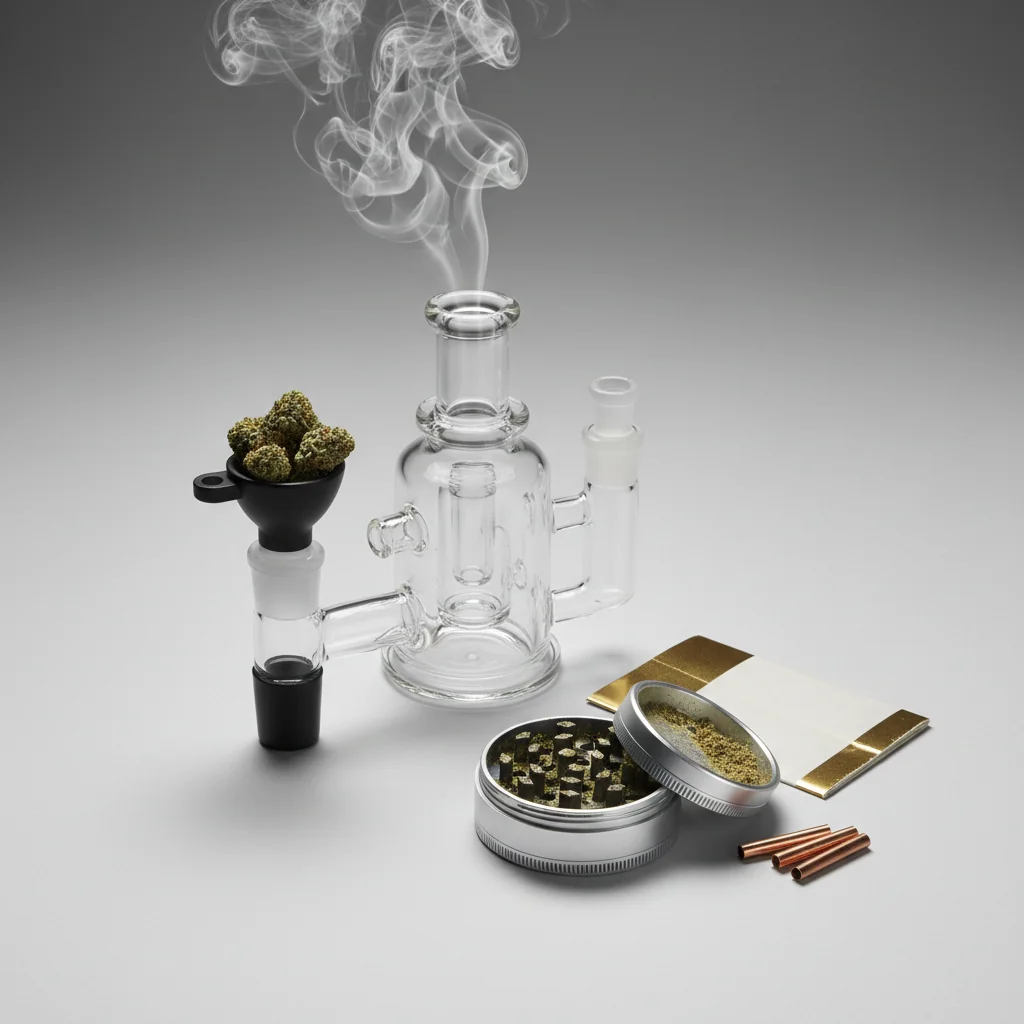
Ash catchers are bong attachments that trap debris before it enters your main water chamber. They keep your bong significantly cleaner with minimal downside. Using quality custom grinders helps produce even ash. This guide explains how ash catchers work, different types available, and whether one is worth adding to your setup.
Quick Answer
Ash catchers attach to your bong's joint and catch ash, resin, and debris before they reach your bong. Result: You clean your ash catcher frequently (easy) instead of your whole bong (harder). Users report cleaning their bong 3-4x less often. Available in dry and wet styles with various joint angles.
How Ash Catchers Work
An ash catcher sits between your bowl and bong joint, creating an additional filtration chamber.
The path smoke takes:
1. Bowl (attached to ash catcher)
2. Ash catcher chamber (debris falls/filters here)
3. Downstem (clean smoke enters bong)
4. Bong water chamber
5. Your lungs
What gets caught:
- Ash particles
- Plant debris
- Resin buildup
- Small particulate matter
What passes through:
- Smoke
- Vapor
- Most terpenes
Types of Ash Catchers
Dry Ash Catchers
No water, just an empty chamber.
Pros:
- Minimal added drag
- Nothing to spill
- Easiest to maintain
- Lightweight
- Cheapest option
Cons:
- Less filtration than wet
- Smoke not cooled
- Just debris catching
Best for: Users who want cleanliness without changing their hit
Wet Ash Catchers (Basic)
Contains water like a small bong.
Pros:
- Additional filtration
- Cooler smoke
- More debris caught
- Better than dry
Cons:
- Adds some drag
- Water can spill if tilted
- Heavier
- Water needs changing
Best for: Most users seeking cleanliness + smoothness
Percolator Ash Catchers
Wet ash catcher with built-in percolator.
Pros:
- Maximum filtration
- Very smooth hits
- Significant cooling
- Great for harsh flower
Cons:
- Most drag added
- Heaviest option
- Harder to clean
- Most expensive
- Overkill for some setups
Best for: Smoothness enthusiasts, users with simple bongs wanting more filtration
Joint Size and Angle
Getting the right fit is critical - wrong size or angle causes problems.
Joint Size
Match your bong's joint size:
- 14mm bong = 14mm ash catcher
- 18mm bong = 18mm ash catcher
If mismatched, use adapters (adds awkward height).
Joint Angle
This is where many buyers make mistakes.
45-degree angle: Most common for beaker bongs. Bowl sits at noticeable angle.
90-degree angle: Common for straight tube bongs. Bowl sits nearly upright.
Using wrong angle:
- Puts stress on glass joint
- Ash catcher may not sit right
- Risk of breakage
- Looks awkward
How to check your angle: Look at your current bowl when seated. Is it angling back (45°) or nearly straight up (90°)?
Do Ash Catchers Really Work?
Short answer: Absolutely yes.
User reports consistently show:
- Bong water stays cleaner 3-4x longer
- Less resin buildup in bong chamber
- Downstem stays cleaner
- Percolators don't clog as fast
- Significant visual difference after sessions
The trade-off: You clean the ash catcher more often, but it's much easier to clean than a full bong.
Installation
Step 1: Check Compatibility
Verify joint size and angle match. If wrong, return before using.
Step 2: Add Water (If Wet Style)
Fill ash catcher until bottom of downstem is covered by about half inch. Don't overfill - it will splash into bong.
Step 3: Attach to Bong
Insert ash catcher into your bong's joint. Should seat firmly without forcing.
Step 4: Attach Bowl
Put your bowl into the ash catcher's joint. Now you have: bowl → ash catcher → bong.
Step 5: Test Before Full Session
Take a dry pull (no light) to check:
- Is there too much drag?
- Does water splash anywhere?
- Is everything stable?
Weight and Stability Concerns
Ash catchers add weight and change your bong's balance point.
Potential Issues:
Tip-over risk: Heavy ash catcher on lightweight bong can make it front-heavy.
Joint stress: Weight hanging off joint can cause wear or cracks over time.
Handling changes: Need to be more careful picking up bong.
Solutions:
- Use appropriately sized ash catcher for your bong
- Consider dry ash catchers (lighter)
- Don't use on thin/fragile glass
- Handle bong from base, not neck
Cleaning Ash Catchers
Frequency: More often than your bong - that's the point. Clean when you see debris accumulation.
Quick Clean (After Each Session):
1. Empty water (if wet style)
2. Tap out loose ash
3. Quick rinse with warm water
4. Done
Deep Clean (Weekly or As Needed):
1. Empty and disassemble if possible
2. Add isopropyl alcohol and coarse salt
3. Shake in sealed bag
4. Use pipe cleaners for hard spots
5. Rinse thoroughly
6. Dry before use
Much easier than cleaning a full bong - this is the main benefit.
Airflow Considerations
All ash catchers add some drag. How much depends on type:
Minimal drag: Dry ash catchers
Moderate drag: Basic wet ash catchers
Noticeable drag: Percolator ash catchers
If Drag Is Too Much:
- Switch to dry ash catcher
- Use ash catcher with larger openings
- Accept it as trade-off for cleanliness
- Remove ash catcher for sessions where you want free airflow
Is an Ash Catcher Worth It?
Definitely Worth It If:
- You hate cleaning your bong
- Your bong has complex percolators that clog easily
- You share your bong (gets dirtier faster)
- You want smoother hits AND cleanliness
- You smoke frequently
Maybe Not Worth It If:
- You already clean bong after every session
- Your bong has no percolators (easy to clean anyway)
- You're very sensitive to added drag
- Budget is very tight
- Your bong is small/lightweight (stability issues)
Price Reality:
- Basic dry ash catcher: $15-30
- Basic wet ash catcher: $25-45
- Percolator ash catcher: $40-80+
Given how much easier they make bong maintenance, most regular users find them worthwhile investments.
Common Mistakes
Wrong angle purchase: Most common error. Double-check before buying.
Overfilling water: Leads to splash-back into bong. Less water is better.
Never cleaning it: Defeats the purpose. Debris-filled ash catcher stops filtering effectively.
Using on fragile bong: Weight stress can crack thin joints.
Ignoring stability: Heavy ash catcher on light bong = accidents.
Alternatives to Ash Catchers
Screens in bowl: Cheap metal or glass screens prevent debris. Less effective than ash catchers but simpler.
Frequent water changes: Changing water after every session keeps bong cleaner.
Regular cleaning schedule: Weekly deep cleans regardless of debris level.
Built-in pre-coolers: Some bongs have integrated ash catching chambers.
None are as effective as a dedicated ash catcher, but they help.
Final Verdict
Ash catchers do exactly what they promise - keep your bong cleaner by catching debris before it enters the main chamber. The cleaning trade-off (ash catcher frequently, bong rarely) is favorable for most users.
Match your joint size and angle, consider drag sensitivity, and choose dry vs wet based on your filtration preferences. For most regular bong users, an ash catcher is a smart investment that pays for itself in reduced cleaning time.
This guide is for educational purposes. Cannabis laws vary by jurisdiction.
Frequently Asked Questions
Yes, significantly. Ash catchers trap debris before it enters your bong's main chamber. Users report cleaning their bong 3-4x less frequently. The ash catcher itself needs regular cleaning, but it's much easier to clean than a full bong.
Related Guides

Anatomy of a Bong: Every Part Explained
Complete guide to understanding bong components - from downstem and bowl to percolators and ice catchers. Learn what each part does and how they work together.
Bong Joint Sizes Explained: 10mm, 14mm, and 18mm Guide
Comprehensive guide about bong joint sizes explained: 10mm, 14mm, and 18mm guide. Learn everything you need to know with expert tips and detailed instructions.

Bong vs Bubbler: Key Differences Explained
Complete comparison of bongs and bubblers covering size, portability, water capacity, smoothness, and use cases. Learn which water pipe is right for you.