

Explicación de los tipos de percolador de Bong: Guía visual completa

Emma Chen
Glass Specialist
Explicación de los tipos de percolador de Bong: Guía visual completa
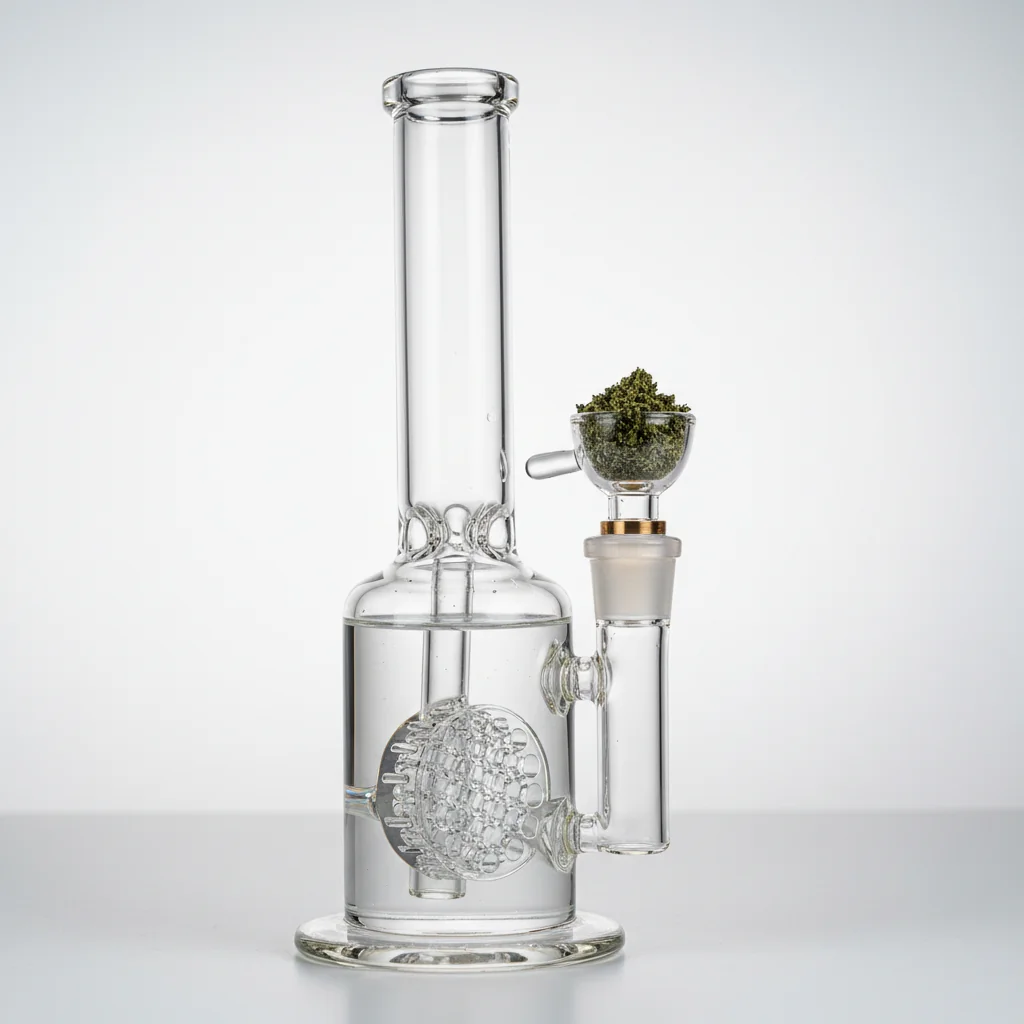
INGEL [ [ 0]]Los percoladores son los sistemas de filtración dentro de los bongs que dividen el humo en burbujas más pequeñas, enfriando y filtrando cada golpe. Investigación de [ [1]]Estudios de PubMed explora cómo la filtración de agua afecta la composición del humo. Diferentes diseños de PERC ofrecen diferentes niveles de suavidad, arrastre y facilidad de limpieza. Esta guía explica cada tipo de percolador principal para que pueda elegir el adecuado para sus preferencias.
respuesta rápida
INGEL [ [ 0]][1]]Los tipos de percolador más comunes son: PERCs de árboles (múltiples brazos), PERCs de panal (disco plano con agujeros), PERC de ducha (domo cortado), percs en línea (tubo horizontal) y perc de turbina (tablillas en ángulo que crean giro). Los perc de panal y matriz proporcionan la máxima difusión pero más arrastre. Los percs de árbol ofrecen un equilibrio de suavidad y flujo de aire. Los diseños más simples como los tallos de bajada y los cabezales de ducha son más fáciles de limpiar.
Cómo funcionan los percoladores
INGEL [ [ 0]]Principio básico:
Todos los percoladores funcionan forzando el humo a través del agua a través de pequeños agujeros o hendiduras. Esto rompe el humo en muchas burbujas pequeñas, que:
INGEL [ [ 0]]1. Aumenta el contacto de la superficie con el agua
2. Enfría el humo de manera más efectiva
3. Filtra más partículas
4. Ofrece golpes más suaves
INGEL [ [0]]Contrayóbil clave:
Más difusión (burbujas más pequeñas, más agujeros) = golpes más suaves pero se requiere tirar más duro y más limpieza.
downstem (el perc original)
INGEL [ [ 0]]Qué es:
Un simple tubo que se extiende desde el recipiente hacia el agua, generalmente con hendiduras en la parte inferior.
INGEL [ [ 0]]Cómo funciona:
- El humo viaja por el tubo
- Salidas a través de hendiduras en agua
- Filtración básica pero efectiva
INGEL [ [ 0]]Pros:
- Sencillo y confiable
- Fácil de limpiar
- Fácil de reemplazar
- Arrastre mínimo
- económico
INGEL [ [ 0]]Guarde su cannabis correctamente en [ [ 1]]Almacenamiento a prueba de olor para preservar la calidad entre sesiones.
INGEL [ [ 0]]Cons:
- Menos difusión que los perc avanzados
- Puede romperse si se cae
- Solo filtración básica
INGEL [ [ 0]]lo mejor para: principiantes, aquellos que quieren sencillez, fácil mantenimiento
INGEL [ [ 0]]Nivel de difusión: Bajo a medio (depende del número de rendijas)
Percolator de árboles
INGEL [ [ 0]]Qué es:
Múltiples brazos (típicamente 4-16) que se extienden hacia abajo desde un cubo central, cada uno con ranuras en la parte inferior.
INGEL [ [ 0]]Cómo funciona:
- El humo entra en la cámara central
- Distribuye a través de múltiples brazos
- Cada brazo libera burbujas a través de hendiduras
- Más brazos = más difusión
INGEL [ [ 0]]Variaciones:
- Árbol de 4 brazos (básico)
- Árbol de 8 brazos (estándar)
- 12-16 Árbol del brazo (difusión pesada)
- Diseños fijos vs removibles
INGEL [ [ 0]]Pros:
- Excelente equilibrio de difusión y arrastre
- Visualmente impresionante
- Golpes suaves
- Disponible en muchas configuraciones
INGEL [ [ 0]]Cons:
- Los brazos pueden romperse
- Más difícil de limpiar que los percs simples
- más caro
- La calidad varía significativamente
INGEL [ [ 0]][1]]Lo mejor para: usuarios que desean golpes suaves con arrastre moderado, atractivo estético
INGEL [ [ 0]]Nivel de difusión: De medio a alto
Percolador de panal
INGEL [ [ 0]]Qué es:
Un disco plano con docenas de pequeños orificios, colocados horizontalmente en el tubo.
INGEL [ [ 0]]Cómo funciona:
- El humo pasa a través del disco
- Cada hoyo crea una pequeña burbuja
- Contacto de superficie masiva
- A menudo apilados (2-3 discos)
INGEL [ [ 0]]Variaciones:
- panal de abeja
- Doble/Triple Apilado
- Diferentes tamaños de agujero
- combinado con otros perc
INGEL [ [ 0]]Pros:
- Difusión máxima
- golpes muy suaves
- Diseño de perfil bajo
- Durable (sin piezas frágiles)
- Puede apilar varios discos
INGEL [ [ 0]]Cons:
- Arrastre significativo (tiro más duro)
- Se obstruye fácilmente sin limpieza regular
- Puede reducir la intensidad del sabor
- Requiere más agua
INGEL [ [ 0]][1]]Lo mejor para: usuarios priorizando la suavidad sobre la facilidad de tirón, sabor no principal preocupación
INGEL [ [ 0]]Nivel de difusión: Muy alto
Percolator de cabezal de ducha
INGEL [ [ 0]]Qué es:
Una cúpula o tubo con hendiduras alrededor del borde inferior, que se asemejan a una ducha.
INGEL [ [ 0]]Cómo funciona:
- El humo entra en la cámara del domo
- Salidas por hendiduras alrededor del perímetro
- Crea anillo de burbujas
- Diseño limpio y eficiente
INGEL [ [ 0]]Variaciones:
- Cabezal de ducha estándar (cúpula vertical)
- OVNI PERC (cabezal de ducha aplanada)
- Neumático Perc (disco horizontal con ranuras de borde)
- Recuentos de hendiduras diferentes
INGEL [ [ 0]]Pros:
- Buena difusión sin resistencia excesiva
- Relativamente fácil de limpiar
- Diseño duradero
- Rendimiento consistente
INGEL [ [ 0]]Cons:
- Menos difusión que el panal
- Puede salpicar si el nivel de agua es incorrecto
- La calidad varía según el fabricante
INGEL [ [ 0]][1]]lo mejor para: Equilibrio de suavidad, flujo de aire y limpieza
INGEL [ [ 0]]Nivel de difusión: De medio a alto
Percolador en línea
INGEL [ [ 0]]Qué es:
Un tubo horizontal con hendiduras a lo largo de su longitud, colocado en la base del bong.
INGEL [ [ 0]]Cómo funciona:
- El humo entra en el tubo horizontal
- Salidas a través de múltiples rendijas a lo largo de la longitud
- Crea una línea de burbujas
- A menudo combinado con otros percs arriba
INGEL [ [ 0]]Variaciones:
- Estándar en línea (un solo tubo)
- En línea cuadriculada (cuadrícula de hendiduras)
- Matriz estéreo (dos tubos paralelos)
- Diferentes patrones de hendidura
INGEL [ [ 0]]Pros:
- Arrastre bajo para una buena difusión
- Diseño resistente
- Buena base para apilar percs
- Distribución de burbujas uniforme
INGEL [ [ 0]]Cons:
- ocupa espacio horizontal
- Puede ser más difícil de limpiar
- Limitado a ciertas formas de bong
INGEL [ [ 0]][1]]Lo mejor para: usuarios que desean difusión con mínimos de arrastre, perc base en configuraciones de varios perc
INGEL [ [ 0]]Nivel de difusión: Medio
Percolador de turbinas (ciclones)
INGEL [ [ 0]]Qué es:
Un disco con hendiduras en ángulo que crean un vórtice de agua y humo.
INGEL [ [ 0]]Cómo funciona:
- El humo pasa por hendiduras en ángulo
- Crea efecto tornado de hilado
- El agua salpica los lados del tubo
- visual y funcional
INGEL [ [ 0]]Variaciones:
- turbina individual
- turbina doble
- combinado con otros perc
- Diferentes configuraciones de ángulo
INGEL [ [ 0]]Pros:
- Visualmente impresionante
- Evita el salpicadero
- buena difusión
- arrastre moderado
INGEL [ [ 0]]Cons:
- El nivel del agua debe ser preciso
- Menos difusión que el panal
- puede ser ruidoso
- Requiere agua limpia para efectos visuales
INGEL [ [ 0]][1]]Lo mejor para: usuarios que valoran la estética y la prevención de salpicaduras, difusión moderada
INGEL [ [ 0]]Nivel de difusión: Medio
percolador de matriz
INGEL [ [ 0]]Qué es:
Un cilindro con hendiduras tanto horizontales como verticales creando un patrón de cuadrícula.
INGEL [ [ 0]]Cómo funciona:
- El humo entra en el centro del cilindro
- Salidas a través de la cuadrícula de rendijas
- Área de difusión masiva
- Crea muchas burbujas pequeñas
INGEL [ [ 0]]Variaciones:
- Matriz estándar
- Matriz estéreo (doble)
- Diferentes densidades de red
- combinado con otros perc
INGEL [ [ 0]]Pros:
- Excelente difusión
- Golpes suaves
- Diseño compacto
- Durable (sin brazos delgados)
INGEL [ [ 0]]Cons:
- dragón alto
- Difícil de limpiar por dentro
- Zuecos sin mantenimiento
- Pueden apagar sabores
INGEL [ [ 0]][1]]lo mejor para: buscadores de suavidad máxima, aquellos que limpian regularmente
INGEL [ [ 0]]Nivel de difusión: Muy alto
Percolador suizo
INGEL [ [ 0]]Qué es:
Un disco vertical con grandes agujeros en todas partes, parecido al queso suizo.
INGEL [ [ 0]]Cómo funciona:
- El humo fluye alrededor de los agujeros
- Crea turbulencia y difusión
- El agua se llena alrededor de los agujeros
- Estética única
INGEL [ [ 0]]Variaciones:
- Suizo estándar
- Huevo fabuloso (forma redondeada)
- Diferentes tamaños y patrones de agujeros
INGEL [ [ 0]]Pros:
- golpes muy suaves
- hermoso diseño
- Buena difusión con baja resistencia
- Nivel de agua fácil de ver
INGEL [ [ 0]]Cons:
- Complejo de fabricar (caro)
- puede ser frágil
- Más difícil de limpiar
- Precios de prima
INGEL [ [ 0]][1]]lo mejor para: coleccionistas, aquellos que quieren una estética única con función
INGEL [ [ 0]]Nivel de difusión: De medio a alto
Percolator de disco frito
INGEL [ [ 0]]Qué es:
Un disco de partículas de vidrio sinterizado, creando miles de agujeros microscópicos.
INGEL [ [ 0]]Cómo funciona:
- El humo pasa por un disco poroso
- Crea burbujas extremadamente finas
- Difusión máxima posible
- Casi como espuma
INGEL [ [ 0]]Pros:
- Los golpes más suaves posibles
- Filtración máxima
- experiencia única
INGEL [ [ 0]]Cons:
- Arrastre extremadamente alto
- se obstruye muy rápido
- Casi imposible de limpiar completamente
- Requiere mantenimiento frecuente
- No es práctico para el uso diario.
INGEL [ [ 0]][1]]lo mejor para: uso ocasional, entusiastas de la suavidad, usuarios experimentados
INGEL [ [ 0]]Nivel de difusión: Extremo
Comparación de tipos de percolador
INGEL [ [ 0]]
Percoladores individuales frente a múltiples
INGEL [ [ 0]]bonchos de un solo perc:
- Más fácil de limpiar
- menos arrastre
- Más conservación del sabor
- precio más bajo
- Función más simple
INGEL [ [ 0]]Bongs multiperc:
- Golpes más suaves
- Más filtración
- Humo más fresco
- Arrastre superior
- Más mantenimiento
- precio mas alto
INGEL [ [ 0]]El mito de apilamiento:
Más percs no siempre significa mejor. Dos percs de calidad superan a cuatro baratos. Después de 2-3 percs, obtienes rendimientos decrecientes y un aumento significativo de arrastre.
Elegir el percolador adecuado
INGEL [ [ 0]]¿Priorizar la suavidad?
Elija: panal, matriz o disco frito
Esperar: más arrastre, más limpieza
INGEL [ [ 0]]¿Priorizar el tirón fácil?
Elija: Downstem, Inline o Duchahead
Esperar: Menos difusión, pero aún suave
INGEL [ [ 0]]¿Priorizar la limpieza fácil?
Elija: Downstem, Ducha, o Turbina
Evite: Percs de árboles, discos fritos
INGEL [ [ 0]]¿Priorizar el sabor?
Elija: downstem simple o cabezal de ducha individual
Evite: percs de difusión pesada (también filtran el sabor)
INGEL [ [ 0]]¿Priorizar la estética?
Elija: Percs suizos, de turbina o de árbol
Estos proporcionan interés visual mientras funcionan bien
Mantenimiento de las percoladores
INGEL [ [ 0]]Todos los percs necesitan una limpieza regular:
- Enjuague con agua caliente después de cada sesión
- Semanal de limpieza profunda (alcohol + sal)
- Los perc más complejos necesitan más atención
- Los perc obstruidos no funcionan correctamente
INGEL [ [ 0]]Señales de que su perc necesita limpieza:
- Flujo de aire restringido
- burbujeo desigual
- Construcción visible
- Sonido diferente al tirar
la línea de fondo
INGEL [ [ 0]][1]]Para principiantes: Comience con un simple downlown o perc de ducha. Conozca sus preferencias antes de invertir en diseños complejos.
INGEL [ [ 0]][1]]Para usuarios diarios: El cabezal de ducha o los perc en línea ofrecen el mejor equilibrio de suavidad y mantenimiento.
INGEL [ [ 0]][1]]Para los cazadores de suavidad: Los perc de panal o matriz proporcionan la máxima difusión, pero se comprometen con una limpieza regular.
INGEL [ [ 0]][1]]Para coleccionistas: Los percs suizos y los percs de árboles de calidad ofrecen tanto la función como el atractivo estético.
INGEL [ [ 0]]recuerde: el mejor percolador es uno que realmente limpiará y mantendrá. Un panal sucio funciona peor que un tallo descendente limpio.
INGEL [ [ 0]]Esta guía es para fines educativos. Las leyes del cannabis varían según la jurisdicción.
Frequently Asked Questions
Los percoladores de panal y matriz suelen proporcionar los golpes más suaves debido a la máxima difusión a través de muchos agujeros pequeños. Sin embargo, más difusión significa más resistencia. Los percs de árbol con brazos de 8+ también sobresalen en la suavidad.
Related Guides
Ash Catcher Guide: Keep Your Bong Clean Longer
Complete guide to ash catchers for bongs: what they do, types including dry and percolator ash catchers, joint sizes and angles, how to use and clean them, and how to choose the right one.

Ash Catchers: What They Do and Why Use One
Learn what ash catchers do, how they keep your bong clean, and whether you need one. Understand different types, how to choose the right size, and maintenance tips.
Beaker vs Straight Tube Bongs: Which Style is Better?
Comprehensive guide about beaker vs straight tube bongs: which style is better?. Learn everything you need to know with expert tips and detailed instructions.