

Cómo arreglar una articulación de piragüismo: prevenir y arreglar la quema desigual

Mike Rodriguez
Rolling Expert
Cómo arreglar una articulación de piragüismo: prevenir y arreglar la quema desigual
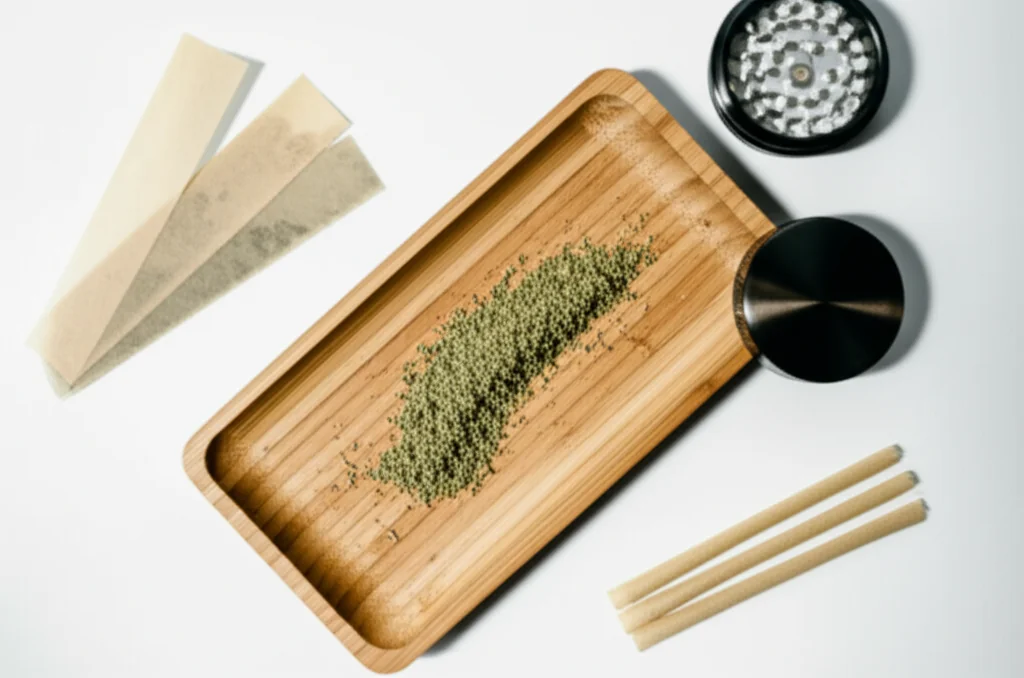
INGEL [ [ 0]]Un articulación de piragüismo (también llamado correr o tunelar) se quema de manera desigual en un lado, desperdiciando cannabis y creando golpes duros. Esta guía le enseña cómo arreglar el piragüismo mientras fuma y evitar que suceda en primer lugar.
respuesta rápida
INGEL [ [ 0]]Para fijar una articulación de canoa: humedezca el lado de combustión rápida con saliva para reducir la velocidad, gire la junta con frecuencia mientras fuma o quema con cuidado el exceso de papel en el lado rápido. Prevenga el cannabis distribuyendo el cannabis de manera uniforme, rodando apretado, moliendo bien y evitando el viento.
¿Qué es el piragüismo?
INGEL [ [ 0]][1]]Canoaeing ocurre cuando un lado de la articulación se quema más rápido que el otro, creando un patrón de quemadura desigual que parece una canoa o un bote.
INGEL [ [ 0]]Visual:
- Un lado se quemó significativamente
- La otra cara todavía tiene papel/cereza intacta
- Crea un "corredor" - línea de quema rápida que viaja por un lado
- Parece que alguien talla una canoa de tu porro
INGEL [ [ 0]][1]]Resultado[[2]: Cannabis desperdiciado, humo duro, frustración
INGEL [ [ 0]]Evitar canoarse con un producto de tierra uniforme usando un [ [ 1]]Calidad [ Grinder de Munchmakers](https://munchmakers.com/product-category/custom-grinders/). Para consejos de solución de problemas de rodadura, [ [3]]Blog de Grasscity Cubre los problemas comunes de fumar.
Por qué articulaciones de canoa
Causa #1: Distribución desigual de cannabis (la más común)
INGEL [ [ 0]]El problema:
- Más cannabis de un lado que del otro
- huecos o bolsas de aire
- Agrupaciones densas en algunas áreas
INGEL [ [ 0]]Cómo provoca el piragüismo:
- Quemaduras laterales densas más lentas (más material)
- Quemaduras laterales más rápidas (menos resistencia)
- Crea quemaduras desiguales
Causa #2: Estanqueidad de rodadura inconsistente
INGEL [ [ 0]]El problema:
- Rodado más fuerte en un lado
- Puntos sueltos en la articulación
- Presión desigual durante el rodadura
INGEL [ [ 0]]Cómo provoca el piragüismo:
- Las áreas sueltas obtienen más oxígeno
- Más oxígeno = quemadura más rápida
- Las áreas estrechas se queman más lentamente
Causa #3: Desequilibrio de humedad
INGEL [ [ 0]]El problema:
- saliva en un lado de sellado
- Cannabis húmedo en un lado
- Cannabis secado desigual
INGEL [ [ 0]]Cómo provoca el piragüismo:
- Quemaduras laterales húmedas más lenta
- Sequedad lateral quemaduras más rápido
- Crea corredor en el lado seco
Causa #4: Tallos y trozos
INGEL [ [ 0]]El problema:
- Piezas grandes o tallos en molienda
- Tamaño de molienda inconsistente
- Los fragmentos crean brechas
INGEL [ [ 0]]Cómo provoca el piragüismo:
- Los tallos no se queman bien
- Los fragmentos crean canales de aire
- Densidad de material desigual
Causa #5: Viento y Flujo de Aire
INGEL [ [ 0]]El problema:
- Fumar afuera en el viento
- Ventilador soplando en la articulación
- Exposición de aire desigual
INGEL [ [ 0]]Cómo provoca el piragüismo:
- El lado que mira al viento recibe más oxígeno
- arde más rápido
- Crea canoa persistente
Correcciones inmediatas (mientras fuma)
Solución #1: La saliva humedece
INGEL [ [ 0]][1]]Cuándo usar: canoa en etapa inicial (apenas comenzando)
INGEL [ [ 0]]Cómo:
1. Lame tu dedo
2. Humedezca el lado de quema rápida (el corredor)
3. Esto ralentiza temporalmente ese lado
4. otro lado se pone al día
INGEL [ [ 0]][1]]Protilo Pro: No mojar demasiado o empaparse
Solución #2: Girar y soplar
INGEL [ [ 0]][1]]Cuándo usar: Prevención de canoa o canoa leve
INGEL [ [ 0]]Cómo:
1. darse un puff
2. Gire la junta 90-180 grados
3. Tome la siguiente bocanada desde la posición rotada
4. Continúe girando cada 2-3 bocanadas
INGEL [ [ 0]][1]]Por qué funciona: incluso la exposición al aire en todos los lados
Solución #3: Quemar el corredor
INGEL [ [ 0]][1]]Cuándo usar: piragüismo severo (un lado adelante)
INGEL [ [ 0]]Cómo:
1. Encienda con cuidado solo el papel en el lado rápido
2. Quemarlo para que coincida con el lado lento
3. No quemes el cannabis
4. Soplar cuando incluso
INGEL [ [ 0]][1]]Advertencia: técnica avanzada, fácil de quemar o desperdiciar cannabis
Solución #4: Ashing estratégico
INGEL [ [ 0]]Cuándo usar: canoa leve con ceniza larga
INGEL [ [ 0]]Cómo:
1. Ceniza el lado de quema rápida primero
2. Deje que se queme el lado lento para 1-2 bocanadas más
3. Entonces ceniza ese lado
4. Crea efecto nocturno
Prevención: Técnicas de Roda
Prevención #1: Distribución uniforme
INGEL [ [ 0]]paso crítico en la prevención de canoas:
INGEL [ [ 0]]1. [ [1]]Grida fina y consistente - Sin trozos, sin tallos
2 . [ [ 0]]Distribuir uniformemente a lo largo de toda la longitud del papel
3. [ [ 0]]Toca y agita La articulación en forma de cannabis
4. [ [ 0]]Cheque visual - Deben tener una densidad uniforme
INGEL [ [ 0]]Test: antes de sellar, mira la articulación desde el lado: el cannabis debe estar nivelado, no desequilibrado
Prevención #2: Presión constante
INGEL [ [ 0]]Cómo rodar uniformemente:
INGEL [ [ 0]]1. [ [ 1]]Usa ambas manos con una presión uniforme
2 . [ [ 0]]rollo de filtro a punta manteniendo la misma presión
3. [ [0]]No apriete demasiado un extremo y apriete demasiado el otro
4. [ [ 0]]Test de dibujado antes del sellado - debe tener una resistencia constante
INGEL [ [ 0]][1]]Comparación: debería sentirse como un cilindro firme y continuo, no con un patrón apretado y apretado
Prevención #3: Molienda de calidad
INGEL [ [ 0]]Técnica de molinillo:
- Moler durante 10-15 segundos (no 3-5)
- Gire la amoladora varias veces
- Verifique la consistencia: debe ser esponjoso, no grueso
- Retire los tallos antes de moler
INGEL [ [ 0]]Alternativa de descanso de mano:
- romper muy bien
- Retire todos los tallos
- Más tiempo pero efectivo
Prevención #4: Empaque adecuado
INGEL [ [ 0]]Después de rodar pero antes de fumar:
INGEL [ [ 0]]1. [ [ 1]]Paquete de la punta suavemente
2 . [ [ 0]]Toque el porro en la mesa para resolver el cannabis
3. [ [0]]Paquete de nuevo si es necesario
4. [ [ 0]]objetivo: Densidad firme y uniforme en todo
INGEL [ [ 0]][1]]No: sobre-pack (restringe el flujo de aire, causa problemas)
Prevención #5: Ambiente controlado
INGEL [ [ 0]][1]]Condiciones ideales para fumar:
- Área interior o tranquila al aire libre
- Sin viento ni ventiladores
- Gire la articulación naturalmente mientras fuma
- No siempre sostén de la misma manera
INGEL [ [ 0]]Evitar:
- Días de viento (canoa garantizada)
- Flujo de aire directo del ventilador
- Manteniendo la misma posición de la articulación todo el tiempo
Prevención avanzada de canoas
El método de cuarto de vuelta
INGEL [ [ 0]]mientras fuma:
- Después de cada bocanada, gire la articulación 90 grados
- Crea incluso la exposición a la quemadura
- se vuelve automático con la práctica
INGEL [ [ 0]][1]]Por qué funciona: ningún lado permanece mirando al viento o dominante
La inspección previa a la luz
INGEL [ [ 0]]antes de la iluminación:
INGEL [ [ 0]]1. [ [ 1]]Held to Light - Compruebe si hay manchas densas (áreas más oscuras)
2 . [ [ 0]]Sentirse por bultos - Redistribuir si se encuentra
3. [ [ 0]]Test de sorteo - Debe tener una resistencia constante
4. [ [ 0]]Escaneo visual - Debe ser simétrico
INGEL [ [ 0]][1]]Si detecta problemas: desenrolle y vuelva a rodar. Mejor que canoa.
La elección del papel importa
INGEL [ [ 0]]Papeles menos propensos a canoa:
- Papeles de arroz delgados (Elementos, OCB)
- Cáñamo de alta calidad (negro crudo)
- Marcas de combustión uniforme
INGEL [ [ 0]]papeles más propensos a canoa:
- Papeles de pulpa de madera gruesa
- Marcas baratas inconsistentes
- Papeles con sabor (recubrimiento desigual)
Escenarios comunes de piragüismo
Escenario: "Siempre canoas en el mismo lado"
INGEL [ [ 0]][1]]diagnóstico: lo estás sosteniendo de la misma manera cada vez
INGEL [ [ 0]][1]]solución: rotar conscientemente mientras fuma, alternar qué mano sostiene la articulación
Escenario: "Canoas en el extremo del filtro"
INGEL [ [ 0]][1]]diagnóstico: apretado en la punta, suelto en el filtro o la humedad de la boca
INGEL [ [ 0]]solución:
- Filtro de rollo de extremo más apretado
- No lamer demasiado al sellar el área del filtro
- Dibuja más suavemente (menos humedad de la boca)
Escenario: "Canoas en el medio"
INGEL [ [ 0]][1]]Diagnóstico: bolsillo de aire o punto suelto en el medio
INGEL [ [ 0]]solución:
- Empaque con más cuidado
- Toque la articulación antes de fumar para asentarse en el
- Al rodar, preste atención a la sección central
Escenario: "Canoas afuera en el viento"
INGEL [ [ 0]]Diagnóstico: exposición al viento
INGEL [ [ 0]]solución:
- Taza articulación con mano para bloquear el viento
- cara lejos del viento
- encontrar un lugar protegido
- Rotar con más frecuencia
¿Es peligroso hacer piragüismo?
INGEL [ [ 0]][1]]No, el piragüismo es simplemente molesto, no dañino.
INGEL [ [ 0]]Preocupaciones que la gente tiene:
- "¿Estoy desperdiciando hierba?" - Sí, significativamente
- "¿Es más duro?" - Sí, quemadura desigual = golpes duros
- "¿Significa que no puedo rodar?" - No necesariamente, podrían ser solo condiciones
INGEL [ [ 0]][1]]El verdadero problema[[2]: desperdiciado de cannabis y mala experiencia de fumar, no seguridad
Canoa vs. Running vs Tunelización
INGEL [ [ 0]]Canoa : quemadura lateral (término más común)
[ [ 0]]Ejecución: igual que el piragüismo
[ [ 0]]Tunneling: el centro se quema más rápido que el exterior (diferentes problemas)
INGEL [ [ 0]][1]]Esta guía cubre: piragüismo y carrera (lo mismo)
Cuándo simplemente volver a rodar
INGEL [ [ 0]][1]]Si tu canoa articular severamente en las primeras bocanadas:
INGEL [ [ 0]]Señales para volver a tirar:
- Canoa en el primer 25% de la articulación
- Quemaduras desiguales severas (más de 1 cm de diferencia)
- No se puede arreglar con amortiguación/giración
- Desperdiciar demasiado cannabis
INGEL [ [ 0]]Cómo salvar:
1. Desenrolle con cuidado la articulación restante
2 Guardar cannabis
3. con respecto a -rodar correctamente
4. Mejor que fumar porro mal enrollado
INGEL [ [0]]No seas terco: A veces, la re-rollamiento es la elección inteligente
Ejercicio de práctica: prueba de quemaduras perfecta
INGEL [ [ 0]]Prueba tu mejora de laminación:
INGEL [ [ 0]]1. [ [ 1]]lanzamiento de una articulación con cuidado con todas las técnicas de prevención
2. Humo en ambiente controlado (interiores, sin viento)
3. No gire intencionalmente, deje que se queme naturalmente
4. A ver si canoas
INGEL [ [ 0]]Resultados:
- [ [ 0]]No canoa: Tu técnica de laminación es sólida
- [ [ 0]]Cano suave: necesita mejoras pero aceptable
- [ [ 0]]Cano severo: Practique los pasos de prevención más
INGEL [ [ 0]][1]]objetivo: quemadura natural sin canoa, no necesita rotación
Consejos profesionales
INGEL [ [0]][1]]Tip #1: La mayor parte de "canoa" es en realidad solo una distribución desigual durante el rollo. Fijar el 90% de las canoas distribuyendo mejor.
INGEL [ [0]]Consejo #2: Rotación mientras fuma debe ser un hábito. Incluso las articulaciones perfectas se benefician de la rotación.
INGEL [ [0]]Consejo #3: La calidad de la molienda importa más de lo que piensas. Invierta tiempo en una rutina constante.
INGEL [ [0]][1]]Tip #4: Si las articulaciones siempre en canoa en el mismo lado, tienes un sesgo de rodadura. compensar conscientemente.
INGEL [ [0]][1]]Consejo #5: papeles de arroz en canoa menos que la pulpa de madera (quema más lentamente, más uniformemente).
INGEL [ [ 0]]Esta guía es para fines educativos. Las leyes del cannabis varían según la jurisdicción.
Step 1:
Step 2:
Step 3:
Step 4:
Step 5:
Step 6:
Frequently Asked Questions
Canoa articulares debido a la distribución desigual del cannabis, laminación suelta, tallos/ trozos en la rutina, viento soplando en un lado o desequilibrio de humedad. Arregle distribuyendo uniformemente, rodando más apretado, moliendo más fino y fumando en condiciones tranquilas.
Sí: humedezca el lado de quema rápida con saliva, gire la articulación con frecuencia mientras fuma o queme con cuidado el exceso de papel en el lado rápido con un encendedor.
Canoarse no es peligroso, solo derrochador y molesto. Desperdicia el cannabis, crea golpes duros y hace que el porro sea más difícil de fumar. Es un problema de técnica rodante, no un problema de salud.
Related Guides
Rolling Paper Sizes Explained: 1 1/4, King Size, and More
Comprehensive guide about rolling paper sizes explained: 1 1/4, king size, and more. Learn everything you need to know with expert tips and detailed instructions.

Best Rolling Papers for Beginners: Complete Buying Guide 2026
Discover the best rolling papers for beginners including RAW, Zig-Zag, and OCB. Learn about sizes, materials (rice vs hemp vs wood pulp), and which papers are easiest to roll with.
Clear Rolling Papers: Are Cellulose Papers Worth It?
Comprehensive guide about clear rolling papers: are cellulose papers worth it?. Learn everything you need to know with expert tips and detailed instructions.