
Wie lange bleibt Unkraut gut? Aufbewahrungs- und Frische-Leitfaden

Sarah Green
Cannabis Educator
Wie lange bleibt Unkraut gut? Aufbewahrungs- und Frische-Leitfaden
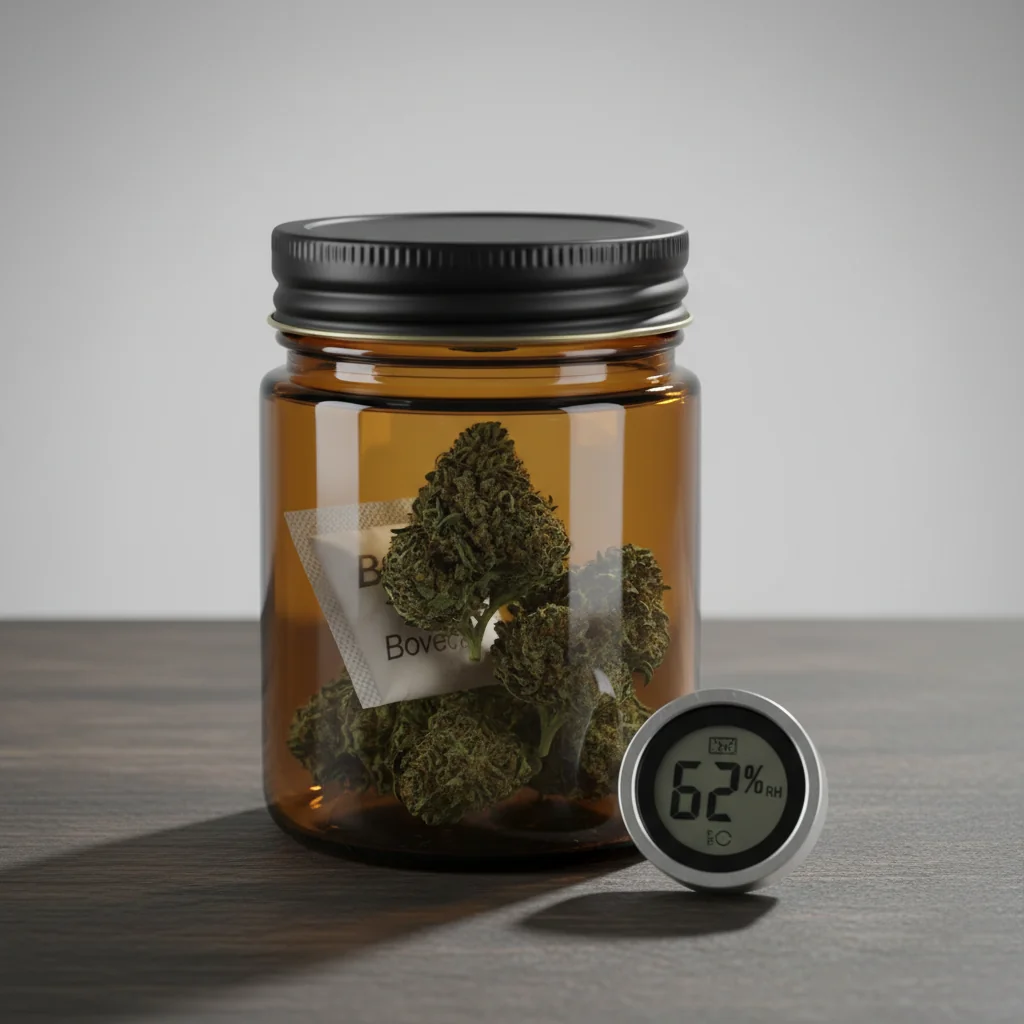
Ob Sie sich während eines Verkaufs eingedeckt haben, während Sie beim Putzen einen alten Vorrat gefunden haben oder einfach nur, dass Ihr Cannabis länger hält, ist es für jeden Verbraucher ein wesentliches Wissen, zu verstehen, wie lange Unkraut gut bleibt. Richtig gelagertes Cannabis kann monatelang potent und angenehm bleiben, während unsachgemäß gelagerte Blüten schnell abbauen können.
Dieser umfassende Leitfaden behandelt die Haltbarkeit von Cannabis, bewährte Verfahren für die Lagerung, Anzeichen einer Verschlechterung und wie Sie die Langlebigkeit Ihrer Versorgung maximieren können.
schnelle Antwort
Richtig gelagertes Cannabis bleibt 6 Monate bis 1 Jahr lang und behält den größten Teil seiner Wirksamkeit und seines Geschmacks bei. Nach einem Jahr beginnt THC zu CBN (ein weniger psychoaktives Cannabinoid) abzubauen, und Terpene verdampfen. Cannabis, das in einem kühlen, dunklen, luftdichten Behälter mit kontrollierter Luftfeuchtigkeit (58-62% rF) gelagert wird, hält am längsten. Altes Gras macht Sie nicht krank, aber weniger stark und geschmackvoll.
Inhaltsverzeichnis
- Grundlagen der Cannabis-Haltbarkeit
- Was degradiert Cannabis?
- Wie man erkennt, ob das Unkraut schlecht geworden ist
- Optimale Lagerbedingungen
- Beste Lagerbehälter
- Speicherfehler zu vermeiden
- Altes Cannabis wiederbeleben
- Esswaren und Konzentrat Haltbarkeit
- Profi-Tipps
- FAQ
Grundlagen der Cannabis-Haltbarkeit
Allgemeine Zeitleiste
Unter optimalen Bedingungen:
THC-Degradationsforschung
Eine im Journal of Pharmacy and Pharmacology veröffentlichte Studie ergab, dass Cannabis bei Lagerung bei Raumtemperatur THC verliert:
- Nach 1 Jahr: ~ 16% THC-Verlust
- Nach 2 Jahren: ~26% THC-Verlust
- Nach 3 Jahren: ~ 34% THC-Verlust
- Nach 4 Jahren: ~41% THC-Verlust
Diese Zahlen stellen Durchschnittswerte dar – schlechter Speicher beschleunigt die Verschlechterung, während der optimale Speicher sie verlangsamt.
Was passiert, wenn Cannabis altert?
Mit zunehmendem Alter treten mehrere Veränderungen auf:
1. THC konvertiert in CBN: THC oxidiert in CBN (Cannabinol), das weniger psychoaktiv ist, aber beruhigende Eigenschaften haben kann
2. Terpene verdunsten: Die aromatischen Verbindungen, die Cannabis seinen Geschmack verleihen und zu Wirkungen beitragen
3. Feuchtigkeitsverlust: Blume wird trocken und spröde
4. Chlorophyll-Abbau: Farbe verblasst von grün nach braun
Was degradiert Cannabis?
Vier Hauptfaktoren beschleunigen den Abbau von Cannabis:
1. Licht
Licht ist der größte Feind von Cannabis. UV-Strahlen zersetzen Cannabinoide und Terpene schnell. Eine Studie der University of London ergab, dass die Lichtexposition der größte Faktor für den Abbau von Cannabinoiden war.
Lösung: In undurchsichtigen Behältern an dunklen Orten lagern.
2 . Luft / Sauerstoff
Sauerstoff oxidiert Cannabinoide und wandelt THC in CBN um. Es trocknet auch die Blüte aus und lässt Terpene verdampfen.
Lösung: Verwenden Sie luftdichte Behälter mit minimalem Luftraum.
3. Temperatur
Hohe Temperaturen beschleunigen den Abbau und können Blüten austrocknen. Sehr hohe Wärme decarboxyliert THCa vorzeitig in THC - gut für essbare, aber nicht ideal zum Rauchen.
Temperaturen über 25 °C können auch Schimmelwachstum fördern, wenn Feuchtigkeit vorhanden ist.
Lösung: In kühlen Umgebungen (60-70 ° F / 15-21 ° C) lagern.
4. Feuchtigkeit
Zu viel Luftfeuchtigkeit (über 65%) fördert das Schimmel- und Mehltauwachstum. Zu wenig Luftfeuchtigkeit (unter 55%) trocknet die Blüte aus und verschlechtert Trichome.
Lösung: Halten Sie 58-62% relative Luftfeuchtigkeit mit Feuchtigkeitspaketen.
Wie man erkennt, ob das Unkraut schlecht geworden ist
Anzeichen von abgebautem Cannabis
Texturänderungen:
- Beim Berühren zu Staub zerfallen (übertrocknet)
- Fühlt sich schwammig an oder bricht nicht leicht (zu feucht - potenzieller Schimmel)
- Stiele schnappen statt leicht zu biegen
Visuelle Veränderungen:
- braune oder verblasste Farbe (war einmal hellgrün)
- Trichome erscheinen stumpf oder bernsteinfarben (waren einmal milchig / klar)
- Sichtbarer Schimmel (weiße Fuzzy-Flecken oder Gurtband)
Geruchsänderungen:
- Muffiger oder schimmeliger Geruch (gefährlich - nicht konsumieren)
- Heu- oder Grasgeruch (abgebaute Terpene)
- Wenig bis gar kein Aroma (Terpenverlust)
Rauch-/Dampfqualität:
- Harter, unangenehmer Geschmack
- weniger glatt als frische Blume
- Minimale Effekte im Vergleich zu frischem Cannabis
Wann wir es rauswerfen
Wenn Sie es bemerken, entsorgen Sie Cannabis:
- Schimmel (weiße Fuzzy-Patches, dunkle Flecken oder netzähnliches Material)
- muffiger oder "aus" Geruch
- sichtbare Insekten oder Eier
Schimmeliges Cannabis kann Atemprobleme verursachen und sollte niemals verzehrt werden.
Optimale Lagerbedingungen
Die ideale Umgebung
Temperatur: 60-70 ° F (15-21 ° C)
- Kühl aber nicht kalt
- Temperaturschwankungen vermeiden
- Nie in der Nähe von Wärmequellen lagern
Feuchtigkeit: 58-62% relative Luftfeuchtigkeit
- Verwenden Sie Feuchtekontrollpakete (Boveda oder Integra Boost)
- 62% für etwas mehr Feuchtigkeit
- 58% für Trocknerpräferenz
anzünden: Vollständige Dunkelheit
- Undurchsichtige Behälter bevorzugt
- dunkler Lagerort
- Kein direktes Sonnenlicht
tüfteln: Luftdicht mit minimalem Kopfraum
- Behälter entsprechend füllen
- Vakuumversiegelung funktioniert langfristig
- Vermeiden Sie es häufig zu
Wo kann man Cannabis lagern?
Gute Lage:
- Schublade oder Schrank von Fenstern entfernt
- Schrankregal
- Kühler Keller (wenn nicht feucht)
- Dedizierte Aufbewahrungsbox
Schlechte Orte:
- in der Nähe von Fenstern oder Lichtquellen
- Küche (Temperaturschwankungen)
- Badezimmer (Feuchtigkeitsschwankungen)
- Auto (extreme Temperaturänderungen)
- Gefrierschrank (umstritten – siehe FAQ)
Beste Lagerbehälter
Gläser (bester Gesamt)
Profi:
- Luftdichter Verschluss
- hat keinen Einfluss auf den Geschmack
- wiederverwendbar
- Erhältlich in opaker/UV-beständiger Ausführung
Nachteile:
- zerbrechlich
- Klares Glas braucht dunkle Aufbewahrung
- Statisch kann Trichome stören
Beste Optionen: Einmachgläser mit neuen Deckeln, UV-geschützten Gläsern, Spezial-Cannabis-Lagergläsern
Spezialitäten-Cannabis-Behälter
Zweckmäßig gebaute Container verfügen häufig über:
- UV-Schutz
- Feuchtigkeitskontrolle
- Luftdichte Dichtungen
- Eingebaute Feuchte-Packhalter
Beliebte Marken sind CVault, Herb Guard und TightVac.
Behälter aus Titan/Metall
Profi:
- lichtbeständig
- langlebig
- Luftdichte Optionen verfügbar
Nachteile:
- Kann die Luftfeuchtigkeit beeinflussen
- Einige Metalle können mit Terpenen interagieren
- oft teurer
Was zu vermeiden
Plastiktüten: Statisch zieht Trichome ab, nicht luftdicht, Plastik kann den Geschmack beeinträchtigen
Plastikbehälter: Kann Schwitzen verursachen, kann Chemikalien auslaugen, statische Probleme
Papier oder Pappe: nicht luftdicht, absorbiert Feuchtigkeit und Terpene
Humidor: Zedernhumidore für Zigarren können Öle übertragen, die den Cannabisgeschmack beeinflussen
Speicherfehler zu vermeiden
1. Im Gefrierschrank aufbewahren
Während es logisch erscheint, führt das Einfrieren von Cannabis dazu, dass Trichome beim Umgang brüchig werden und abbrechen. Wenn Sie für eine sehr langfristige Lagerung einfrieren müssen, sollten Sie es erst vollständig auf dem Aufgetaut behandeln.
2. mit Plastiktüten
Die schlechteste gängige Speichermethode. Statische Elektrizität zieht Trichome an, Taschen sind nicht luftdicht und Kunststoff kann den Geschmack beeinträchtigen.
3. Verschiedene Stämme zusammen lagern
Stämme vermischen Aromen und übertragen möglicherweise Feuchtigkeit. Bewahren Sie jede Sorte in einem eigenen Behälter auf.
4. Überfüllung oder Unterfüllung von Behältern
Überfüllen verursacht Kompressionsschäden. Unterfüllung bedeutet mehr Sauerstoffexposition. Füllen Sie die Behälter zu 75% voll.
5. Trockenmittel ohne Feuchtigkeitspackungen verwenden
Regelmäßige Trockenmittel (Kieselgel) können Cannabis übertrocknen. Verwenden Sie 2-Wege-Feuchtigkeitspackungen, die bei Bedarf Feuchtigkeit hinzufügen und entfernen.
6. Schleifen vor der Lagerung
Gemahlenes Cannabis baut sich aufgrund der erhöhten Oberflächenexposition viel schneller ab als die ganze Blüte. Mahlen Sie nur, was Sie bald verwenden werden.
7 drohen Zu häufig überprüfen
Jedes Mal, wenn Sie den Behälter öffnen, leiten Sie frische Luft ein und lassen Terpene entweichen. Zugriff nur bei Bedarf.
Altes Cannabis wiederbeleben
Wenn Ihr Cannabis zu trocken geworden ist, können Sie versuchen, es zu rehydrieren:
Feuchteverpackungsmethode (sicherste)
1. Trockenes Cannabis in einen luftdichten Behälter geben
2 62% Feuchtepackung (Boveda oder Integra Boost) hinzufügen
3. Versiegeln und warten Sie 24-72 Stunden
4. Überprüfen Sie den Feuchtigkeitsgehalt und wiederholen Sie diesen bei Bedarf
Fruchtschalenmethode (sorgfältig anwenden)
1. Legen Sie ein kleines Stück Orangen- oder Zitronenschale in den Behälter
2. Lassen Sie Peel nicht das Cannabis berühren
3. Überprüfen Sie nach 1-2 Stunden
4. Schälen Sie sofort, um Schimmel zu vermeiden
Warnung: Diese Methode kann Feuchtigkeit zu schnell einführen und Schimmel fördern. Die Feuchtepackmethode ist sicherer.
Salat-/Tortilla-Methode
Ähnlich wie bei Fruchtschalen – feuchten (nicht nassen) Salat oder eine Tortilla kurz in den Behälter geben. Nach ein paar Stunden entfernen.
Was Sie nicht reparieren können
Rehydration kann etwas Feuchtigkeit wiederherstellen, aber es kann nicht:
- Verlorenes THC wiederherstellen (bereits auf CBN abgebaut)
- Verdampfte Terpene zurückbringen
- Fixieren Sie schimmeliges Cannabis (versuchen Sie nie, es zu retten)
Altes Cannabis ist unabhängig von der Rehydratisierung immer weniger wirksam und geschmackvoll als frisch.
Esswaren und Konzentrat Haltbarkeit
Speisen
Kommerzielle Lebensmittel enthalten in der Regel ein Best-by-Datum. Allgemeine Richtlinien:
- Backwaren: 1-2 Wochen (Kühlen)
- Gummis / Süßigkeiten: 6-12 Monate (kühl, dunkle Lagerung)
- Pralinen: 6-12 Monate (Hitze vermeiden)
- Getränk: Überprüfen Sie das Ablaufdatum
- Tinktur: 1-3 Jahre (auf dunklem, kühlem Ort lagern)
Konzentrat
Konzentrate halten normalerweise länger als die Blüte:
- zerrütten: 6-12 Monate (luftdicht, kühle Aufbewahrung)
- Wachs/Knopf: 6-12 Monate (Hitze vermeiden, die Konsistenzänderungen verursacht)
- Lebendes Harz: 6-12 Monate (für den besten Konservierungszustand)
- Kolophonium: 3-6 Monate bei Raumtemperatur, länger bei Kühlung
- Destillat: 1-2 Jahre (sehr stabil)
Weitere Informationen zur Lagerung von Konzentrat finden Sie unterKonzentrat-Leitfaden speichern.
vape patronen
Die Patronen halten 6-12 Monate, wenn sie an einem kühlen, dunklen Ort aufrecht gelagert werden. Vermeiden Sie es, in heißen Autos zu fahren
Profi-Tipps
1. Beschriften Sie Ihre Behältermit Belastungsname und Kaufdatum
2. Investieren Sie in QualitätsspeicherVon Anfang an – es zahlt sich in erhaltener Potenz aus
3. Feuchtepackungen in großen Mengen kaufen- Sie sind erschwinglich und wichtig
4. Bewahren Sie für jede Sorte ein Vorratsglas aufSie kaufen regelmäßig
5. In einer dedizierten Schublade aufbewahrenWeg von den täglichen Gebrauchsgegenständen
6. Lagern Sie Cannabis nicht mit Schleifern oder Rohren- Der Rest erzeugt unerwünschte Gerüche
7. Kaufen Sie kleinere MengenWenn Sie langsam konsumieren - frisch ist immer besser
8. Vakuumversiegelung zur Langzeitlagerung(Monate +)
9. Überprüfen Sie das gespeicherte Cannabis monatlichFür jegliche Schimmel
10.Schreiben Sie das Datum "Geöffnet"auf Behältern, um die Frische zu verfolgen
FAQ
Kann altes Unkraut krank machen?
Altes Gras, das einfach ausgetrocknet ist, macht Sie nicht krank - es ist nur weniger stark und härter zu rauchen. Schimmeliges Cannabis kann jedoch Atemwegsprobleme, allergische Reaktionen oder Infektionen verursachen. Niemals Cannabis mit Schimmelanzeichen konsumieren.
Ist es sicher, wirklich altes Unkraut zu rauchen?
Wenn es keinen Schimmel gibt, ist er sicher, aber wahrscheinlich nicht angenehm. Der Rauch wird hart, die Wirkungen verringert und der Geschmack schlecht. Es wird dich nicht weh tun, aber frisches Cannabis wird immer bevorzugt.
Läuft Unkraut ab?
Cannabis "abläuft" nicht wie Lebensmittel, die gefährlich werden. Es verschlechtert sich - im Laufe der Zeit verliert Potenz, Geschmack und Glätte. Stellen Sie sich das wie Gewürze vor, die eher den Geschmack verlieren als Lebensmittel, die verdorben.
Soll ich mein Cannabis einfrieren?
Generell nein. Das Einfrieren macht Trichome spröde und sie brechen ab, wenn sie behandelt werden. Wenn Sie für eine sehr langfristige Lagerung (6+ Monate) einfrieren müssen, vakuumieren Sie zuerst und fassen Sie es erst, wenn Sie vollständig aufgetaut sind.
Wie lange halten Boveda-Packs?
Boveda-Packs halten 2-4 Monate in regelmäßig geöffneten Behältern oder 6-12 Monate in versiegelten Behältern. Sie werden ausgegeben, wenn sie sich knusprig anstatt matschig fühlen.
Hilft das Unkraut im Kühlschrank?
Kühlschränke können funktionieren, sind aber nicht ideal. Die Temperaturschwankungen beim Öffnen und die Luftfeuchtigkeit können Probleme verursachen. Ein kühler, dunkler Schrank ist normalerweise besser.
Wie lagern Apotheken ihr Cannabis?
Professionelle Apotheken verwenden eine klimatisierte Lagerung mit optimaler Temperatur und Feuchtigkeit, oft in großen Behältern mit Feuchtigkeitskontrolle. Sie drehen den Bestand, um zuerst das älteste Inventar zu verkaufen.
Kann ich Cannabis mit anderen Kräutern aufbewahren?
kein drohen Starke Kräuter wie Minze oder Lavendel übermitteln Aromen auf Ihr Cannabis und beeinträchtigen den Geschmack. Halten Sie Cannabis in einem eigenen Container.
Schluss
Bei richtiger Lagerung kann Cannabis bis zu einem Jahr potent und angenehm bleiben - manchmal länger. Die Tasten sind Licht, Luft, Temperatur und Feuchtigkeit. Investieren Sie in luftdichte Qualitätsbehälter, verwenden Sie Feuchtigkeitspackungen, lagern Sie an einem kühlen dunklen Ort und mahlen Sie nur das, was Sie bald konsumieren werden.
Während altes Cannabis Ihnen nichts schadet (es sei denn, es schimmelt), bietet Fresh Flower das beste Erlebnis. Wenn Sie mit abgebautem Cannabis leben, können Sie eine Rehydrierung versuchen, aber verlorene Cannabinoide und Terpene nicht wiederherstellen.
Informationen zu den entsprechenden Speicherinformationen finden Sie in unseren Anleitungen zurichtige Cannabis-Lagerbehälteroder stöbern Sie inStrain-Datenbankum neue Sorten zu finden, die Sie Ihrer Sammlung hinzufügen können.
Frequently Asked Questions
Altes Gras, das einfach ausgetrocknet ist, macht Sie nicht krank - es ist nur weniger stark und härter zu rauchen. Schimmeliges Cannabis kann jedoch Atemprobleme verursachen und sollte niemals verzehrt werden.
Related Guides

Common Beginner Mistakes to Avoid When Using Cannabis
Learn the most common mistakes first-time and new cannabis users make, why they happen, and how to avoid them for a better experience.
Best Snacks to Enjoy When High: Ultimate Munchies Guide
Comprehensive guide about best snacks to enjoy when high: ultimate munchies guide. Learn everything you need to know with expert tips and detailed instructions.
Best Time of Day to Smoke Cannabis: Morning vs Evening Effects
Comprehensive guide about best time of day to smoke cannabis: morning vs evening effects. Learn everything you need to know with expert tips and detailed instructions.